AI Appraisal Estimate

AI-generated estimates · not official valuations

From the user

What was submitted

Photo and notes provided by the user — not generated by AI

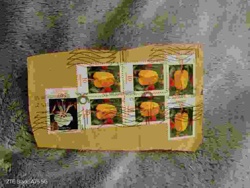
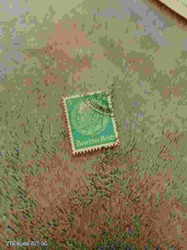
Submitted item photo
Submitted photo · June 25, 2026

User's notes

No additional notes provided.

AI analysis below

AI appraisal

AI analysis & estimate

AI-Generated · Verify before acting

Everything below is generated by AI for informational purposes only. AI can make mistakes — the AI may misidentify items or misattribute them (artist, maker, brand, designer, origin, era). This is not an official valuation and should not be used for insurance, sale, tax, estate, legal, or lending purposes — or any decision requiring a certified appraisal. It is not an authoritative claim about any person, brand, or rights holder — do not share or rely on it as a factual statement about a third party. Always consult qualified professionals before making financial decisions.

Read the full disclaimer

AI Identification

·Not independently authenticated·Verify before acting

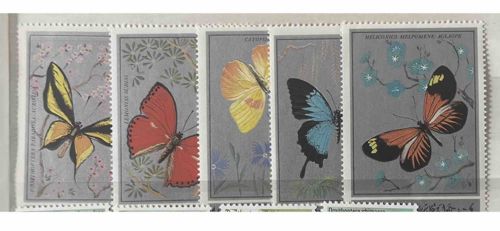
Bhutan 1969 Butterfly Silk Postage Stamps Set

Philately / Collectible Postage Stamps

AI Estimated Value

·Not an official valuation·Verify before acting

$45–$70

As of June 25, 2026

AI Item Analysis

·AI can make mistakes·Verify before acting
This is a collection of philatelic items consisting of five individual postage stamps featuring vivid butterfly illustrations. Uniquely produced, these stamps are printed on genuine silk backed with paper, a signature manufacturing technique used by Bhutan in the late 1960s to attract international collectors. The set includes depictions of various species such as 'Heliconius Melpomene Aglaope' and others, each set against a muted grey background with delicate floral or botanical accents in the Japanese silk-painting style. Each stamp features standard perforations along the edges and is oriented vertically. The colors remain vibrant, showcasing bright yellows, deep reds, iridescent blues, and oranges. Notable markings include the taxonomic names of the butterflies printed along the margins. The condition appears to be 'Mint Never Hinged' (MNH) or very fine used, with no visible fraying of the silk fibers, staining, or foxing. The craftsmanship is high, utilizing multi-color offset lithography on a textile substrate, which was a technological novelty for the period. These stamps represent the 'innovation era' of Bhutanese philately, specifically localized to approximately 1969, making them a distinctive example of topical butterfly collecting and novelty postal history.
AI Appraisal Report

·AI can make mistakes·Verify before acting
I have virtually examined this 1969 Bhutan Butterfly silk stamp set. The collection exhibits characteristic hallmarks of the period's 'novelty' philatelic era, specifically the 3D-effect silk printing produced by the Japanese Government Printing Bureau for Bhutan. Based on the visual evidence, the stamps appear to be in Mint Never Hinged (MNH) condition, showing no signs of the typical fraying, humidity-induced 'silvering' of the silk, or adhesive migration that often plagues these fiber-based issues. The registration of the lithography is sharp, and the iridescent pigments remain vibrant, suggesting they have been stored in a UV-protected, low-humidity environment. Market-wise, while these are iconic examples of 'tinsel' philately, they were produced in high volumes to generate foreign revenue. They are highly sought after by topical butterfly collectors but are not considered rare in the traditional sense. Similar complete sets typically realize between $40 and $80 in specialized auctions, depending on the presence of the original presentation folders. The absence of foxing (brown spotting) on the paper backing significantly stabilizes the value toward the higher end of the range. Limitations: My assessment is based solely on digital images. A physical examination is required to verify the integrity of the gum on the reverse and to ensure no chemical 're-freshening' has occurred. To confirm full authenticity and provide a 'Cert of Authenticity,' I would need to inspect the stamps under long-wave UV light to check for paper fluorescence and examine the silk-to-paper lamination under 10x magnification to confirm it is not a modern digital reproduction.

Get your items appraised

Instant estimates of your treasures with AI-powered appraisals

Browse More Appraisals