AI Appraisal Estimate

AI-generated estimates · not official valuations

From the user

What was submitted

Photo and notes provided by the user — not generated by AI

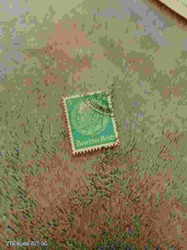
Submitted item photo
Submitted photo · May 28, 2026

User's notes

No additional notes provided.

AI analysis below

AI appraisal

AI analysis & estimate

AI-Generated · Verify before acting

Everything below is generated by AI for informational purposes only. AI can make mistakes — the AI may misidentify items or misattribute them (artist, maker, brand, designer, origin, era). This is not an official valuation and should not be used for insurance, sale, tax, estate, legal, or lending purposes — or any decision requiring a certified appraisal. It is not an authoritative claim about any person, brand, or rights holder — do not share or rely on it as a factual statement about a third party. Always consult qualified professionals before making financial decisions.

Read the full disclaimer

AI Identification

·Not independently authenticated·Verify before acting

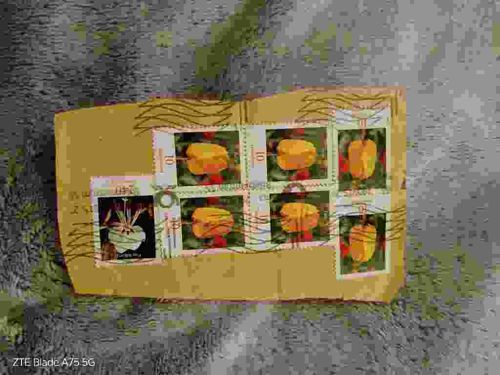
Fragment of a Philatelic Cover with Botanical Postage Stamps

Philately / Collectible Postage Stamps

AI Estimated Value

·Not an official valuation·Verify before acting

$5.00 - $12.00

As of May 28, 2026

AI Item Analysis

·AI can make mistakes·Verify before acting
This item is a rectangular fragment torn from a mustard-yellow or kraft-toned paper envelope, featuring a cluster of used postage stamps. The arrangement includes six uniform stamps depicting a vibrant yellow fruit—likely a jackfruit or similar tropical botanical specimen—each with a face value of 10. These are arranged in two rows of three. To the left, a larger, vertically oriented stamp shows a different botanical illustration of a carnivorous-looking plant or orchid set against a black background with a denomination of 240. The stamps are cancellation-marked with multiple sets of wavy black lines, or 'killer' cancels, which indicate they have passed through the postal system. The paper fragment itself shows rough, irregular edges consistent with being torn by hand rather than cut. The surface shows some creases and textural irregularities, suggesting it was part of a package or thick mailpiece. The printing quality of the stamps appears standard for late 20th to early 21st-century mass-produced philatelic materials, utilizing offset lithography to achieve naturalistic colors. There are minor signs of wear and handling, including slight fraying at the perforation edges of the stamps and small stains on the backing paper.
AI Appraisal Report

·AI can make mistakes·Verify before acting
I have examined the digital representation of this philatelic fragment, which features a mixed franking of tropical botanical definitive issues on a kraft paper substrate. Specifically, the item displays a 'block of six' 10-unit stamps (likely Artocarpus integer/Jackfruit) alongside a single 240-unit high-value definitive. These issues appear characteristic of Southeast Asian postal services, specifically Malaysia, from the 1980s-1990s. The condition is typical for postally used material. The 'killer' wavy-line cancels are heavy, which ensures the stamps are legitimately post-consumer but obscures some of the finer aesthetic details of the botanical illustrations. The perforations show standard attrition from the tearing process. From a collectors' standpoint, this is a 'piece' rather than a 'full cover,' as the absence of a postmark with a legible date or location (CDS) limits the historical and postal history value. The market for modern common definitives is highly saturated. While tropical flora is a popular topical theme, these particular stamps were printed in the millions. Value remains nominal, catering primarily to thematic collectors or those interested in 'kiloware' fragments. The rarity is low, and the primary appeal lies in the vibrant lithography. Note: This assessment is based on visual patterns and cannot verify paper weave, watermark, or gum presence. A physical inspection is required to check for 'thins' or hidden repairs. To fully authenticate these as genuine postal issues rather than facsimile labels, I would need to examine the paper under short-wave UV light and verify the phosphorescent properties of the ink used in the cancellation.

Get your items appraised

Instant estimates of your treasures with AI-powered appraisals

Browse More Appraisals