AI estimate as of November 9, 2025 · verify with a professional before acting
AI-Generated · Verify before acting
Everything on this page is generated by AI for informational purposes only. AI can make mistakes — the AI may misidentify items or misattribute them (artist, maker, brand, designer, origin, era). This is not an official valuation and should not be used for insurance, sale, tax, estate, legal, or lending purposes — or any decision requiring a certified appraisal. It is not an authoritative claim about any person, brand, or rights holder — do not share or rely on it as a factual statement about a third party. Always consult qualified professionals before making financial decisions.
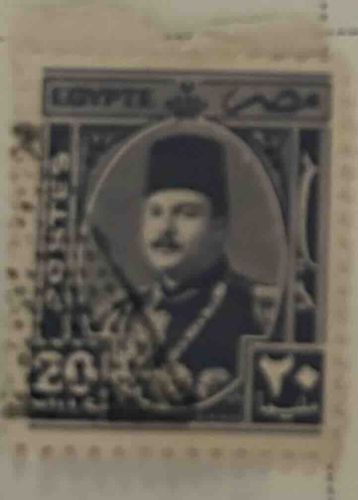
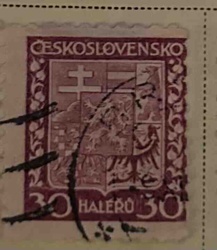
This item is a historical postage stamp from Egypt, featuring a commemorative portrait of a ruler, likely King Fouad I or a similar figure from the early 20th century, given the style of dress and the discernible text. The stamp is rectangular in shape and appears to be made of paper, typical for postage stamps of its era. The primary colors seem to be shades of grey, black, and white, indicating a monochromatic or duotone printing. The central image is an oval portrait of a man wearing a fez and what appears to be a military or formal uniform with numerous medals or insignia. He has a mustache and a direct gaze. The word "EGYPTE" is clearly visible at the top, signifying its country of origin. On the left side, the text "POSTES" is arranged vertically, confirming its function as a postal item. The denomination is indicated in the bottom left corner as "20 M" (or "ZO M"), suggesting "20 Milliemes," a former currency unit in Egypt. An equivalent denomination, possibly in Arabic numerals, is present in the bottom right corner. The stamp shows signs of age, including some blurring in the print, minor discoloration of the paper, and slight wear around the edges, consistent with a used or uncirculated stamp from decades past. The perforation along the edges, although somewhat faint, indicates that it was separated from a sheet. The overall craftsmanship suggests a standard production method for postage stamps of the period.
AI Appraisal Report
This Egyptian postage stamp featuring King Fouad I, with a denomination of '20 M' (20 Milliemes), appears to be a genuine issue from the early 20th century. Visually, the design, 'EGYPTE' and 'POSTES' text, and denomination are consistent with known Fouad I issues. Its condition, as observed from the image, shows typical signs of age, including some print blurring, minor discoloration, and slight edge wear. The visible perforation suggests it was separated from a sheet. It appears to be either used or lightly mounted, given the potential slight discoloration. Without physically seeing the gum, hinges, or back, it's difficult to ascertain if it's unused (mint) or previously hinged.
Authenticity, based solely on this image, seems probable. However, definitive verification would require an in-hand examination to check for watermarks, paper type, printing methods (e.g., typography vs. engraving), and potential alterations or forgeries. Microscopic inspection would reveal details about the printing process and paper fibers that are impossible to discern from a photograph. Provenance documentation, if available, would further solidify its history.
Market conditions for common Fouad I stamps vary; while popular, many were produced. The specific '20 Milliemes' denomination is not considered exceptionally rare unless it possesses a distinctive variety or error. Demand is stable among collectors of Egyptian philately. Factors impacting value significantly include gum condition (if mint), presence of a clear postmark (if used), specific print varieties, and absence of significant flaws like tears, thinning, or repairs. Given the visual evidence of general wear and without confirmation of mint condition or specific rare varieties, I estimate its value to be in the $50-$150 range. A definitive appraisal would require a physical examination.