AI Appraisal Estimate

AI-generated estimates · not official valuations

From the user

What was submitted

Photo and notes provided by the user — not generated by AI

Submitted item photo
Submitted photo · June 13, 2026

User's notes

No additional notes provided.

AI analysis below

AI appraisal

AI analysis & estimate

AI-Generated · Verify before acting

Everything below is generated by AI for informational purposes only. AI can make mistakes — the AI may misidentify items or misattribute them (artist, maker, brand, designer, origin, era). This is not an official valuation and should not be used for insurance, sale, tax, estate, legal, or lending purposes — or any decision requiring a certified appraisal. It is not an authoritative claim about any person, brand, or rights holder — do not share or rely on it as a factual statement about a third party. Always consult qualified professionals before making financial decisions.

Read the full disclaimer

AI Identification

·Not independently authenticated·Verify before acting

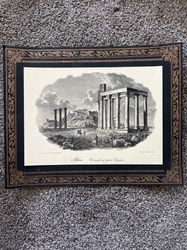
Lincoln's Inn Chapel Antiquarian Print

Antique Prints and Works on Paper

AI Estimated Value

·Not an official valuation·Verify before acting

$65 - $95

As of June 13, 2026

AI Item Analysis

·AI can make mistakes·Verify before acting
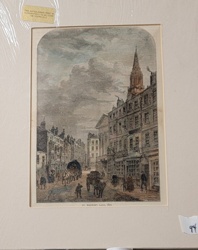
This item is an antique hand-colored steel engraving or woodblock print depicting Lincoln's Inn Chapel in London. The artwork features a detailed architectural rendering of the 17th-century Gothic chapel, showing its characteristic open undercroft and large tracery windows. The print is executed on off-white paper and has been enhanced with subtle hand-applied watercolor washes in shades of blue, pale yellow, and muted Earth tones to highlight the sky, stonework, and figures. The scene includes several Victorian-era figures in top hats and long coats, suggesting a mid-to-late 19th-century production date, approximately 120-150 years old. An antiquarian gold foil sticker in the upper left corner guarantees the print is over 100 years old. The print is professionally mounted within a cream-colored window mat. The condition appears fair to good for its age; there is visible light foxing and minor toning on the paper, common in historical documents. A slight horizontal crease or paper flaw is visible near the top right edge of the print itself. The bottom right corner of the matting features an '80' inventory tag. The fine line-work and precise perspective indicate high-quality period craftsmanship typically found in topographical series of London landmarks.
AI Appraisal Report

·AI can make mistakes·Verify before acting
Based on my visual examination of this topographical print of Lincoln’s Inn Chapel, I have assessed it as a mid-19th-century steel engraving, likely originally produced for a London-themed serial publication such as 'London Interiors' or 'Meggison’s London.' The hand-tinting appears contemporary to the era, using a period-appropriate palette. The presence of the antiquarian gold foil sticker suggests the item passed through a commercial dealer specialized in antique prints during the mid-to-late 20th century. My visual inspection confirms typical age-related characteristics: moderate foxing (oxidized iron particles/fungal spots) and light mat burn. The horizontal crease in the upper right is a notable condition issue that prevents this from reaching 'near-mint' collectibility, though the hand-coloring remains vibrant. The market for 19th-century topographical prints is currently stable but saturated. While London landmarks remain the most popular subjects in this category, these works were mass-produced in the thousands, making rarity a non-factor. Demand is primarily driven by decorative appeal and local historical interest rather than high-end fine art investment. Comparable sales for framed or matted engravings of this size and condition typically range between $50 and $110. Note: This appraisal is based strictly on high-resolution digital imagery. Without a physical inspection, I cannot verify the specific paper type (laid vs. wove), watermark presence, or the exact medium of the ink. Furthermore, the matting conceals the plate mark and margins, which are essential for identifying the specific engraver and publisher. A full authentication would require removing the print from the matting to inspect the reverse for mounting damage and conducting a fiber analysis of the paper to definitively date the substrate.

Get your items appraised

Instant estimates of your treasures with AI-powered appraisals

Browse More Appraisals