AI Appraisal Estimate

AI-generated estimates · not official valuations

From the user

What was submitted

Photo and notes provided by the user — not generated by AI

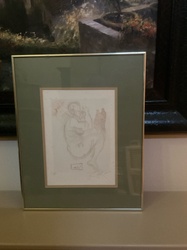
Submitted item photo
Submitted photo · June 18, 2026

User's notes

No additional notes provided.

AI analysis below

AI appraisal

AI analysis & estimate

AI-Generated · Verify before acting

Everything below is generated by AI for informational purposes only. AI can make mistakes — the AI may misidentify items or misattribute them (artist, maker, brand, designer, origin, era). This is not an official valuation and should not be used for insurance, sale, tax, estate, legal, or lending purposes — or any decision requiring a certified appraisal. It is not an authoritative claim about any person, brand, or rights holder — do not share or rely on it as a factual statement about a third party. Always consult qualified professionals before making financial decisions.

Read the full disclaimer

AI Identification

·Not independently authenticated·Verify before acting

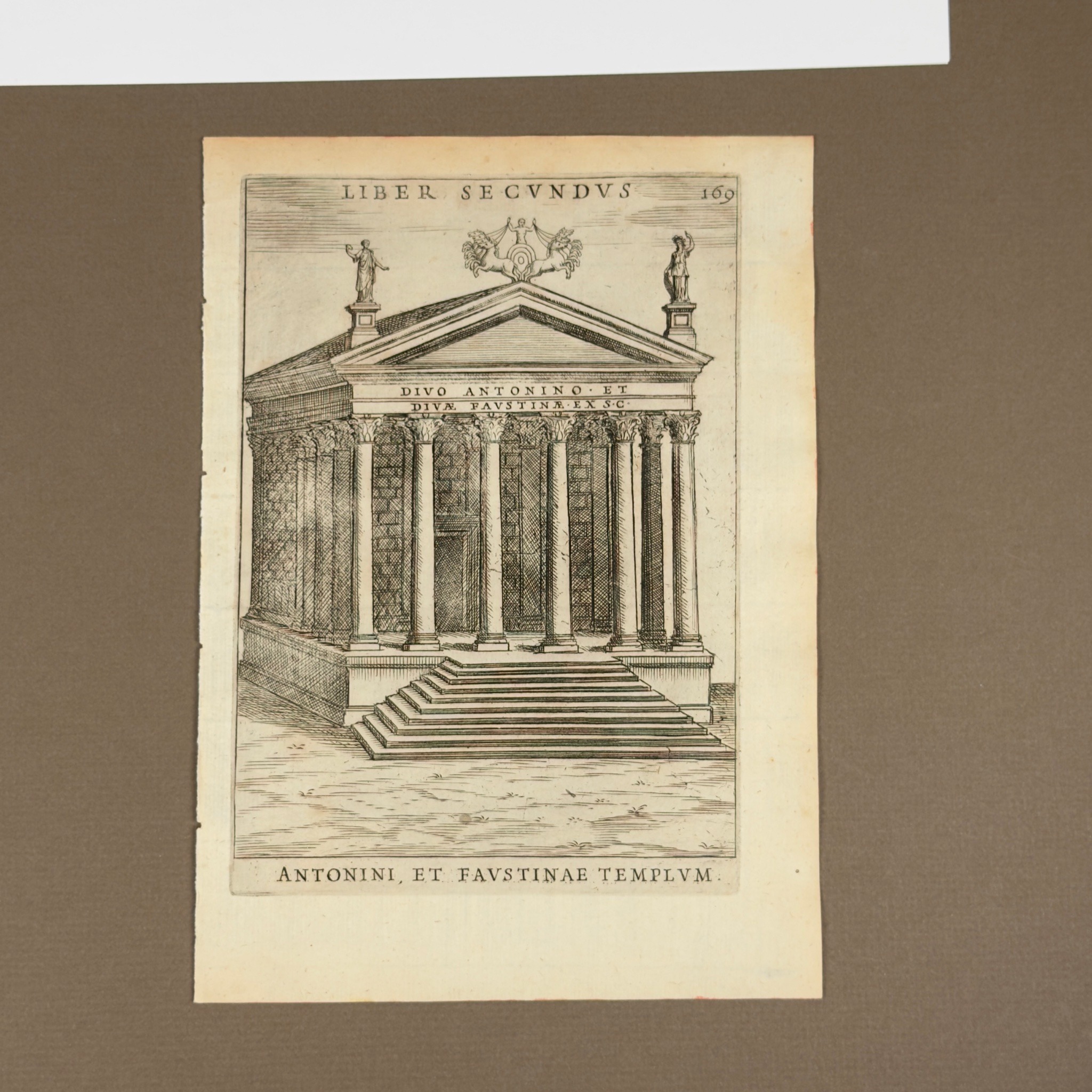
Engraved architectural print of the Temple of Antoninus and Faustina

Prints and Works on Paper

AI Estimated Value

·Not an official valuation·Verify before acting

$400 - $700

As of June 18, 2026

AI Item Analysis

·AI can make mistakes·Verify before acting
This item is an unframed engraving on paper depicting the Temple of Antoninus and Faustina in Rome. The print features a central architectural elevation of the hexastyle Corinthian temple, complete with a stepped podium, figured pediment sculptures including a central quadriga, and acroteria. The header text reads 'LIBER SECVNDVS' with the page number '169' in the upper right. The architrave of the temple itself carries an inscription reading 'DIVO ANTONINO ET DIVA FAVSTINA EX S C'. Below the image, centered in the lower margin, is the caption 'ANTONINI, ET FAVSTINAE TEMPLVM'. The work is stylistically consistent with late 16th or 17th-century architectural treatises, appearing to be a plate from a published volume such as Andrea Palladio's 'I Quattro Libri dell'Architettura' or a similar Renaissance-era architectural study. The paper shows signs of age, including light foxing, mild yellowing consistent with oxidation, and uneven edges where it may have been removed from a binding. The linework is sharp, suggesting it is a copperplate engraving. Without physical inspection of watermarks or paper texture, the exact printing date remains unverified, though the layout and typography are consistent with early modern Italian printing standards. The lack of a visible artist's signature or printer's mark beyond the text necessitates this stylistic attribution.
AI Appraisal Report

·AI can make mistakes·Verify before acting
Based on the image provided, I have examined this copperplate engraving of the Temple of Antoninus and Faustina. The typography and layout, specifically the 'LIBER SECVNDVS' header and page 169 notation, suggest a working hypothesis that this is a plate from an early edition of Andrea Palladio’s 'I Quattro Libri dell’Architettura' or a contemporary 16th to 17th-century architectural treatise. While the linework appears sharp and consistent with period intaglio printing, I cannot verify the paper’s weight, watermark, or exact age from a photograph alone. The visible foxing and oxidation are typical for paper of this age, but a physical inspection would be required to rule out later 18th or 19th-century restrikes or photographic reproductions. The valuation assumes the piece is an early modern impression; if confirmed as such, it holds significant interest for collectors of classical architecture and Renaissance prints. General market demand for individual Palladian plates is relatively stable, often selling in the $400 to $700 range depending on the specific edition's rarity and the degree of margin trimming. However, the value is highly contingent on the printing date. If this were determined to be a later reproduction or a modern facsimile, the value would likely drop below $50. To confirm its status, an in-person examination by a specialist is necessary to study the plate mark depth, ink absorption, and paper texture. Documentation of provenance or a visible watermark consistent with known editions would further support the higher estimate range. Without such verification, this estimate remains a hypothesis based on stylistic and typographical evidence alone.

Related Tags

Explore similar items and categories

Get your items appraised

Instant estimates of your treasures with AI-powered appraisals

Browse More Appraisals