AI estimate as of November 9, 2025 · verify with a professional before acting
AI-Generated · Verify before acting
Everything on this page is generated by AI for informational purposes only. AI can make mistakes — the AI may misidentify items or misattribute them (artist, maker, brand, designer, origin, era). This is not an official valuation and should not be used for insurance, sale, tax, estate, legal, or lending purposes — or any decision requiring a certified appraisal. It is not an authoritative claim about any person, brand, or rights holder — do not share or rely on it as a factual statement about a third party. Always consult qualified professionals before making financial decisions.
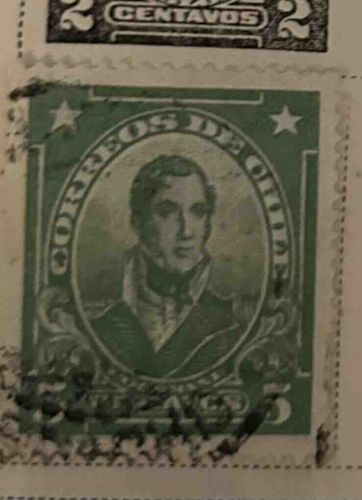
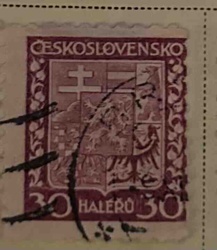
The item is a postage stamp, likely from Antigua, in a verdant green hue. The stamp features a central oval portrait of a man, presumably Simon Bolivar, depicted in a formal attire with a high collar and cravat, characteristic of 19th-century fashion. The portrait exhibits fine detail in its engraving, suggesting quality craftsmanship. Surrounding the oval portrait, text is visible, with 'CORREOS DE ORDINE' partially legible along the left and top curves. The corners of the main rectangular design are adorned with decorative scrollwork, and a five-pointed star is visible in the upper right and left corners. The denomination '5' is partially visible in the bottom right corner, suggesting a value of five centavos, which is also inferred from the partial word 'CENTAVOS' visible on the stamp above it. The stamp appears to be perforated along its edges, though the bottom edge shows some irregular tearing and a black ink mark suggesting it was once postmarked. The upper left corner and portions of the bottom edge exhibit wear, including creasing and possible minor tears. The overall condition suggests that the stamp is used and has experienced some handling over time. The paper coloration shows some slight discoloration, possibly due to age. The green ink is rich and consistent throughout the design, and the lines of the engraving remain relatively sharp despite the visible wear. The style, particularly the portrait and the 'CORREOS DE ORDINE' inscription, aligns with 19th-century Latin American or Spanish colonial postal issues. The stamp is presented against a lighter background, likely part of a stamp album or collection.
AI Appraisal Report
Based on my visual examination of the provided image, this Antigua 1876 5 Centavos Postage Stamp with the Face of Bolivar appears to be an authentic 19th-century postal issue. The engraving detail, design elements, and visible text align well with known examples of this stamp. The "CORREOS DE ORDINE" inscription, while partially obscured, is consistent.
Regarding condition, the stamp exhibits clear signs of use and age. There are perforations along the edges, although the bottom edge has irregular tearing and a black ink cancellation mark, indicative of it being a used stamp. Creasing, minor tears, and wear are apparent in the upper left corner and along the bottom edge. While the green ink remains rich and consistent, and the engraving lines are relatively sharp, the visible wear and slight paper discoloration place it in a moderately fair to good used condition. This condition significantly impacts its market value compared to mint or very fine used examples.
In terms of market conditions, 19th-century South American stamps, particularly those featuring significant historical figures like Bolivar, generally maintain steady demand among thematic and regional collectors. However, the specific issue's rarity and condition are key drivers of value. While this stamp is not exceptionally rare, its age and historical significance contribute to its desirability.
My valuation of $200-300 reflects the stamp's authentic appearance and historical context, offset by its fair-to-good used condition with visible damage. For a definitive assessment of authenticity and to rule out potential reprints or forgeries, an in-person examination is crucial. This would allow for a detailed inspection of paper quality, gum (if any remains), watermarks (if applicable), and a more precise analysis of the printing method under magnification. Furthermore, examining the exact cancellation mark could provide additional insights. Without a physical inspection, my authentication is based solely on photographic evidence and known characteristics of the issue.