AI Appraisal Estimate

AI-generated estimates · not official valuations

From the user

What was submitted

Photo and notes provided by the user — not generated by AI

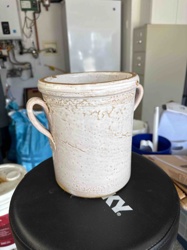
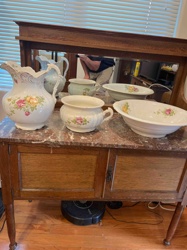
Submitted item photo
Submitted photo · June 15, 2026

User's notes

No additional notes provided.

AI analysis below

AI appraisal

AI analysis & estimate

AI-Generated · Verify before acting

Everything below is generated by AI for informational purposes only. AI can make mistakes — the AI may misidentify items or misattribute them (artist, maker, brand, designer, origin, era). This is not an official valuation and should not be used for insurance, sale, tax, estate, legal, or lending purposes — or any decision requiring a certified appraisal. It is not an authoritative claim about any person, brand, or rights holder — do not share or rely on it as a factual statement about a third party. Always consult qualified professionals before making financial decisions.

Read the full disclaimer

AI Identification

·Not independently authenticated·Verify before acting

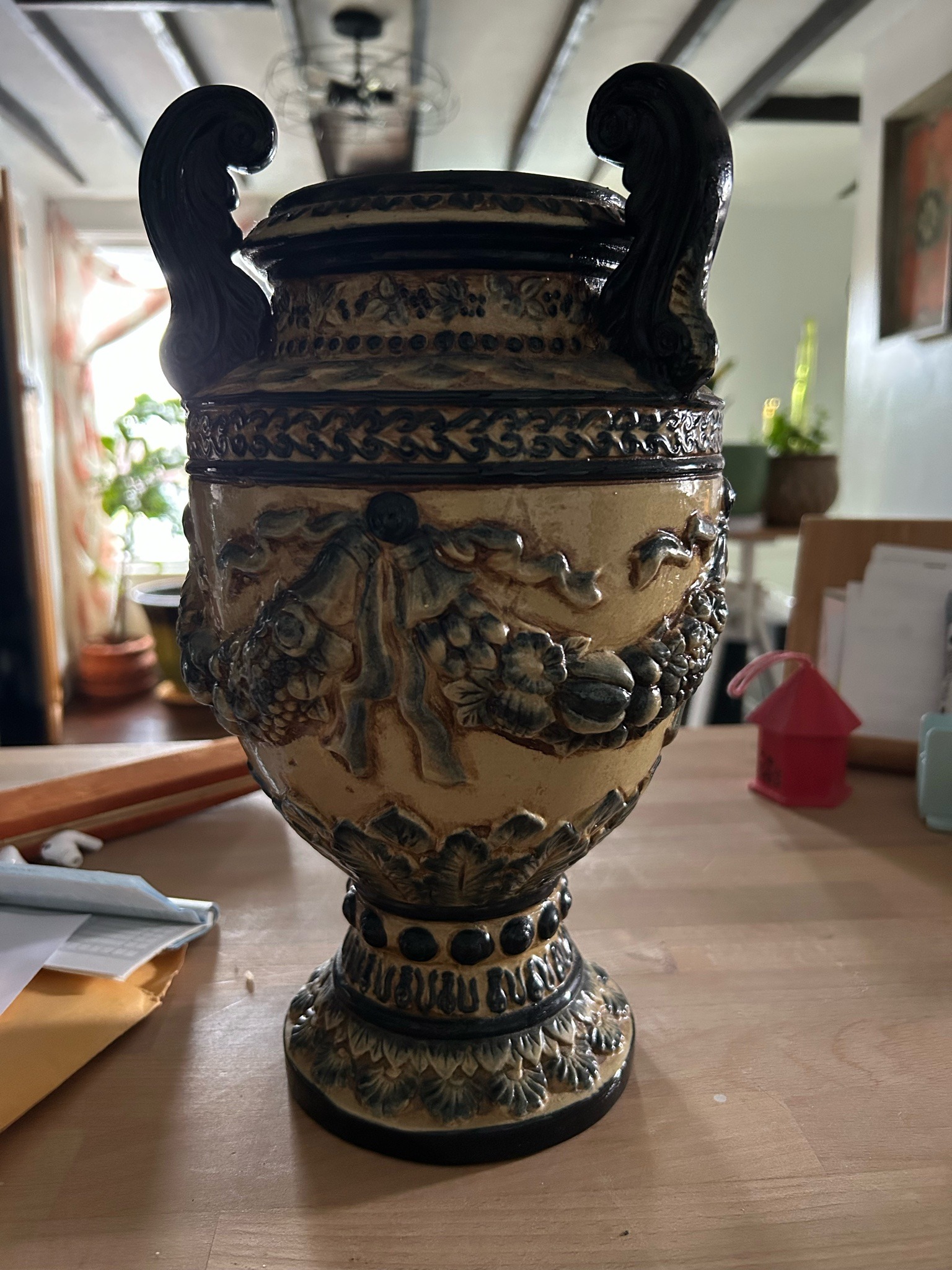
Neoclassical Style Majolica Footed Urn with Swag Decoration

Antique Ceramics and Pottery

AI Estimated Value

·Not an official valuation·Verify before acting

$450 - $650

As of June 15, 2026

AI Item Analysis

·AI can make mistakes·Verify before acting
This item is a decorative footed urn crafted in a Neoclassical style, likely made of ceramic with a glazed majolica-style finish. The urn features a base cream or buff-colored glaze accented with dark navy or charcoal-toned relief details. Key physical characteristics include two prominent scroll or volute handles at the rim, a tapered body sitting atop a pedestal foot, and extensive relief molding. The primary decorative motif consists of heavy fruit and floral swags tied with ribbons around the midsection. Additional ornamentation includes a band of egg-and-dart or geometric patterning on the shoulder, acanthus leaf molding at the base of the vessel, and a beaded border around the pedestal. The construction appears sturdy, with a deep contrast between the recessed dark glaze and the highlighted cream surface. Regarding condition, the piece shows a distinct crazing pattern throughout the light-colored glaze, which is typical for aged ceramic or intentional antiquing. There are minor surface scuffs and dust accumulation in the crevices of the relief work, but no major cracks or structural repairs are immediately visible. The style suggests it could be a late 19th-century or 20th-century revival piece, mimicking European pottery traditions such as those from Italy or England. The craftsmanship is characterized by the dimensional nature of the appliqués, giving it a heavy, substantial aesthetic suitable for formal decor.
AI Appraisal Report

·AI can make mistakes·Verify before acting
I have examined the Neoclassical Majolica footed urn via high-resolution imagery. The piece exhibits characteristic revivalist traits found in late 19th-century European earthenware, specifically mimicking Minton or Wedgwood motifs. The heavy garlands and volute handles are well-executed. Condition-wise, the visible crazing appears consistent with authentic glaze tension over time rather than modern 'crackle' effects, though the heavy dust in the reliefs suggests long-term display without specialized cleaning. No significant chips are visible, which is rare for such high-relief molding. The current market for large-scale Neoclassical ceramics remains stable among interior decorators, though the dark-on-light glaze palette is more specialized than traditional polychrome Majolica. Value is supported by the scale and the 'grand tour' aesthetic, though lack of a visible maker's mark prevents a 'premium' valuation associated with specific potteries. Note that this appraisal is based solely on visual inspection of images. I cannot determine the presence of internal structural hairline cracks or professional overpainting without a physical 'ring test' or UV light examination. To fully authenticate this as a 19th-century specimen rather than a high-quality mid-century reproduction, I would need to inspect the foot rim for shelf wear and verify any impressed marks or numerical stamps on the underside.

Get your items appraised

Instant estimates of your treasures with AI-powered appraisals

Browse More Appraisals