AI Appraisal Estimate

AI-generated estimates · not official valuations

From the user

What was submitted

Photo and notes provided by the user — not generated by AI

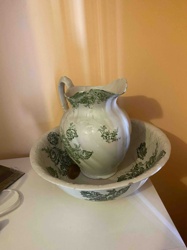
Submitted item photo
Submitted photo · May 30, 2026

User's notes

No additional notes provided.

AI analysis below

AI appraisal

AI analysis & estimate

AI-Generated · Verify before acting

Everything below is generated by AI for informational purposes only. AI can make mistakes — the AI may misidentify items or misattribute them (artist, maker, brand, designer, origin, era). This is not an official valuation and should not be used for insurance, sale, tax, estate, legal, or lending purposes — or any decision requiring a certified appraisal. It is not an authoritative claim about any person, brand, or rights holder — do not share or rely on it as a factual statement about a third party. Always consult qualified professionals before making financial decisions.

Read the full disclaimer

AI Identification

·Not independently authenticated·Verify before acting

Victorian Flow Blue Covered Serving Dish

Antique Ceramics and Pottery

AI Estimated Value

·Not an official valuation·Verify before acting

$225 - $350

As of May 30, 2026

AI Item Analysis

·AI can make mistakes·Verify before acting
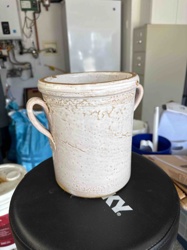
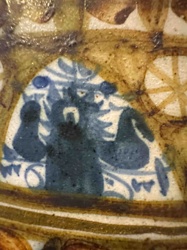
This is a substantial Victorian-era covered vegetable server or tureen, exhibiting the classic aesthetic of XIX-century English Flow Blue pottery. The piece is constructed from ironstone or earthenware, finished with a creamy white glaze that serves as a canvas for the deep cobalt blue transferware patterns. The decoration is characterized by thick, 'flowing' blue borders with intricate geometric and scrollwork motifs, likely in a Chinoiserie or traditional English floral style. A notable feature is the ornate sculptural finial on the lid, shaped like a bud or fruit with detailed leaves, accentuated by traces of gilt (gold) highlights. The handles are likewise molded in a rococo-scroll fashion with similar blue and gold accents. Based on the blurring of the transfer print, this piece likely dates from the mid-to-late 1800s. Condition-wise, the item shows significant age-related wear, particularly visible along the rim where the cobalt and gilt have rubbed thin. There is a prominent dullness to the glaze, suggesting potential 'oil spots' or surface crazing common in antique ironstone. No structural cracks are immediately visible, though the underside of the lid and the base rim likely possess shelf wear commensurate with age. The craftsmanship is typical of high-quality mass production from Staffordshire potteries of that period.
AI Appraisal Report

·AI can make mistakes·Verify before acting
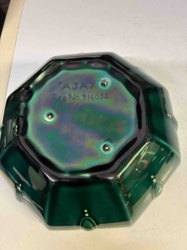
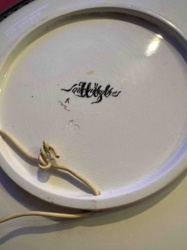
I have conducted a visual inspection of this Victorian Flow Blue covered vegetable server. The piece exhibits the distinct 'bleeding' cobalt cobalt characteristics of mid-to-late 19th-century Staffordshire ironstone. The ornate finial and rococo-style handles suggest a production date between 1850 and 1880, a period when Flow Blue was highly popularized for middle-class Victorian dining. My assessment of the condition reveals significant surface wear; the loss of gilt on the handles and the visible dulling of the glaze (likely 'oil spots' or micro-crazing) suggest the piece saw frequent utility. While no major chips or 'spider' cracks are evident, the rubbing of the cobalt at the rim indicates a lower grade of preservation, which tempered my valuation. The market for Flow Blue remains steady but has corrected from its peak in the late 1990s. Comparables for covered tureens in common floral patterns currently realize between $200 and $400 at specialty antique auctions, whereas rarer patterns like 'Luneville' or 'Oregon' fetch premiums. Limitations of this appraisal include the inability to inspect for 'thicket' repairs, professional restorations hidden under UV light, or tactile interior staining. For a definitive authentication, a physical examination of the maker's mark (backstamp) is required to identify the specific pottery house (e.g., Johnson Brothers, W. Adams & Sons). A professional 'tap test' for resonance would also be necessary to rule out hairline fractures not visible in images.

Get your items appraised

Instant estimates of your treasures with AI-powered appraisals

Browse More Appraisals