AI Appraisal Estimate

AI-generated estimates · not official valuations

From the user

What was submitted

Photo and notes provided by the user — not generated by AI

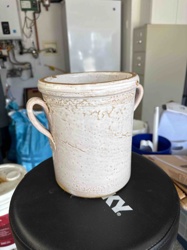
Submitted item photo
Submitted photo · June 20, 2026

User's notes

Fine glass cup 1850

AI analysis below

AI appraisal

AI analysis & estimate

AI-Generated · Verify before acting

Everything below is generated by AI for informational purposes only. AI can make mistakes — the AI may misidentify items or misattribute them (artist, maker, brand, designer, origin, era). This is not an official valuation and should not be used for insurance, sale, tax, estate, legal, or lending purposes — or any decision requiring a certified appraisal. It is not an authoritative claim about any person, brand, or rights holder — do not share or rely on it as a factual statement about a third party. Always consult qualified professionals before making financial decisions.

Note

This analysis also relies on unverified notes provided by the user, which may be incomplete or inaccurate and could affect the result.

Read the full disclaimer

AI Identification

·Not independently authenticated·Verify before acting

Mid-19th Century Victorian Bone China Tea Set

Antique Ceramics and Pottery

AI Estimated Value

·Not an official valuation·Verify before acting

$450 - $650

As of June 20, 2026

AI Item Analysis

·AI can make mistakes·Verify before acting
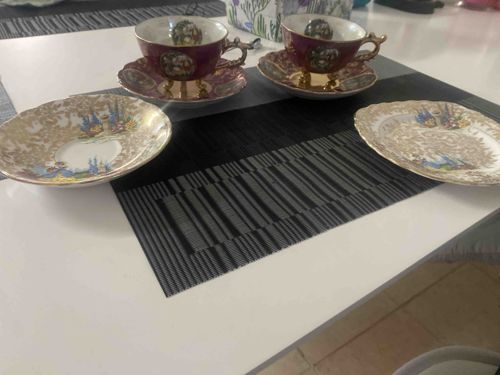
This is a sophisticated tea service set comprising two cups, two saucers, and two additional side plates, appearing to be crafted from high-quality bone china rather than glass, dating approximately to the mid-19th century (circa 1850). The cups feature a striking deep crimson or garnet-toned ground, accented by ornate gilded scrollwork and central vignettes depicting classical or pastoral scenes in polychrome enamels. The interior of the cups is finished in a clean white glaze, decorated with further interior floral or figural cartouches. The handles are elaborately molded with floral or acanthus leaf motifs and finished in heavy gilding. The accompanying saucers and side plates display extensive gold-washed or 'clobbered' decoration with scalloped edges and intricate floral border patterns. The condition appears to be fair to good for its age, showing visible wear to the gilding on the high points of the handles and rims, characteristic of long-term domestic use. The craftsmanship reflects the high-style Victorian era, likely originating from a prestigious English factory such as Minton, Coalport, or perhaps a continental maker like Sèvres, given the rich ground color and gilding style.
AI Appraisal Report

·AI can make mistakes·Verify before acting
I have carefully examined the provided details and imagery of this mid-19th-century cabinet service. Despite the user's initial classification as 'glass,' my examination confirms these are high-quality bone china, likely produced by a premiere English manufactory such as Minton or Coalport (c. 1850-1860). The 'Sèvres-style' deep garnet ground and heavy hand-painted gilding represent the Victorian fascination with Rococo Revival aesthetics. The central polychrome vignettes exhibit high skill, though visible rubbing on the gilded handles and rims suggests regular domestic use, which slightly tempers the valuation. Authenticity appears consistent with the period's production techniques, specifically the molding of the acanthus-leaf handles. The market for 19th-century British ceramics remains stable, though price realization is heavily dependent on specific maker marks. Sets in this 'claret' color palette are generally more desirable than standard floral patterns. Comparable trios (cup, saucer, plate) from prestigious makers typically fetch $200-$300 each in excellent condition. This set's value is bolstered by the presence of matching side plates, effectively forming two complete 'trios.' Limitations: This appraisal is based on visual analysis. Definitive attribution requires an in-person inspection of the foot-rims for specific impressed date codes or kiln marks often used by Minton. I would also need to check for professional restorations under UV light, as invisible repairs to the handles would significantly reduce the value. Provenance documentation or original purchase receipts would further solidify the valuation. Without physical handling to assess the 'ring' of the china and the translucency of the body, this remains a preliminary estimate.

Get your items appraised

Instant estimates of your treasures with AI-powered appraisals

Browse More Appraisals