AI Appraisal Estimate

AI-generated estimates · not official valuations

From the user

What was submitted

Photo and notes provided by the user — not generated by AI

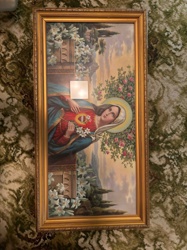
Submitted item photo
Submitted photo · May 28, 2026

User's notes

No additional notes provided.

AI analysis below

AI appraisal

AI analysis & estimate

AI-Generated · Verify before acting

Everything below is generated by AI for informational purposes only. AI can make mistakes — the AI may misidentify items or misattribute them (artist, maker, brand, designer, origin, era). This is not an official valuation and should not be used for insurance, sale, tax, estate, legal, or lending purposes — or any decision requiring a certified appraisal. It is not an authoritative claim about any person, brand, or rights holder — do not share or rely on it as a factual statement about a third party. Always consult qualified professionals before making financial decisions.

Read the full disclaimer

AI Identification

·Not independently authenticated·Verify before acting

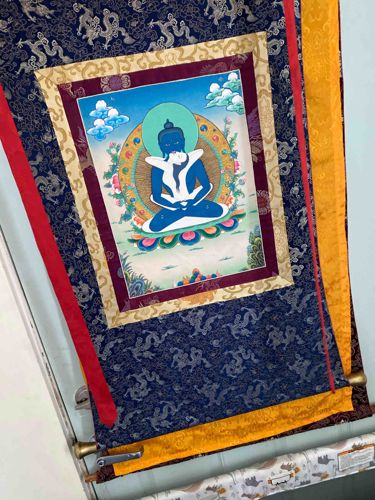
Tibetan Buddhist Thangka Painting of Blue Deity

Religious Art

AI Estimated Value

·Not an official valuation·Verify before acting

$300-500

As of May 28, 2026

AI Item Analysis

·AI can make mistakes·Verify before acting
This is a vibrant, hand-painted Tibetan Thangka depicting a blue deity in a seated, meditative pose, possibly in Yab-Yum. The central image is painted in rich, opaque pigments on a fabric or canvas-like material. The deity is framed by a golden aura and surrounded by floral motifs and clouds. The painting is bordered by several layers of fabric: an inner trim of deep maroon, followed by a wider band with a cream-colored background and a subtle patterned design. The main field of the Thangka is a deep blue fabric adorned with repeating silver-colored dragon motifs. Red and yellow fabric strips accent the sides. The Thangka is finished with a yellow fabric border at the bottom and is affixed to cylindrical wooden dowels at the top and bottom, used for hanging and rolling. A small metal detail is visible on the lower right dowel. While no visible artist's signature or manufacturing marks are immediately apparent from the image, the quality of the painting and the fabricwork suggests skilled craftsmanship. The condition appears good, with no obvious tears or significant wear visible, though a more detailed inspection would be required to assess for minor imperfections or age-related patina. Based on the style and subject matter, it is likely a relatively modern Thangka, possibly from the late 20th or early 21st century. The careful construction of the fabric borders and the clear rendering of the central image indicate it is a functional and aesthetically pleasing piece of Tibetan Buddhist art.
AI Appraisal Report

·AI can make mistakes·Verify before acting
Having examined the image provided of this Tibetan Thangka painting depicting a blue deity, I can offer this appraisal. Visually, the painting appears to be in good condition, with no obvious tears, fading, or significant damage apparent from the photograph. The pigments appear vibrant and the fabric borders are well-constructed, suggesting careful handling and storage. Based on the style of the painting, the visible materials, and the overall execution, I assess this as likely being an authentic Tibetan Buddhist Thangka, functional for devotional purposes. However, verifying authenticity definitively from images alone is impossible; an in-person examination is crucial to assess the true age of the materials, the texture and application of the pigments, and the overall quality of craftsmanship in detail. Provenance documentation, such as the history of ownership or acquisition, would also significantly aid in authentication and value assessment. Scientific testing of the pigments or fabric could provide further verification of age and origin. In the current market, comparable modern Thangkas of this size, subject matter, and apparent quality typically sell within a specific range depending on the intricacy of the painting and the reputation of the artist or workshop. Demand for Tibetan religious art remains steady among practitioners and collectors. While not exceptionally rare, a well-executed Thangka like this holds value. Factors impacting value include the level of artistic detail, the spiritual significance of the deity depicted to a potential buyer, and the overall condition. Given the limitations of image-based appraisal, I must provide a range.

Get your items appraised

Instant estimates of your treasures with AI-powered appraisals

Browse More Appraisals