AI estimate as of October 6, 2025 · verify with a professional before acting
AI-Generated · Verify before acting
Everything on this page is generated by AI for informational purposes only. AI can make mistakes — the AI may misidentify items or misattribute them (artist, maker, brand, designer, origin, era). This is not an official valuation and should not be used for insurance, sale, tax, estate, legal, or lending purposes — or any decision requiring a certified appraisal. It is not an authoritative claim about any person, brand, or rights holder — do not share or rely on it as a factual statement about a third party. Always consult qualified professionals before making financial decisions.
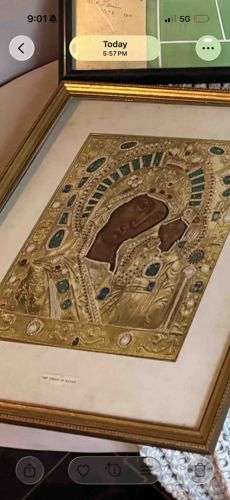
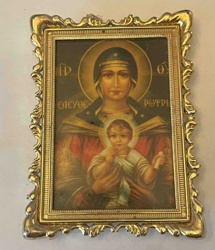
This item is a framed devotional icon, likely of Russian or Eastern Orthodox origin, featuring a traditional depiction of a religious figure, most probably the Virgin Mary, covered by an elaborate metal oklad (also known as a riza or basma). The oklad is crafted from a gold-toned metal, possibly brass or gilt silver, and covers almost the entirety of the painted image, leaving only the faces and hands of the figures exposed. The visible parts of the figures, specifically the faces, appear dark, consistent with traditional icon painting techniques that often utilize dark pigments or have darkened over time due to age or varnish. The oklad itself is highly decorative, featuring intricate repoussé or stamped patterns, including scrollwork, floral motifs, and geometric designs. Along the borders and within the design, there are numerous cabochon-style 'jewels' or glass inserts in various shades of green and possibly blue, as well as several white or pearlescent ovals, simulating pearls or polished stones. The craftsmanship of the oklad appears detailed, suggesting a quality religious artifact. The icon is presented within a wooden frame with a gold-leaf or gilt finish, and it is matted with a light-colored, possibly off-white, mat board. The mat board shows some discoloration or spotting consistent with age. A small label or inscription, 'THE HEAVEN OF EARTH', is visible at the bottom center of the mat, which may refer to the specific iconography or title of the Marian image. The overall condition appears good with expected patination and minor wear appropriate for an item of religious veneration. The frame itself shows some slight wear to the gilt finish, and the mat might have foxing. The general style points to an 18th, 19th, or early 20th-century religious artifact.
AI Appraisal Report
Upon visual examination of this framed Orthodox icon, it presents as a devotional piece featuring a traditional Marian image under a decorative metal oklad. The style is consistent with Russian or Eastern Orthodox artifacts from the late 19th or early 20th century. The oklad, likely of brass or a similar gilt base metal, is stamped with intricate patterns and adorned with glass cabochons and faux pearls. The visible painting of the face and hands shows significant darkening, typical for icons of this period due to age, varnish, and incense exposure. The frame and matting appear appropriate for the era, though the mat shows age-related discoloration. The inscription 'THE HEAVEN OF EARTH' is a known epithet for the Theotokos (Virgin Mary), adding to its character.
The market for religious icons of this type is stable. While a piece with a silver or silver-gilt oklad would command a significantly higher price, mass-produced, stamped brass oklads like this one are more common and accessible. Comparable examples from this period, without silver marks or documented provenance, typically sell in the low to mid-hundreds at auction.
Critically, this appraisal is based solely on images. I cannot definitively authenticate the age or materials without in-person examination. A full appraisal would require me to inspect for maker's marks or hallmarks on the oklad, particularly to determine if it is silver (which would substantially increase value). Verifying the painting technique and age of the wooden panel underneath the oklad is also impossible visually. Without provenance or further material analysis, this piece is appraised as a decorative and devotional artifact of its type, rather than a fine art or museum-quality icon.