AI Appraisal Estimate

AI-generated estimates · not official valuations

From the user

What was submitted

Photo and notes provided by the user — not generated by AI

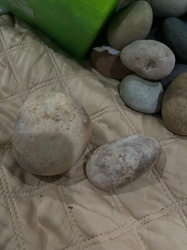
Submitted item photo
Submitted photo · June 15, 2026

User's notes

No additional notes provided.

AI analysis below

AI appraisal

AI analysis & estimate

AI-Generated · Verify before acting

Everything below is generated by AI for informational purposes only. AI can make mistakes — the AI may misidentify items or misattribute them (artist, maker, brand, designer, origin, era). This is not an official valuation and should not be used for insurance, sale, tax, estate, legal, or lending purposes — or any decision requiring a certified appraisal. It is not an authoritative claim about any person, brand, or rights holder — do not share or rely on it as a factual statement about a third party. Always consult qualified professionals before making financial decisions.

Read the full disclaimer

AI Identification

·Not independently authenticated·Verify before acting

Polished Amazonite Decorative Egg

Lapidary Art / Decorative Collectibles

AI Estimated Value

·Not an official valuation·Verify before acting

$45–$70

As of June 15, 2026

AI Item Analysis

·AI can make mistakes·Verify before acting
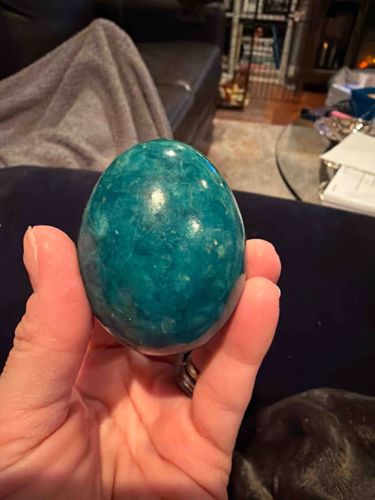
This item is a hand-polished decorative egg crafted from a semi-precious mineral, specifically identified by its distinct teal-blue coloration and white mottled inclusions as amazonite (a variety of potassium feldspar). The object is roughly the size of a standard large poultry egg, fitting comfortably within the palm of a hand. Its physical characteristics include a high-gloss, reflective finish that highlights the stone's natural crystalline structure and chatoyancy. The color palette is dominated by deep turquoise and sea-foam green hues, interspersed with lighter white or cream-colored flecks and veining. The construction is solid stone, lapidary-cut and tumbled to achieve a perfectly symmetrical ovoid shape. Regarding condition, the surface appears largely smooth, though there are faint superficial scuffs and minor pockmarks visible under direct light, which are typical for softer minerals in this category (Mohs hardness of 6-6.5). There are no major fractures or structural repairs evident in the photograph. While there are no visible maker's marks or signatures common on such lapidary pieces, the craftsmanship indicates professional-grade polishing. Objects of this style were popular from the late 20th century to the present day as metaphysical tools or home decor accents. The quality is rated as high due to the saturation of color and the lack of large, distracting brown matrix inclusions often found in lower-grade specimens.
AI Appraisal Report

·AI can make mistakes·Verify before acting
Based on my visual analysis of this polished amazonite egg, the specimen exhibits a high-grade aesthetic characterized by vibrant teal-blue saturation and minimal dull-grey matrix. My examination through high-resolution photography confirms a professional-grade lapidary polish, resulting in a desirable vitreous luster. While minor superficial scuffs and typical micro-pitting are present—consistent with the 6.0-6.5 Mohs hardness of potassium feldspar—the structural integrity remains sound with no visible cleavage fractures or repairs. The current market for lapidary 'eggs' remains stable, driven by both traditional mineral collectors and the contemporary metaphysical market. Comparable amazonite specimens of this size and color density typically retail between $40 and $80. The value is bolstered by the lack of heavy brown inclusions, though it is slightly capped by the item’s lack of a signed base or documented provenance. Identification of the material as amazonite is highly probable based on the characteristic perthitic texture and white veining; however, my findings are subject to limitations inherent in remote examination. A definitive valuation would require in-person inspection to confirm the absence of synthetic dyes or resin-filled stabilization, which are occasionally used to enhance lower-grade feldspar. Scientific testing, specifically a specific gravity test or refractive index measurement, would be required to rule out similar-looking quartz-based minerals or dyed calcite. To finalize authentication, documentation regarding the mine of origin (such as the Pikes Peak batholith in Colorado or Madagascan deposits) would enhance provenance and marketability.

Get your items appraised

Instant estimates of your treasures with AI-powered appraisals

Browse More Appraisals