AI Appraisal Estimate

AI-generated estimates · not official valuations

From the user

What was submitted

Photo and notes provided by the user — not generated by AI

Submitted item photo
Submitted photo · June 18, 2026

User's notes

No additional notes provided.

AI analysis below

AI appraisal

AI analysis & estimate

AI-Generated · Verify before acting

Everything below is generated by AI for informational purposes only. AI can make mistakes — the AI may misidentify items or misattribute them (artist, maker, brand, designer, origin, era). This is not an official valuation and should not be used for insurance, sale, tax, estate, legal, or lending purposes — or any decision requiring a certified appraisal. It is not an authoritative claim about any person, brand, or rights holder — do not share or rely on it as a factual statement about a third party. Always consult qualified professionals before making financial decisions.

Read the full disclaimer

AI Identification

·Not independently authenticated·Verify before acting

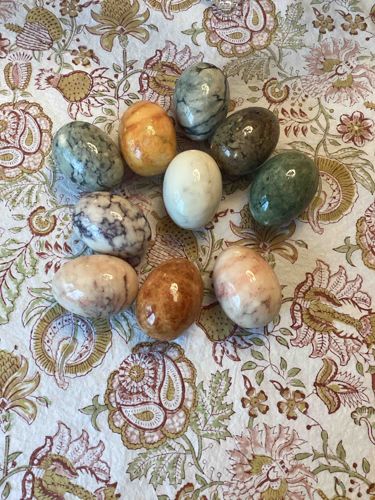
Collection of Polished Decorative Alabaster and Marble Eggs

Decorative Arts / Lapidary Collectibles

AI Estimated Value

·Not an official valuation·Verify before acting

$100 - $150

As of June 18, 2026

AI Item Analysis

·AI can make mistakes·Verify before acting
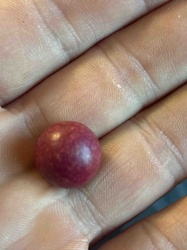
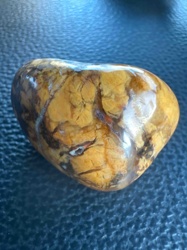
This is a set of ten decorative, egg-shaped objects crafted from various semi-precious stones and minerals, likely including alabaster, marble, and onyx. Each egg measures approximately 2 to 3 inches in height, consistent with the size of a standard hen's egg. The collection displays a wide spectrum of natural colors including creamy white, honey orange, forest green, mottled grey, and pale pink. The stones feature intricate natural veining, inclusions, and brecciated patterns that are unique to each piece. The eggs exhibit a high-gloss, polished finish achieved through mechanical tumbling and hand-buffing. The craftsmanship is high, with uniform ovoid shapes and no visible flat spots or irregular asymmetry. Upon close inspection, the surfaces appear smooth with minor superficial hairline scratches and tiny pitted areas typical of natural stone porousness. There are no significant cracks, chips, or signs of repair. Based on the style and typical production of such decorative curiosities, these likely date from the mid-to-late 20th century. The collection lacks specific maker's marks or signatures, suggesting they were produced as high-quality artisanal decorative goods. They are arranged on a floral patterned textile, highlighting their smooth texture and reflective qualities.
AI Appraisal Report

·AI can make mistakes·Verify before acting
I have carefully examined the provided images of this collection of ten polished decorative stone eggs. The set consists of varied specimens including banded onyx, figured marble, and possible alabaster, each displaying the characteristic ovoid dimensions of standard lapidary curiosities ($2.5–3.0 inches). The craftsmanship is consistent with mid-to-late 20th-century production, likely originating from established lapidary centers in Italy or Pakistan. The polish remains high-gloss, and the symmetry suggests quality mechanical shaping. Condition appears Excellent to Near-Mint. I observe minor surface pitting and micro-scratches consistent with the natural porosity of the minerals, but no significant structural fractures or impact chips were noted. The lack of a maker's mark is typical for these decorative items, which were largely sold through high-end gift shops and interior design boutiques as accent pieces. While these are common decorative objects, the presence of a complete set of ten in varied colors enhances the aesthetic appeal for modern collectors of mineral specimens and 'maximalist' home decor. Market demand for lapidary eggs remains stable but modest. Comparable sets of 10–12 vintage stone eggs typically realize between $10 and $15 per specimen at auction or in vintage retail environments. Limitations: This appraisal is based solely on visual inspection of digital images. I cannot definitively verify the specific mineral composition or the presence of hidden internal fissures. A physical inspection would be required to confirm the density of the stones (distinguishing marble from heavier minerals) and to detect any professional adhesive repairs that may be invisible under standard lighting. Provenance documentation or original purchase receipts would be necessary to establish a more precise historical lineage.

Get your items appraised

Instant estimates of your treasures with AI-powered appraisals

Browse More Appraisals