AI Appraisal Estimate

AI-generated estimates · not official valuations

From the user

What was submitted

Photo and notes provided by the user — not generated by AI

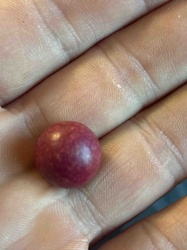
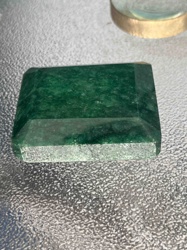
Submitted item photo
Submitted photo · May 22, 2026

User's notes

No additional notes provided.

AI analysis below

AI appraisal

AI analysis & estimate

AI-Generated · Verify before acting

Everything below is generated by AI for informational purposes only. AI can make mistakes — the AI may misidentify items or misattribute them (artist, maker, brand, designer, origin, era). This is not an official valuation and should not be used for insurance, sale, tax, estate, legal, or lending purposes — or any decision requiring a certified appraisal. It is not an authoritative claim about any person, brand, or rights holder — do not share or rely on it as a factual statement about a third party. Always consult qualified professionals before making financial decisions.

Read the full disclaimer

AI Identification

·Not independently authenticated·Verify before acting

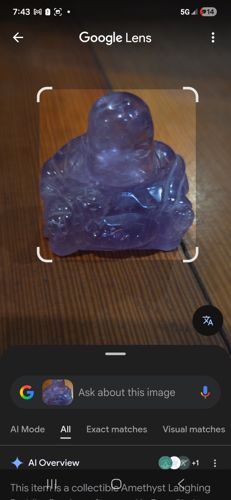
Carved Amethyst Laughing Buddha (Budai) Figurine

Collectibles / Decorative Lapidary Arts

AI Estimated Value

·Not an official valuation·Verify before acting

$45.00 - $75.00

As of May 22, 2026

AI Item Analysis

·AI can make mistakes·Verify before acting
This item is a small, hand-carved statuette of the Laughing Buddha (Budai), crafted from natural amethyst gemstone. The figurine exhibits a semi-translucent purple hue with characteristic cloudy white inclusions and internal fracturing consistent with natural quartz varieties. The Buddha is depicted in a traditional seated pose, featuring a large protruding belly, a bald head, and a jovial facial expression. The carving style is rounded and stylized rather than highly anatomical, suggesting a mass-produced decorative piece from the late 20th or early 21st century. Physically, the piece appears to be roughly 2 to 3 inches in height. The surface shows a high-gloss polish, which helps highlight the color zoning of the amethyst. In terms of condition, there are no obvious chips or large external cracks visible from the frontal view, although the natural internal fissures ('veins') are prominent, which is a standard characteristic of this material. There are no visible maker's marks or signatures, indicating commercial production, likely from a lapidary center in East Asia or Brazil. The craftsmanship is of fair quality, with the facial features and clothing folds rendered through smooth, recessed grooves.
AI Appraisal Report

·AI can make mistakes·Verify before acting
I have conducted a visual examination of the featured Amethyst Laughing Buddha (Budai) figurine. The piece exhibits the physical properties of natural amethyst, characterized by distinct color zoning and internal 'frozen' fractures or veining typical of the quartz family. The high-gloss finish suggests a mechanical tumble-polish rather than hand-finishing with fine abrasives. In terms of condition, the specimen appears structurally sound with no significant surface-reaching chips. From a craftsmanship perspective, the carving is standard commercial grade, likely originating from high-volume lapidary centers in East Asia. The styling is stylized and lacks the intricate detail or signature of a master carver, positioning it as a decorative giftware item rather than a investment-grade collectible. The market for small semi-precious stone carvings is currently saturated, with high availability through online retail and mineral shows. Comparables for 2-3 inch amethyst figures consistently fall within the $40 to $80 range depending on the intensity of the purple hue. The value is primarily driven by the decorative appeal and the weight of the raw material rather than historical significance or rarity. Limitations of this digital appraisal: I cannot definitively confirm that this is natural amethyst versus color-treated quartz or glass without testing the refractive index and specific gravity. A physical inspection under 10x magnification or polarized light is required to identify synthetic growth patterns or dye injections. Furthermore, the absence of provenance documentation makes it impossible to verify the exact age or origin beyond stylistic estimation. For an insurance-grade valuation, a laboratory test and physical weighing would be necessary.

Get your items appraised

Instant estimates of your treasures with AI-powered appraisals

Browse More Appraisals