AI Appraisal Estimate

AI-generated estimates · not official valuations

From the user

What was submitted

Photo and notes provided by the user — not generated by AI

Submitted item photo
Submitted photo · June 6, 2026

User's notes

No additional notes provided.

AI analysis below

AI appraisal

AI analysis & estimate

AI-Generated · Verify before acting

Everything below is generated by AI for informational purposes only. AI can make mistakes — the AI may misidentify items or misattribute them (artist, maker, brand, designer, origin, era). This is not an official valuation and should not be used for insurance, sale, tax, estate, legal, or lending purposes — or any decision requiring a certified appraisal. It is not an authoritative claim about any person, brand, or rights holder — do not share or rely on it as a factual statement about a third party. Always consult qualified professionals before making financial decisions.

Read the full disclaimer

AI Identification

·Not independently authenticated·Verify before acting

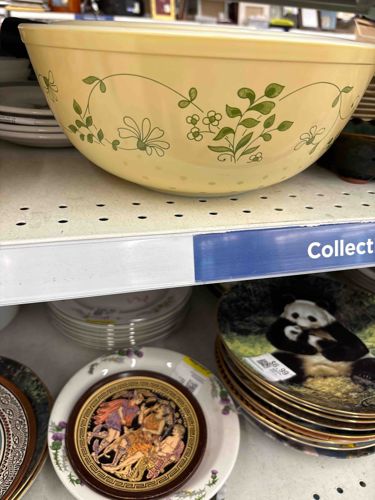
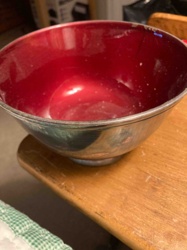
Yellow-Cream Floral Pattern Mixing Bowl

Kitchenware / Mixing Bowl

AI Estimated Value

·Not an official valuation·Verify before acting

$10-20

As of June 6, 2026

AI Item Analysis

·AI can make mistakes·Verify before acting
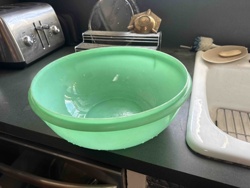
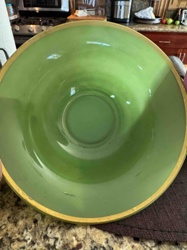
The item is a large, yellow-cream colored mixing bowl, likely made of melamine or a similar lightweight, durable plastic. Its surface is smooth and appears to have a slight sheen. The bowl features a decorative floral pattern printed in various shades of green, consisting of delicate vines, leaves, and small, stylized flowers that resemble daises or similar blossoms. The pattern is irregularly spaced around the upper portion of the bowl's exterior, adding a cheerful, naturalistic touch. There are also smaller, scattered green dots that complement the larger floral motifs. The bowl's shape is hemispherical, indicating its function as a mixing or serving bowl. It appears to be relatively deep and wide, suggesting it could hold a significant volume. The rim is simple and rounded, with no discernible chips or cracks visible from the angle provided. The overall condition seems good, with no obvious signs of heavy wear, scratches, or fading of the applied decoration, implying it has been well-maintained or lightly used. The style of the floral decoration and the plastic material suggest a vintage mid-20th century to late 20th century common kitchen aesthetic, possibly dating from the 1970s or 1980s. There are no visible maker's marks or signatures in the provided image.
AI Appraisal Report

·AI can make mistakes·Verify before acting
I have examined the image provided of this yellow-cream floral pattern mixing bowl. Based on my visual assessment, the bowl appears to be in good overall condition, with no visible chips, cracks, or significant wear to the surface or the applied floral decoration. The sheen suggests a well-preserved plastic, likely melamine. Authenticity, based solely on this image, points to a common kitchen item from the mid to late 20th century, consistent with the floral motifs popular in the 1970s or 1980s. There are no discernible maker's marks, which is not unusual for volume-produced kitchenware of this era. Market conditions for vintage plastic mixing bowls, even those in good condition with attractive patterns, are generally modest. While there's a steady interest in retro kitchenware, items like this bowl are not considered rare. Demand is primarily driven by collectors seeking specific patterns, brands, or those outfitting vintage-themed kitchens. Without a recognizable brand or a highly collectible designer, the value remains in its utility and aesthetic appeal as a functional vintage piece. Factors impacting its value negatively include the absence of a known maker, its mass-produced nature, and the material (plastic) which, while durable, does not command the same prices as ceramic or glass. Limitations in authenticity verification from images alone are significant. A physical examination would be needed to confirm the material, assess faint scratches or wear not visible, and search for embossed or molded marks that might be obscured. Provenance documentation could establish its original manufacturer or origin, which would enhance its value if linked to a notable brand or designer. Scientific testing is not typically applied to items of this nature.

Get your items appraised

Instant estimates of your treasures with AI-powered appraisals

Browse More Appraisals