AI Appraisal Estimate

AI-generated estimates · not official valuations

From the user

What was submitted

Photo and notes provided by the user — not generated by AI

Submitted item photo
Submitted photo · June 28, 2026

User's notes

No additional notes provided.

AI analysis below

AI appraisal

AI analysis & estimate

AI-Generated · Verify before acting

Everything below is generated by AI for informational purposes only. AI can make mistakes — the AI may misidentify items or misattribute them (artist, maker, brand, designer, origin, era). This is not an official valuation and should not be used for insurance, sale, tax, estate, legal, or lending purposes — or any decision requiring a certified appraisal. It is not an authoritative claim about any person, brand, or rights holder — do not share or rely on it as a factual statement about a third party. Always consult qualified professionals before making financial decisions.

Read the full disclaimer

AI Identification

·Not independently authenticated·Verify before acting

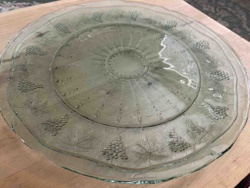
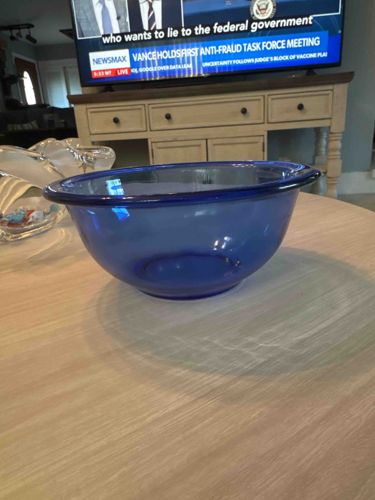
Cobalt Blue Glass Mixing Bowl

Vintage Glassware / Kitchenware

AI Estimated Value

·Not an official valuation·Verify before acting

$45.00 - $65.00

As of June 28, 2026

AI Item Analysis

·AI can make mistakes·Verify before acting
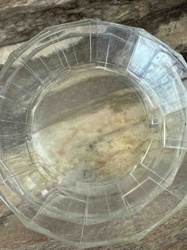
This is a medium-sized circular mixing bowl crafted from translucent cobalt blue glass, a style frequently associated with mid-to-late 20th-century American glassware manufacturers such as Pyrex or Hazel-Atlas. The bowl evaluates as roughly 8 to 10 inches in diameter with a deep, rounded basin and a distinctive wide, flat rim that extends outward at the lip to facilitate a secure grip. The color is a vibrant, deep sapphire blue with uniform saturation throughout the glass body. The construction appears to be machine-pressed glass, characterized by smooth, thick walls and a substantial weight. There is a slight indentation on the base which helps stabilize it on flat surfaces. Condition-wise, the bowl appears to be in very good vintage condition; however, close inspection may reveal minor superficial 'flea bites' or utility scratches on the interior bottom from kitchen tool use. There are no large chips, cracks, or visible repairs. While no maker's mark is visible in this specific photograph (marks are typically embossed on the exterior bottom), the heavy-duty nature of the glass suggests it was part of a nested mixing set series. This item likely dates from between the 1960s and 1990s, representing a classic utilitarian aesthetic that remains highly collectible for its durable craftsmanship and iconic color.
AI Appraisal Report

·AI can make mistakes·Verify before acting
I have conducted a visual examination of the vintage cobalt blue glass mixing bowl. This piece, likely manufactured by a firm such as Hazel-Atlas or Pyrex between 1960 and 1990, showcases the 'Sapphire' or 'Royal Blue' aesthetic highly sought after in the secondary kitchenware market. The bowl features a robust, machine-pressed construction with a flat-lipped rim designed for heavy utility. Based on the visual data, I assess the condition as 'very good.' While moderate 'flea bites' and interior utensil marks indicate historical use, the absence of structural cracks or significant chips preserves its functional and decorative integrity. The current market for mid-century colored glass remains stable, though common. Comparables for standalone 8-to-10 inch cobalt bowls typically sell within the $35 to $75 range depending on the specific maker's mark and clarity of the glass. The vibrant saturation of this piece places it toward the higher end of that spectrum. Rarity is low, as these were mass-produced in nested sets; however, cobalt blue remains the most desirable colorway for collectors compared to clear or amber variants. Limitations: My assessment is based solely on high-resolution imagery. A definitive valuation and authentication are limited by the inability to inspect the embossed maker's mark on the base, which would confirm the specific manufacturer and production year. In-person examination is required to check for 'sick glass' (permanent clouding) or factory defects not visible in photos. Full authentication would involve verifying the presence of an embossed trademark (e.g., the 'H-over-A' mark) and cross-referencing provenance to ensure this is not a modern reproduction.

Get your items appraised

Instant estimates of your treasures with AI-powered appraisals

Browse More Appraisals