AI Appraisal Estimate

AI-generated estimates · not official valuations

From the user

What was submitted

Photo and notes provided by the user — not generated by AI

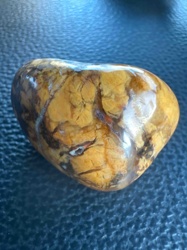
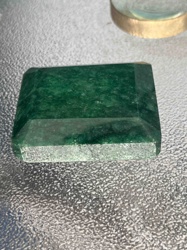
Submitted item photo
Submitted photo · June 15, 2026

User's notes

No additional notes provided.

AI analysis below

AI appraisal

AI analysis & estimate

AI-Generated · Verify before acting

Everything below is generated by AI for informational purposes only. AI can make mistakes — the AI may misidentify items or misattribute them (artist, maker, brand, designer, origin, era). This is not an official valuation and should not be used for insurance, sale, tax, estate, legal, or lending purposes — or any decision requiring a certified appraisal. It is not an authoritative claim about any person, brand, or rights holder — do not share or rely on it as a factual statement about a third party. Always consult qualified professionals before making financial decisions.

Read the full disclaimer

AI Identification

·Not independently authenticated·Verify before acting

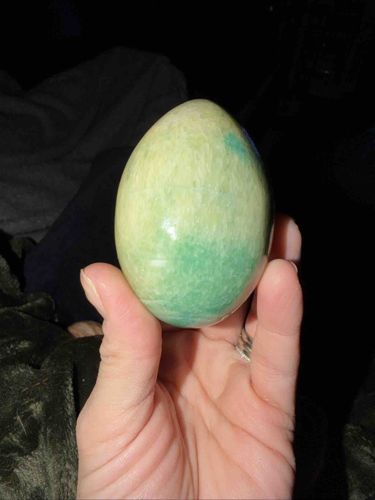
Polished Green and Cream Onyx Decorative Egg

Decorative Arts / Lapidary Collectibles

AI Estimated Value

·Not an official valuation·Verify before acting

$25 - $45

As of June 15, 2026

AI Item Analysis

·AI can make mistakes·Verify before acting
This item is a hand-carved and highly polished decorative egg crafted from a natural stone, likely a variety of light green onyx or marble-banded calcite. The piece measures approximately 2.5 to 3 inches in height, fitting comfortably within a palm. Physically, it displays a variegated color palette consisting of pale cream, buttery yellow, and distinct splashes of emerald to seafoam green. The construction is solid stone, featuring a smooth, reflective surface that highlights the internal crystalline structure and mineral veining. Notable features include the vibrant green patches which appear more concentrated on one side, suggesting the natural flow of mineral deposits within the raw stone. As the item is natural, it shows unique striations and subtle variations in translucency. There are no visible maker's marks or signatures, which is common for such lapidary work. The condition appears excellent with no visible chips, cracks, or significant abrasions, though natural vugs or tiny surface pits inherent to the stone may be present upon microscopic inspection. This style of decorative lapidary art was particularly popular in the mid-to-late 20th century as home decor accents. The craftsmanship is evident in the symmetrical ovoid shape and the high-gloss finish which requires several stages of fine-grit polishing.
AI Appraisal Report

·AI can make mistakes·Verify before acting
I have conducted a visual examination of the polished green and cream onyx decorative egg. The piece is a classic example of banded calcite, commercially known as 'Mexican Onyx' or 'Pakistan Onyx.' The craftsmanship demonstrates skilled lapidary work, achieving a symmetrical ovoid form and a high-luster vitreous finish that highlights the stone's natural translucency and distinct mineral banding. The condition appears Excellent; the absence of visible fractures or edge bruising suggests careful handling. These items were produced in significant quantities throughout the late 20th century, particularly in regions like Pakistan and Mexico. While aesthetically pleasing, they are considered mass-produced decorative accents rather than rare specimens, which limits their secondary market value. The current market for such lapidary collectibles remains stable but accessible, with similar sized eggs (approx. 3 inches) frequently appearing in estate sales and vintage marketplaces. Factors such as the vibrant emerald-green saturation and the lack of surface pitting slightly elevate this specimen above average examples. However, visual inspection alone cannot confirm the absence of internal stress fractures or chemical enhancements often used to brighten stone colors. A full authentication would require an in-person tactile inspection to verify the surface integrity, a Mohs hardness test to differentiate the calcite from higher-grade jadeite (though the banding strongly indicates the former), and UV light exposure to check for resin-filled vugs. No provenance documentation was provided, which is typical for items of this utility and price point.

Get your items appraised

Instant estimates of your treasures with AI-powered appraisals

Browse More Appraisals