AI Appraisal Estimate

AI-generated estimates · not official valuations

From the user

What was submitted

Photo and notes provided by the user — not generated by AI

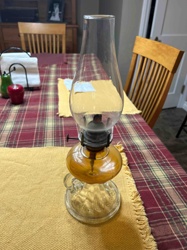
Submitted item photo
Submitted photo · June 7, 2026

User's notes

No additional notes provided.

AI analysis below

AI appraisal

AI analysis & estimate

AI-Generated · Verify before acting

Everything below is generated by AI for informational purposes only. AI can make mistakes — the AI may misidentify items or misattribute them (artist, maker, brand, designer, origin, era). This is not an official valuation and should not be used for insurance, sale, tax, estate, legal, or lending purposes — or any decision requiring a certified appraisal. It is not an authoritative claim about any person, brand, or rights holder — do not share or rely on it as a factual statement about a third party. Always consult qualified professionals before making financial decisions.

Read the full disclaimer

AI Identification

·Not independently authenticated·Verify before acting

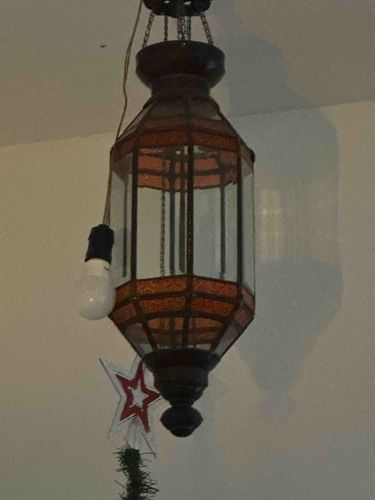
Stained Glass and Metal Hanging Lantern

Antiques & Collectibles - Lighting

AI Estimated Value

·Not an official valuation·Verify before acting

$250 - $450

As of June 7, 2026

AI Item Analysis

·AI can make mistakes·Verify before acting
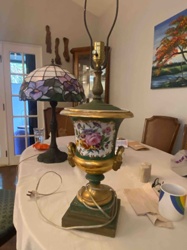
This item is a decorative hanging lantern, likely of early-to-mid 20th-century design with Mediterranean or Moorish revival influences. The lantern features an elongated octagonal body constructed with leaded glass panels. The central sections consist of clear glass, while the upper and lower beveled tiers are accented with amber-colored textured stained glass. The metal framework appears to be made of patinated brass or iron, showcasing a dark, aged finish. It terminates in a tiered, bulbous finial at the bottom and a matching cap at the top, suspended by a set of three metal chains. Notably, the internal lighting mechanism appears compromised, as an external modern light bulb on a loose wire is currently hanging beside the fixture rather than being integrated inside. There is visible surface oxidation on the metal components and dust accumulation on the glass surfaces. The craftsmanship suggests a mid-tier decorative piece rather than high-end custom lighting, often seen in residential foyers or solariums. The soldering is relatively uniform, though some minor misalignment in the leading is visible. No maker's marks are immediately apparent from the exterior.
AI Appraisal Report

·AI can make mistakes·Verify before acting
I have conducted a visual examination of the stained glass and metal hanging lantern. The piece reflects a Moorish Revival aesthetic popular during the mid-20th century. Based on the soldering techniques and the patination of the metalwork, I estimate the production period to be between 1940 and 1960. The use of amber-textured glass in a leaded configuration is characteristic of mid-tier residential lighting from this era. Condition is a significant factor in this valuation. While the glass panels appear intact without major hairline cracks, the electrical system is visibly compromised. The presence of a modern bulb dangling externally indicates that the internal socket assembly is likely non-functional or missing, requiring a professional rewiring—a factor that typically reduces the immediate market value for collectors. Surface oxidation and dust accumulation are present but consistent with age. The market for mid-century revival lighting is stable, though demand is currently driven more by interior design utility than by brand rarity. Comparables for unsigned leaded lanterns of this size and style typically sell in the $300 range at regional auctions, with specialized deco dealers reaching the higher end of the estimate if the piece is fully restored. Critically, this appraisal is based solely on digital images. Without an in-person inspection, I cannot confirm the metal's composition (heavy brass vs. plated iron) or identify faint maker’s marks that might be hidden under the cap. Full authentication would require a tactile check of the leading’s flexibility, a review of any existing provenance, and an examination of the internal hardware to confirm historical consistency. Scientific testing of the glass composition could further narrow the manufacture date but is likely cost-prohibitive given the item's market tier.

Get your items appraised

Instant estimates of your treasures with AI-powered appraisals

Browse More Appraisals