AI Appraisal Estimate

AI-generated estimates · not official valuations

From the user

What was submitted

Photo and notes provided by the user — not generated by AI

Submitted item photo
Submitted photo · June 13, 2026

User's notes

No additional notes provided.

AI analysis below

AI appraisal

AI analysis & estimate

AI-Generated · Verify before acting

Everything below is generated by AI for informational purposes only. AI can make mistakes — the AI may misidentify items or misattribute them (artist, maker, brand, designer, origin, era). This is not an official valuation and should not be used for insurance, sale, tax, estate, legal, or lending purposes — or any decision requiring a certified appraisal. It is not an authoritative claim about any person, brand, or rights holder — do not share or rely on it as a factual statement about a third party. Always consult qualified professionals before making financial decisions.

Read the full disclaimer

AI Identification

·Not independently authenticated·Verify before acting

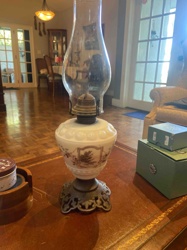
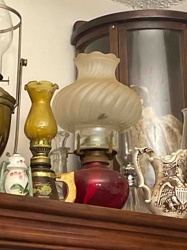
Victorian-Era Brass Banquet Oil Lamp with Swirl Opaline Glass Shade

Antiques & Collectibles - Lighting

AI Estimated Value

·Not an official valuation·Verify before acting

$450 - $650

As of June 13, 2026

AI Item Analysis

·AI can make mistakes·Verify before acting
This is a fine example of a late 19th-century Victorian banquet oil lamp. The piece features a striking translucent white opaline glass shade with a molded diagonal swirl pattern and a ruffled 'pie crust' rim. The base is constructed from pressed brass, displaying intricate repoussé foliate and scroll motifs throughout the font (fuel reservoir) and the base pedestal. The central column is a slender, spiraled brass stem that leads to a weighted circular foot. A clear glass chimney is visible protruding through the top of the shade. Condition-wise, the brass displays a significant aged patina with darkening and verdigris typical of antique metals, though no major structural dents are visible. The glass shade appears intact but shows superficial soiling, dust, and possible heat-related 'soot' marking on the interior surface that requires cleaning. The presence of the original burner mechanism suggests this remained a functional fuel lamp rather than being modernized with electricity. The craftsmanship is high-quality, indicating a late 1800s to early 1900s manufacture, likely British or American in origin, reflecting the ornate aesthetic of the Victorian period.
AI Appraisal Report

·AI can make mistakes·Verify before acting
I have carefully examined the provided images of this Victorian-era banquet lamp. The piece displays characteristic traits of the late 19th-century Aesthetic Movement, specifically in the repoussé brasswork and the 'pie-crust' opaline shade. The presence of the original burner and lacks of cord-drilling indicates it remains in its original non-electrified state, which preservationists prize. The condition is 'fair-to-good.' While the brass retains its structural integrity, the heavy oxidation and verdigris suggest storage in a humid environment; a professional cleaning would likely reveal better detail but should be done carefully to avoid over-polishing. The swirl opaline shade is the highlight, as these are prone to fracture; however, internal soot indicates heavy historical use. Market-wise, Victorian lighting remains a stable niche. Comparable British and American brass banquet lamps with intact period shades typically hammer between $400 and $700 at regional antique auctions. The value is capped by the current trend toward 'industrial' or 'mid-century' lighting, though the 'Cottagecore' aesthetic has recently bolstered demand for opaline glass. Note: This appraisal is based solely on visual inspection of images. Full authentication requires an in-person examination to check for maker's marks on the burner (e.g., Duplex, Hinks), which would confirm a specific manufacturer and potentially increase value. I would also need to inspect the glass rim for 'flea bites' or ground edges that indicate a later reproduction. Scientific testing of the glass composition could confirm the era, but provenance documentation from the previous owner would be the gold standard for verifying its history.

Get your items appraised

Instant estimates of your treasures with AI-powered appraisals

Browse More Appraisals