AI Appraisal Estimate

AI-generated estimates · not official valuations

From the user

What was submitted

Photo and notes provided by the user — not generated by AI

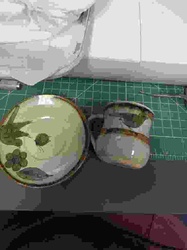
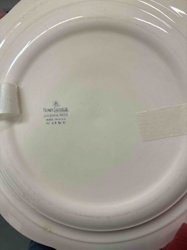
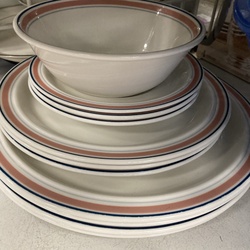
Submitted item photo
Submitted photo · June 27, 2026

User's notes

Cunningham & Pickett, Inc Hand Decorated Ohio Alliance CLASSIC

AI analysis below

AI appraisal

AI analysis & estimate

AI-Generated · Verify before acting

Everything below is generated by AI for informational purposes only. AI can make mistakes — the AI may misidentify items or misattribute them (artist, maker, brand, designer, origin, era). This is not an official valuation and should not be used for insurance, sale, tax, estate, legal, or lending purposes — or any decision requiring a certified appraisal. It is not an authoritative claim about any person, brand, or rights holder — do not share or rely on it as a factual statement about a third party. Always consult qualified professionals before making financial decisions.

Note

This analysis also relies on unverified notes provided by the user, which may be incomplete or inaccurate and could affect the result.

Read the full disclaimer

AI Identification

·Not independently authenticated·Verify before acting

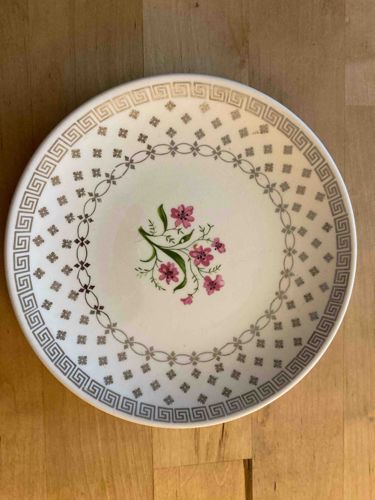
Cunningham & Pickett 'Classic' Hand Decorated Ceramic Plate

Vintage Tableware / Ceramics

AI Estimated Value

·Not an official valuation·Verify before acting

$15.00 - $35.00

As of June 27, 2026

AI Item Analysis

·AI can make mistakes·Verify before acting
This is a vintage ceramic plate produced by Cunningham & Pickett, Inc. in Alliance, Ohio. Based on the manufacturer's history, this piece likely dates to the mid-20th century (circa 1940s-1950s). The plate is constructed from cream-colored earthenware or semi-vitreous china with a smooth, glazed finish. The aesthetic is defined by its 'Classic' pattern, which features a central floral spray consisting of pink blossoms and green leafy stems, likely applied via decal and potentially hand-touched. This central motif is surrounded by a complex geometric border system composed of a platinum or silver-toned Filigree-style chain link, a lattice of small diamond-shaped fleurettes, and a prominent Greek Key fret design grazing the outer rim. The construction indicates high-quality commercial craftsmanship typical of the Ohio pottery cluster of that era. The condition appears excellent with no visible chips, cracks, or heavy crazing; however, there is slight light-reflective wear on the metallic decorative elements, which is common for gilded or platinum-trimmed tableware of this age. The item serves as a representative example of American mid-century formal dinnerware, often sold through distributors rather than direct pottery manufacturers.
AI Appraisal Report

·AI can make mistakes·Verify before acting
I have virtually examined this Cunningham & Pickett 'Classic' plate, a mid-20th-century piece distributed out of Alliance, Ohio. The item appears to be in excellent vintage condition; the cream-colored earthenware retains its luster, and the platinum Filigree and Greek Key borders show only minor reflective wear consistent with age. This lack of heavy crazing or chips is a positive factor for its value. However, the market for mid-century semi-vitreous china is currently saturated. Cunningham & Pickett functioned as a distributor rather than a manufacturer, often utilizing blanks from companies like Homer Laughlin. While the 'Classic' pattern is an elegant representation of 1940s-50s formal dinnerware, its production was high-volume, making individual pieces relatively common rather than rare. Comparables on the secondary market frequently list individual dinner or luncheon plates in this range, with higher values reserved for large, complete sets or serving platters. Demand for silver-trimmed tableware has softened in recent years as younger collectors prioritize microwave-safe and dishwasher-safe ceramics. My assessment is based solely on digital imagery. A full authentication would require an in-person inspection to verify the tactile depth of the hand-decorated elements, check for hairline fractures beneath the glaze, and confirm the specific manufacturer's stamp on the reverse. Provenance documentation, such as original sales receipts or family history, would further solidify its origin but would not significantly move the needle on its current market value.

Get your items appraised

Instant estimates of your treasures with AI-powered appraisals

Browse More Appraisals