AI estimate as of October 28, 2025 · verify with a professional before acting
AI-Generated · Verify before acting
Everything on this page is generated by AI for informational purposes only. AI can make mistakes — the AI may misidentify items or misattribute them (artist, maker, brand, designer, origin, era). This is not an official valuation and should not be used for insurance, sale, tax, estate, legal, or lending purposes — or any decision requiring a certified appraisal. It is not an authoritative claim about any person, brand, or rights holder — do not share or rely on it as a factual statement about a third party. Always consult qualified professionals before making financial decisions.
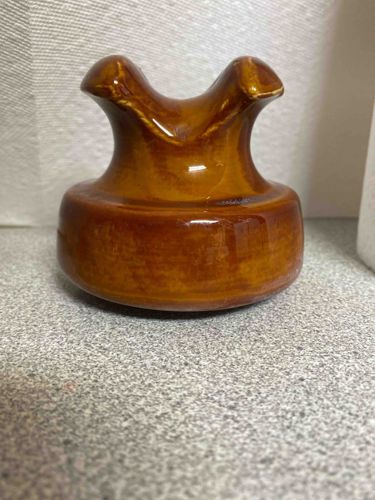
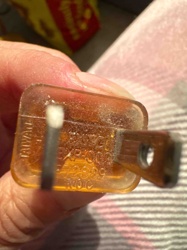
This item is a brown-glazed ceramic component, likely designed as a wire holder or insulator. Its physical form is stout and robust, featuring a cylindrical base that tapers upwards into a distinctive 'Y' or 'V' shaped groove at the top. The overall dimensions appear to be small to medium, suitable for handling individual or small bundles of wires. The material is ceramic, indicated by its smooth, hard, and non-conductive appearance, finished with a high-gloss, variegated brown glaze. The glaze exhibits a rich, caramel-to-dark-brown hue with subtle streaks and pooling that suggest a hand-applied or rustic glazing process, contributing to its unique aesthetic. The 'Y'-shaped top is clearly designed to cradle and secure a wire or rope, indicating a functional rather than purely decorative purpose. There are no visible manufacturer's marks, signatures, or stamps evident in the provided image. The surface appears generally clean with a high sheen, suggesting good preservation of the glaze. Some minor imperfections or irregularities in the glaze, such as small bumps or dips, are present, typical of ceramic production. The edges of the 'Y' shape show minimal wear or chipping, indicating relatively good condition. Items of this type, often used for electrical insulation, tend to be quite durable. Given its design and material, it likely dates from the late 19th to mid-20th century, a common period for the use of glazed ceramic insulators in various applications. Its sturdy construction and simple utility point to a focus on functionality and durability in its craftsmanship.
AI Appraisal Report
I have examined the image of this brown-glazed ceramic wire holder or insulator. Visually, the item appears to be in very good condition. The high-gloss glaze is well-preserved, showing only minor imperfections typical of ceramic manufacturing, such as small bumps or dips, which do not detract significantly from its appearance or functionality. There are no obvious chips, cracks, or significant wear visible, especially along the edges of the 'Y' groove, suggesting it has not seen heavy use or has been carefully handled. Its authenticity as a functional ceramic insulator from the late 19th to mid-20th century seems highly probable given its design, material, and glazing style, which aligns with industrial ceramics from that period. However, without handling the item, I cannot definitively confirm the ceramic composition or rule out modern reproductions made to mimic vintage styles. A physical examination would allow for tactile assessment of material quality and closer inspection for manufacturing marks that might be obscured or too subtle for photographic capture.
From a market perspective, items like this fall into the categories of industrial salvage, architectural reclamation, or collector's items for insulator enthusiasts. While functional, their primary appeal now often lies in decorative re-use or historical novelty. Demand is moderate, driven by niche collectors and crafters seeking industrial aesthetics. Rarity is low; ceramic insulators were mass-produced. While this piece is attractive with its variegated brown glaze, it lacks unique attributes such as distinctive markings, unusual design, or provenance linking it to a specific historical event or location, which would significantly increase its value. Market comparables for similar brown ceramic insulators or wire holders typically range from $10 to $40, depending on size, condition, and any unique characteristics. Factors impacting value are primarily condition and aesthetic appeal; its good preservation is a positive factor. Limitations in authenticity verification from images alone include the inability to feel the material's weight and texture, and to check for hidden marks or repairs. Full authentication would benefit from a direct physical inspection, UV light testing for repairs, and if possible, provenance documentation establishing its manufacturing origin or historical use.