AI estimate as of July 10, 2025 · verify with a professional before acting
AI-Generated · Verify before acting
Everything on this page is generated by AI for informational purposes only. AI can make mistakes — the AI may misidentify items or misattribute them (artist, maker, brand, designer, origin, era). This is not an official valuation and should not be used for insurance, sale, tax, estate, legal, or lending purposes — or any decision requiring a certified appraisal. It is not an authoritative claim about any person, brand, or rights holder — do not share or rely on it as a factual statement about a third party. Always consult qualified professionals before making financial decisions.
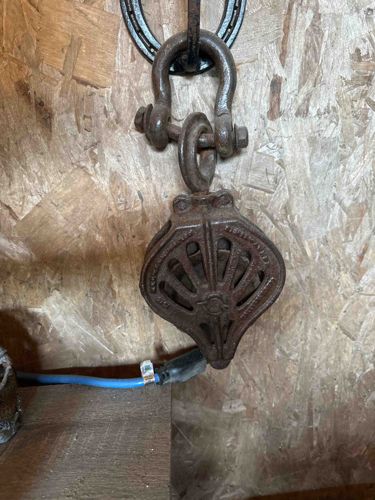
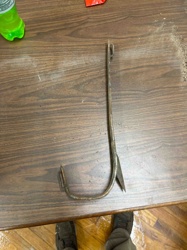
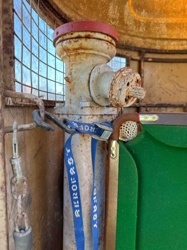
This item is an antique cast iron pulley block, likely for agricultural or industrial use, possibly adapted into a decorative piece. It consists of a single cast iron pulley wheel housed within a decorative, open-work cast iron frame. The frame of the pulley has a somewhat ornate design with radiating spokes and a central circular area, suggesting it may have been produced at a time when utilitarian items also incorporated aesthetic elements. The overall color is a deep, oxidized reddish-brown, indicative of significant rusting and age, creating a robust patina. Attached to the top of the pulley block is a heavy-duty, U-shaped cast iron shackle, commonly known as a screw pin anchor shackle, secured with a visible threaded pin. This shackle is further connected to a larger, similarly rusted metal loop, which in turn appears to be hanging from an inverted horseshoe, visible at the very top of the image. All metal components exhibit extensive surface rust, pitting, and wear consistent with outdoor exposure and prolonged use. There are no clear manufacturer's marks or signatures immediately visible, though some raised lettering or numbers might be present but obscured by the rust. The craftsmanship appears to be typical of early 20th-century or possibly late 19th-century heavy cast iron work, which prioritized durability over fine finishing. The combination with the horseshoe suggests it might be repurposed as a decorative hanging, given its prominent display against a wooden particle board background.
AI Appraisal Report
Upon visual examination of the provided image, I assess this antique cast iron pulley block, shackle, and horseshoe as a striking example of industrial salvage. Its condition is consistent with significant age and outdoor exposure, exhibiting extensive, deep reddish-brown oxidation, pitting, and wear. This 'robust patina' is highly desirable in the current market for industrial aesthetics. The cast iron work appears authentic to the late 19th or early 20th century, characterized by its utilitarian design and the sturdy, decorative open-work frame. The integration of the shackle and the inverted horseshoe suggests a repurposing, likely for decorative use, which aligns with current interior design trends favoring salvaged industrial elements.
Market conditions for industrial salvage and repurposed farm equipment are strong, driven by decorators and collectors seeking unique, historically rich accent pieces. Comparables, such as other well-patinated cast iron pulleys or agricultural implements, typically fetch prices based on size, decorative appeal, and perceived age. This item's appeal is enhanced by the decorative pulley frame and the added horseshoe, which lends character. While not exceptionally rare as a standalone pulley, the aesthetic combination and excellent natural patination elevate its desirability. The primary factor impacting value positively is its appealing 'rustic industrial' aesthetic and solid construction.
Limitations in authenticity verification from images alone are notable. I cannot definitively verify the absence of manufacturer's marks or confirm the exact period of manufacture without a physical inspection. An in-person examination would allow for tactile assessment of material, weight, precise measurement, and closer scrutiny for any obscured markings. Provenance documentation, if available, could confirm original use and history. Scientific testing, such as metallurgy, would be needed for absolute verification, though it's likely unnecessary for this type of item's market value. However, based on visual evidence, I am confident in its decorative and salvage authenticity.