AI Appraisal Estimate

AI-generated estimates · not official valuations

From the user

What was submitted

Photo and notes provided by the user — not generated by AI

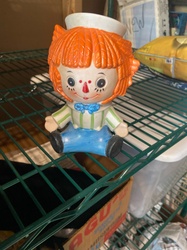
Submitted item photo
Submitted photo · June 12, 2026

User's notes

Coin bank not wood

AI analysis below

AI appraisal

AI analysis & estimate

AI-Generated · Verify before acting

Everything below is generated by AI for informational purposes only. AI can make mistakes — the AI may misidentify items or misattribute them (artist, maker, brand, designer, origin, era). This is not an official valuation and should not be used for insurance, sale, tax, estate, legal, or lending purposes — or any decision requiring a certified appraisal. It is not an authoritative claim about any person, brand, or rights holder — do not share or rely on it as a factual statement about a third party. Always consult qualified professionals before making financial decisions.

Note

This analysis also relies on unverified notes provided by the user, which may be incomplete or inaccurate and could affect the result.

Read the full disclaimer

AI Identification

·Not independently authenticated·Verify before acting

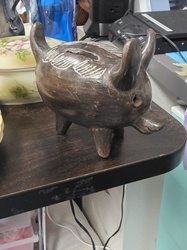
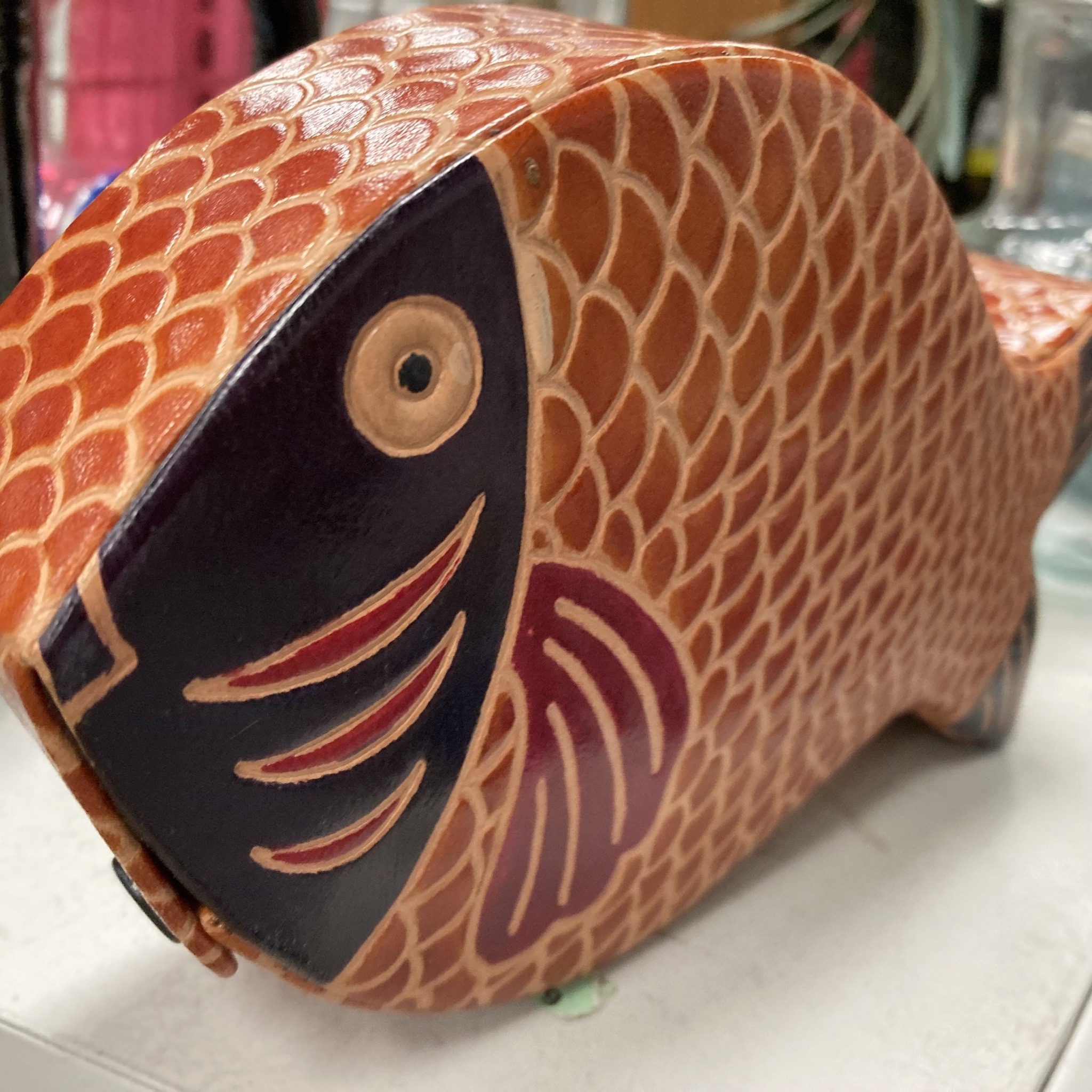
Hand-Tooled Leather Fish-Shaped Coin Bank

Folk Art / Collectible Banks

AI Estimated Value

·Not an official valuation·Verify before acting

$125 - $175

As of June 12, 2026

AI Item Analysis

·AI can make mistakes·Verify before acting
This is a whimsical, three-dimensional coin bank crafted into the stylized form of a fish. Although it possesses the solid appearance of wood, the item is constructed from hand-tooled and dyed leather wrapped over a rigid interior armature, a technique common in Latin American, Southeast Asian, or Northern African folk art traditions. The body features an intricate, repetitive scale pattern achieved through individual stamps or hand-tooling. The facial area is finished in a dark navy or black dye, contrasting sharply with the warm ochre and reddish-brown tones of the body. A large, circular eye and defined gills are embossed into the leather, with the gills featuring a maroon-red pigment. The item shows expert craftsmanship in its molding and seaming, particularly along the contours of the fish's head and tail. Condition appears good overall, with a mild natural patina and minor surface scuffing characteristic of vintage leather goods. The construction suggests a mid-20th-century origin, likely between 1960 and 1980. The coin slot is discreetly integrated into the dorsal curvature, and the piece stands on molded leather 'fins' that serve as feet. Its artisanal nature and the complexity of the tooling indicate a high-quality decorative object meant for both utility and aesthetic display.
AI Appraisal Report

·AI can make mistakes·Verify before acting
Upon visual examination of this folk art leather fish coin bank, I have determined the piece to be a fine example of mid-to-late 20th-century artisan leatherwork, likely originating from Peru or India, where similar stylized animal forms were produced for export. The craftsmanship is high; the intricate hand-tooling of the scales and the use of multi-tonal dyes suggest a master leatherworker rather than a mass-production factory. The transition from the dark facial dye to the ochre body remains vibrant, and the molding around the armature is tight, indicating the leather has been well-preserved. Condition is 'Good to Very Good' for its age, with minor scuffs and patina that authenticate its vintage status. Market demand for vintage leather folk art banks is stable but niche. Comparable sales of similar hand-tooled leather animal banks (often elephants or pigs) typically range between $75 and $200 depending on complexity. This specific specimen’s fish form and detailed pigmenting place it at the higher end of that range. Rarity is moderate; while these were produced in quantity, finding examples with intact fins and minimal cracking in the leather is becoming more difficult. Limitations: This appraisal is based strictly on visual inspection of the provided image. From photos alone, I cannot verify the integrity of the internal armature or confirm the absence of dry rot in the leather. For full authentication and valuation, an in-person inspection would be required to smell for off-gassing, test the leather's suppleness, and look for a maker’s mark or country-of-origin stamp which may be hidden on the underside or inside the coin slot.

Get your items appraised

Instant estimates of your treasures with AI-powered appraisals

Browse More Appraisals