AI Appraisal Estimate

AI-generated estimates · not official valuations

From the user

What was submitted

Photo and notes provided by the user — not generated by AI

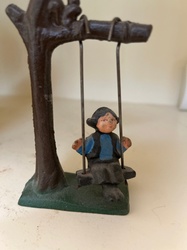
Submitted item photo
Submitted photo · June 23, 2026

User's notes

Unknown artist, untitled sculpture

AI analysis below

AI appraisal

AI analysis & estimate

AI-Generated · Verify before acting

Everything below is generated by AI for informational purposes only. AI can make mistakes — the AI may misidentify items or misattribute them (artist, maker, brand, designer, origin, era). This is not an official valuation and should not be used for insurance, sale, tax, estate, legal, or lending purposes — or any decision requiring a certified appraisal. It is not an authoritative claim about any person, brand, or rights holder — do not share or rely on it as a factual statement about a third party. Always consult qualified professionals before making financial decisions.

Note

This analysis also relies on unverified notes provided by the user, which may be incomplete or inaccurate and could affect the result.

Read the full disclaimer

AI Identification

·Not independently authenticated·Verify before acting

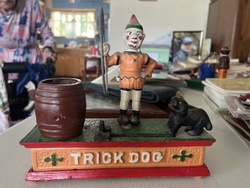
Humpty Dumpty Cast Iron Mechanical Bank

Antique Toys and Collectibles

AI Estimated Value

·Not an official valuation·Verify before acting

$40-80

As of June 23, 2026

AI Item Analysis

·AI can make mistakes·Verify before acting
This is a vintage cast iron mechanical coin bank depicting a character head, traditionally known as the 'Humpty Dumpty' or 'Clown' bank. The piece is constructed from two vertical halves of heavy cast iron, bolted together, and features a hand-operated lever mechanism designed to feed a coin from the figure's hand into its mouth. The figure is depicted with a pale blue-white face, heavily wrinkled skin, sunken eyes, and a prominent red-brown conical hat. Its clothing consists of a ruffled yellow collar and a bi-color tunic in red and dark blue/black. The right hand is articulated and positioned palms-up to receive coins. The paint finish appears to be a later amateur application rather than original factory paint, evidenced by the thick, somewhat sloppy brushwork that obscures some finer casting details and the presence of yellow paint smears on the face. Condition-wise, there is significant paint loss and chipping throughout, especially on the nose, rim of the hat, and hand. The metal shows signs of surface oxidation and a dark patina where paint is missing. The screws at the shoulder and wrist indicate a modular assembly. This style of bank originated in the late 19th century, though without a clearer view of the bottom plate or registration marks, this specific unit is estimated to be a mid-20th-century reproduction or a heavily restored antique piece.
AI Appraisal Report

·AI can make mistakes·Verify before acting
Based on my visual examination of this cast iron 'Humpty Dumpty' mechanical bank, I assess it to be a mid-to-late 20th-century reproduction rather than an original late 19th-century casting by Shepard Hardware. The most telling indicator is the paint application; the finish is thick, glossy, and crudely applied, displaying brushstrokes and color bleed (such as the yellow on the face) inconsistent with the precise, matte-finish painting found on authentic Victorian-era banks. Furthermore, the casting details appear somewhat soft and obscured by the heavy paint, lacking the sharpness of early production molds. The wear patterns—specifically the oxidation on exposed metal—suggest some age, but not the smooth, natural patina expected on a 130-year-old antique. The construction, featuring visible screws at the shoulder, aligns with known reproduction styles often manufactured in the 1950s or 70s. The market for mechanical banks is highly stratified; while a pristine, original Shepard 'Humpty Dumpty' can command thousands of dollars, reproductions flood the market and hold significantly less value, primarily serving as decorative curiosities. Demand for these later copies is low among serious collectors. Valuation is strictly based on its decorative appeal and scrap integrity. To be absolutely certain this isn't a heavily repainted original (a 'married' piece), an in-person inspection of the base plate for a patent date (usually March 14, 1882) and an examination of the internal mechanism's smoothness would be required. However, given the visual evidence, it is appraised as a vintage reproduction.

Get your items appraised

Instant estimates of your treasures with AI-powered appraisals

Browse More Appraisals