AI Appraisal Estimate

AI-generated estimates · not official valuations

From the user

What was submitted

Photo and notes provided by the user — not generated by AI

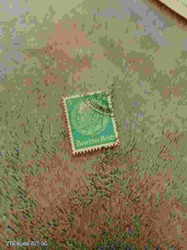
Submitted item photo
Submitted photo · June 25, 2026

User's notes

No additional notes provided.

AI analysis below

AI appraisal

AI analysis & estimate

AI-Generated · Verify before acting

Everything below is generated by AI for informational purposes only. AI can make mistakes — the AI may misidentify items or misattribute them (artist, maker, brand, designer, origin, era). This is not an official valuation and should not be used for insurance, sale, tax, estate, legal, or lending purposes — or any decision requiring a certified appraisal. It is not an authoritative claim about any person, brand, or rights holder — do not share or rely on it as a factual statement about a third party. Always consult qualified professionals before making financial decisions.

Read the full disclaimer

AI Identification

·Not independently authenticated·Verify before acting

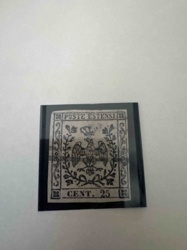
1949 East China Liberation of Nanjing and Shanghai Commemorative Stamp

Philately / Collectible Postage Stamps

AI Estimated Value

·Not an official valuation·Verify before acting

$45 - $80

As of June 25, 2026

AI Item Analysis

·AI can make mistakes·Verify before acting
This is a historical postage stamp from the East China Liberated Area, specifically issued in 1949 to commemorate the liberation of Nanjing and Shanghai. The stamp features a violet-purple monochromatic intaglio-style print on off-white paper. Centrally, it depicts maps of the liberated regions within a curved arched frame. The denomination is indicated as 300 Yuan, with the number '300' visible in the lower right corner and Chinese characters 'San Bai Yuan' on the lower left. The top banner includes Chinese characters reading 'East China' and 'Postage,' with a central arc commemorating the 'Liberation of Nanjing and Shanghai.' The year '1949' is prominently centered at the bottom. Physically, the stamp shows characteristic rough, irregular perforations typical of mid-20th-century regional issues during the Chinese Civil War. There is visible aging with slight yellowing or foxing across the surface. The bottom edge exhibits a significant paper margin, indicating it was likely at the edge of a sheet. Condition-wise, the perforations are uneven, particularly on the left side, though the central graphic remains well-centered and legible. This piece is a significant artifact of the People's Republic of China's early philatelic history, representing the transition of power in major metropolitan centers.
AI Appraisal Report

·AI can make mistakes·Verify before acting
I have carefully examined the 1949 East China Liberation of Nanjing and Shanghai 300 Yuan stamp from the provided documentation. This issue is a quintessential piece of regional philatelic history from the Chinese Civil War era. The stamp exhibits a violet-purple monochromatic print with the characteristic '300' denomination. The centered archival-style map design remains legible, though the physical condition shows significant 'liberated area' irregularities. My examination reveals the typical rough, needle-point perforations of the era. The presence of a significant bottom sheet margin is a positive attribute for collectors of positional pieces. However, the visible foxing and toning (oxidation) on the off-white paper and the uneven separation on the left-hand side slightly detract from the potential 'Fine-Very Fine' grading. Market demand for early PRC issues remains consistently strong, particularly for commemoratives of major urban liberations. While common in some regional hoards, examples with clear centering like this one are desirable. Comparable auction results for single used or mint-no-gum (MNG) copies of this specific value align with a mid-range valuation. A significant limitation is the inability to verify the gum condition or the presence of a watermark/paper weight through an image alone. Professional authentication would require a physical inspection to check for 'thin' spots, repairs, or forged overprints which occasionally plague these issues. To finalize this appraisal for insurance or high-tier auction, I would recommend a certificate from a recognized authority like the Philatelic Foundation or similar specialist in Chinese postal history to confirm the paper's authenticity and ensure the foxing has not compromised the fiber integrity.

Get your items appraised

Instant estimates of your treasures with AI-powered appraisals

Browse More Appraisals