AI Appraisal Estimate

AI-generated estimates · not official valuations

From the user

What was submitted

Photo and notes provided by the user — not generated by AI

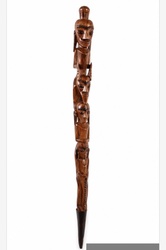
Submitted item photo
Submitted photo · June 22, 2026

User's notes

Unknown artist, untitled sculpture

AI analysis below

AI appraisal

AI analysis & estimate

AI-Generated · Verify before acting

Everything below is generated by AI for informational purposes only. AI can make mistakes — the AI may misidentify items or misattribute them (artist, maker, brand, designer, origin, era). This is not an official valuation and should not be used for insurance, sale, tax, estate, legal, or lending purposes — or any decision requiring a certified appraisal. It is not an authoritative claim about any person, brand, or rights holder — do not share or rely on it as a factual statement about a third party. Always consult qualified professionals before making financial decisions.

Note

This analysis also relies on unverified notes provided by the user, which may be incomplete or inaccurate and could affect the result.

Read the full disclaimer

AI Identification

·Not independently authenticated·Verify before acting

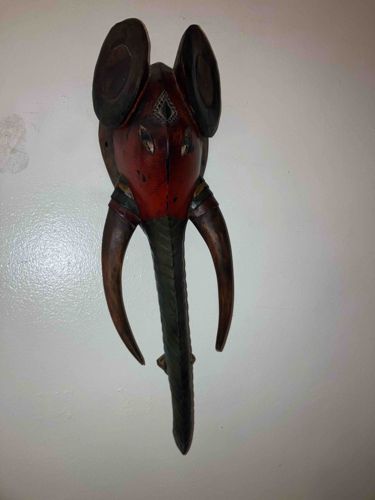
West African Style Carved Wooden Elephant Mask

Cultural Art & Sculptures

AI Estimated Value

·Not an official valuation·Verify before acting

$45-75

As of June 22, 2026

AI Item Analysis

·AI can make mistakes·Verify before acting
This item is a hand-carved decorative wall mask fashioned in the likeness of an elephant, exhibiting stylistic influences typical of West African craftsmanship, likely for the souvenir or export market. The piece is constructed from a single block of dense hardwood, featuring a vertically elongated facial structure. The crown is dominated by two large, circular ears with concave centers. Below the forehead, which is adorned with an incised diamond-shaped geometric pattern containing white pigment, are two narrow, almond-shaped eye slits. The mask is finished in a vibrant, stained deep-red pigment on the main face, contrasting with the dark brown/black finished tusks and trunk. The trunk is exceptionally long and features horizontal ridged incisions to simulate skin texture, while the tusks curve inward towards the center. The condition appears fair to good; there is visible surface wear, small scuffs in the pigment, and a noticeable vertical fissure or stress crack running down the center of the forehead, which is common in aged tropical hardwoods. There are no visible maker's marks, suggesting it is a contemporary artisanal piece rather than a traditional ceremonial ethnographic object. The style is mid-to-late 20th century, designed as decorative folk art with a focus on dramatic symmetry and bold color blocking.
AI Appraisal Report

·AI can make mistakes·Verify before acting
I have examined the provided details and imagery for this hand-carved elephant mask. The piece is a contemporary decorative sculpture crafted in a West African aesthetic, specifically utilizing motifs often found in Bamileke (Cameroon) or Senufo (Ivory Coast) traditions, though it is clearly intended for the global export or 'fair trade' market rather than ritual use. The use of vibrant red staining and geometric incising with white pigment is typical of mid-to-late 20th-century artisanal production aimed at interior decor. Regarding condition, I note a significant vertical stress crack on the forehead. This is a natural occurrence in dense tropical hardwoods due to changes in humidity, but it significantly impacts the secondary market value. The pigmentation shows minor scuffing consistent with age and handling. The market for 'airport art' or souvenir-grade African carvings is currently saturated, with high supply and moderate demand. Comparables for similar decorative elephant masks of this scale and material typically sell at online auctions or vintage markets within the $40 to $80 range, depending on the buyer's interest in the specific color palette. From a digital examination, I cannot determine the specific species of wood or the exact composition of the pigments used. A full authentication would require an in-person inspection to verify the tactile texture of the carving marks (checking for hand-tool vs. power-tool usage) and a review of provenance to establish a more precise geographic origin. Without signs of ritual use—such as internal patina from wear or repair—this remains classified as a high-quality decorative folk art piece rather than a rare ethnographic collectible.

Get your items appraised

Instant estimates of your treasures with AI-powered appraisals

Browse More Appraisals