AI estimate as of September 18, 2025 · verify with a professional before acting
AI-Generated · Verify before acting
Everything on this page is generated by AI for informational purposes only. AI can make mistakes — the AI may misidentify items or misattribute them (artist, maker, brand, designer, origin, era). This is not an official valuation and should not be used for insurance, sale, tax, estate, legal, or lending purposes — or any decision requiring a certified appraisal. It is not an authoritative claim about any person, brand, or rights holder — do not share or rely on it as a factual statement about a third party. Always consult qualified professionals before making financial decisions.
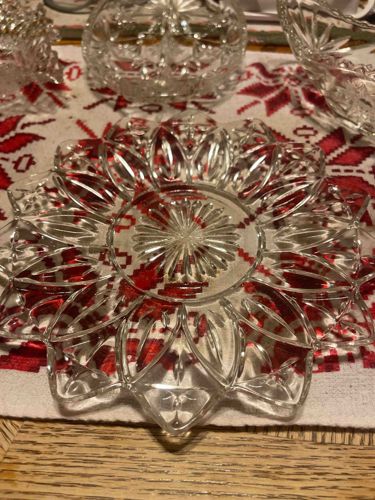
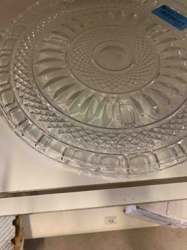
This is a circular dish crafted from clear pressed glass, featuring a distinctive floral or starburst pattern. The overall shape of the dish is reminiscent of a blooming flower, with individual sections forming petals or lobes around the perimeter. The central portion of the dish is circular and exhibits a radiating starburst or chrysanthemum-like design, which serves as the focal point. This central motif is deeply pressed, creating intricate facets that catch and refract light effectively. Each 'petal' around the edge also has similar pressed glass detailing, enhancing its decorative appeal and providing structural rigidity. The edges of these petals appear slightly scalloped or pointed, contributing to the floral aesthetic. The glass is clear and translucent, allowing the red and white patterned tablecloth beneath to be clearly visible through it, indicating its excellent clarity. There are no immediately visible chips, cracks, or significant abrasions on the surface, suggesting good preservation. The pressing technique implies it is likely a mass-produced item, possibly from the early to mid-20th century, a period known for its elaborate pressed glass designs. Without a discernible manufacturer's mark or signature, pinpointing an exact origin or age is challenging, but its design is consistent with vintage American pressed glass. The craftsmanship, while not hand-cut crystal, demonstrates the precision achievable with pressed glass techniques, providing a decorative yet functional piece for serving or display.
AI Appraisal Report
I have carefully examined the provided image of this circular pressed glass dish with a floral/starburst pattern. Based on my visual assessment, the condition appears excellent; I observe no discernible chips, cracks, or significant abrasions. The clarity of the glass is very good, allowing the underlying tablecloth pattern to show through clearly. This indicates good preservation and a lack of clouding or significant surface wear. The design is characteristic of vintage American pressed glass, likely dating from the early to mid-20th century. While the craftsmanship is precise for pressed glass, it is not hand-cut crystal, which places it in a different market segment.
Market conditions for common pressed glass pieces like this are generally stable but do not command high prices. Comparables in similar excellent condition, featuring popular floral or starburst motifs, typically sell in the $15 to $30 range. Demand for such pieces is moderate, often driven by collectors seeking specific patterns or individuals looking for decorative, functional items for everyday use or display. Rarity is not a significant factor here; pressed glass was mass-produced, making this pattern relatively common.
The most significant factor impacting value is its commonality and the fact it is pressed, not cut, glass. While attractive and well-preserved, it lacks the rarity, historical significance, or artistic distinctiveness to command a higher price. Without a manufacturer's mark, attributing it to a specific maker is difficult, which also limits its collectible value to some extent.
It is crucial to note the limitations of an appraisal based solely on images. While the condition appears excellent, a thorough in-person examination would be necessary to detect minute hairline cracks, internal flaws, subtle hazing, or manufacturing imperfections that are not visible in photographs. Provenance documentation could potentially enhance value if it linked the piece to a significant collection or historical context, but this is unlikely for a common pressed glass item. Scientific testing is not typically required for this type of object for authentication, as the pressing technique itself is a strong indicator of its manufacturing origin.