AI Appraisal Estimate

AI-generated estimates · not official valuations

From the user

What was submitted

Photo and notes provided by the user — not generated by AI

Submitted item photo
Submitted photo · June 6, 2026

User's notes

No additional notes provided.

AI analysis below

AI appraisal

AI analysis & estimate

AI-Generated · Verify before acting

Everything below is generated by AI for informational purposes only. AI can make mistakes — the AI may misidentify items or misattribute them (artist, maker, brand, designer, origin, era). This is not an official valuation and should not be used for insurance, sale, tax, estate, legal, or lending purposes — or any decision requiring a certified appraisal. It is not an authoritative claim about any person, brand, or rights holder — do not share or rely on it as a factual statement about a third party. Always consult qualified professionals before making financial decisions.

Read the full disclaimer

AI Identification

·Not independently authenticated·Verify before acting

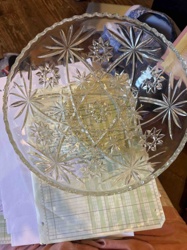
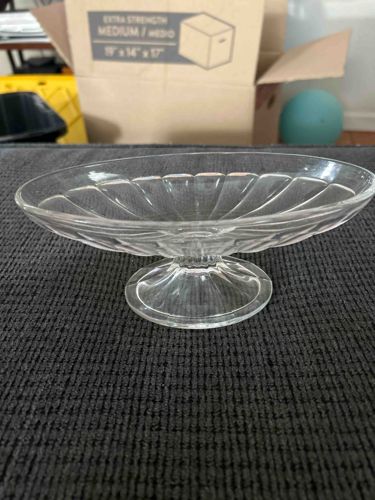
Clear Pressed Glass Oval Pedestal Dish

Dinnerware and Serveware

AI Estimated Value

·Not an official valuation·Verify before acting

$15-30

As of June 6, 2026

AI Item Analysis

·AI can make mistakes·Verify before acting
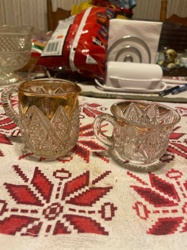
This item is a clear pressed glass oval pedestal dish, likely intended for use as a serving dish for candy, nuts, or relishes. It features a boat-shaped or oval bowl atop a short, flared pedestal base. The dish is constructed entirely of transparent glass, exhibiting a smooth, reflective surface characteristic of molded or pressed glass. The bowl's interior and exterior are adorned with a repeating pattern of fluted or ribbed facets that radiate outwards from the center, creating a decorative, light-catching effect. These facets appear to have a slightly swirling or undulating quality. The rim of the dish is smooth and gently curved. The bowl is supported by a robust stem that connects to a circular foot. Both the stem and the foot also show subtle fluting or decorative elements, consistent with the overall design. No specific maker's marks, signatures, or stamps are visible in the provided image. The condition appears to be good with no obvious chips, cracks, or significant damage. Minor surface scratches or hazing, common with age and use, may be present but are not clearly discernible from the image. The style suggests it could be from the mid-20th century, possibly the 1950s to 1970s, a period when pressed glass serving ware was very popular. The craftsmanship is typical of mass-produced pressed glass, characterized by uniformity in pattern and thickness, indicating a functional and decorative piece for everyday use or casual entertaining.
AI Appraisal Report

·AI can make mistakes·Verify before acting
Based on my examination of the provided image, this clear pressed glass oval pedestal dish appears to be in good condition. There are no obvious chips, cracks, or significant damage visible, which is positive for its value. The uniformity of the pattern and thickness is consistent with mass-produced pressed glass of the mid-20th century. This type of utilitarian pressed glass serving ware was widely produced from the 1950s through the 1970s, making it neither rare nor highly sought after by collectors unless it's a specific pattern with a strong following or from a particularly renowned manufacturer. Without visible maker's marks, its origin remains anonymous, which limits its appeal to collectors. The market for general pressed glass serving dishes of this era is relatively stable but not high. Comparable items typically sell in the $15-$30 range, reflecting their decorative, functional appeal rather than collectible rarity. Factors impacting value include its good condition, but its commonality and lack of identifiable provenance keep the value modest. Demand for such items is generally driven by those furnishing vintage aesthetics or seeking functional, attractive serving pieces. It is crucial to note the limitations of authentication and condition assessment from images alone. A physical inspection would be necessary to confirm the absence of subtle hairlines, nicks, or internal bruising that might not be apparent. An in-person examination would also check for hazing or sick glass, which can diminish value. Furthermore, only a hands-on review could potentially reveal faint maker's marks or mold numbers that would aid in precise dating and manufacturer identification, though such features are often absent on anonymous pressed glass. Provenance documentation, if available, would provide historical context but is rarely found for common items like this.

Get your items appraised

Instant estimates of your treasures with AI-powered appraisals

Browse More Appraisals