AI estimate as of September 29, 2025 · verify with a professional before acting
AI-Generated · Verify before acting
Everything on this page is generated by AI for informational purposes only. AI can make mistakes — the AI may misidentify items or misattribute them (artist, maker, brand, designer, origin, era). This is not an official valuation and should not be used for insurance, sale, tax, estate, legal, or lending purposes — or any decision requiring a certified appraisal. It is not an authoritative claim about any person, brand, or rights holder — do not share or rely on it as a factual statement about a third party. Always consult qualified professionals before making financial decisions.
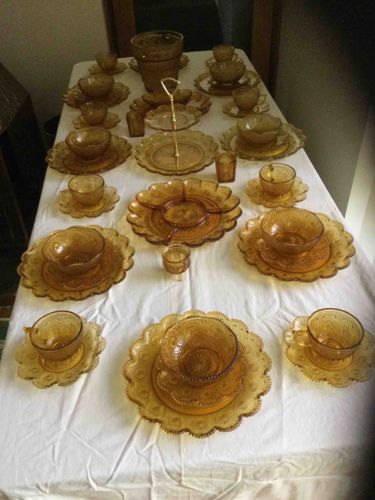
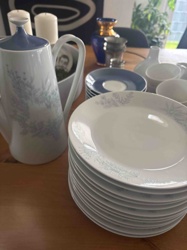
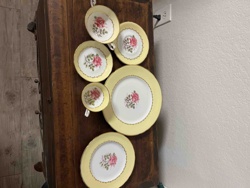
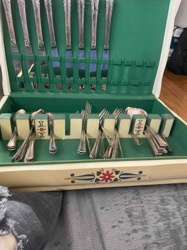
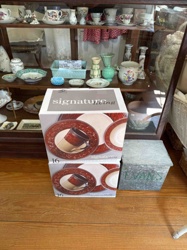
This is an extensive collection of amber-colored pressed glass dinnerware, likely dating from the early to mid-20th century, specifically Depression glass era (1920s-1940s) given its style and material. The set includes a variety of pieces such as dinner plates, dessert plates, bowls (both shallow and deeper), cups with saucers, a two-tiered serving stand, a large segmented serving platter, and what appear to be individual condiment dishes or small tumblers. All pieces share a consistent aesthetic: a warm amber or marigold color, and a distinctive pressed glass pattern. The pattern features ornate, often scalloped or ruffled edges, and a repetitive circular or medallion motif embossed on the surface, particularly noticeable on the rims of plates and bowls, and the undersides of cups. The craftsmanship indicates mass production characteristic of pressed glass, where molten glass is pressed into molds, which can result in slight variations or mold lines. Some pieces exhibit well-defined patterns, suggesting good quality for the period. There are no immediate visible signs of major damage like chips or cracks from the provided images, though a thorough inspection would be needed to confirm overall condition. The consistent honey-amber hue makes it a cohesive collection, likely designed for formal or semi-formal dining. The presence of a two-tiered stand and segmented platter suggests versatility for entertaining.
AI Appraisal Report
Based on my visual examination of the provided image, this extensive collection of amber pressed glass dinnerware appears to be a well-preserved example from the Depression Era (1920s-1940s). The consistent warm amber/marigold coloration and the characteristic pressed glass patterns, including scalloped edges and medallion motifs, strongly suggest authenticity as period Depression glass. The set's breadth, including dinner plates, dessert plates, bowls, cups with saucers, a two-tiered stand, and a segmented platter, is a significant value factor, as complete or near-complete sets are more desirable than individual pieces.
From the image, the condition appears to be good; I do not observe any immediate chips, cracks, or significant fleabites, which is crucial for pressed glass. However, without a physical inspection, confirming the absence of such damage on all pieces, especially their rims and bases, is impossible. Authenticity is strongly indicated by the style and known mass-production techniques of the period, but without handling the pieces, I cannot definitively rule out modern reproductions, although the aging of the glass visible seems consistent with the era.
Market conditions for Depression glass remain steady, with a moderate collector base. While individual pieces might fetch $5-$25 each, a cohesive, extensive set like this commands a premium. The demand is moderate, with rarity being higher for complete sets of uncommon patterns. This particular pattern, while attractive, does not appear to be among the rarest, but its comprehensive nature enhances its appeal. Factors significantly impacting value include the confirmed absence of damage, the precise pattern identification (which could link it to a specific manufacturer like Jeanette, Hazel Atlas, or Anchor Hocking), and the overall quantity of undamaged pieces. For full authentication, I would need to physically inspect each piece for mold lines, manufacturing flaws consistent with the era, and potential pattern identifiers or manufacturer marks. Provenance documentation, though rarely available for Depression glass, would also solidify its history.