AI Appraisal Estimate

AI-generated estimates · not official valuations

From the user

What was submitted

Photo and notes provided by the user — not generated by AI

Submitted item photo
Submitted photo · June 12, 2026

User's notes

No additional notes provided.

AI analysis below

AI appraisal

AI analysis & estimate

AI-Generated · Verify before acting

Everything below is generated by AI for informational purposes only. AI can make mistakes — the AI may misidentify items or misattribute them (artist, maker, brand, designer, origin, era). This is not an official valuation and should not be used for insurance, sale, tax, estate, legal, or lending purposes — or any decision requiring a certified appraisal. It is not an authoritative claim about any person, brand, or rights holder — do not share or rely on it as a factual statement about a third party. Always consult qualified professionals before making financial decisions.

Read the full disclaimer

AI Identification

·Not independently authenticated·Verify before acting

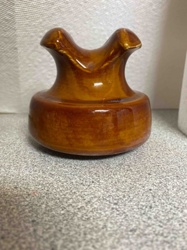
Antiquated Ceramic Power Line Insulator

Electrical Equipment Insulator

AI Estimated Value

·Not an official valuation·Verify before acting

$10-30

As of June 12, 2026

AI Item Analysis

·AI can make mistakes·Verify before acting
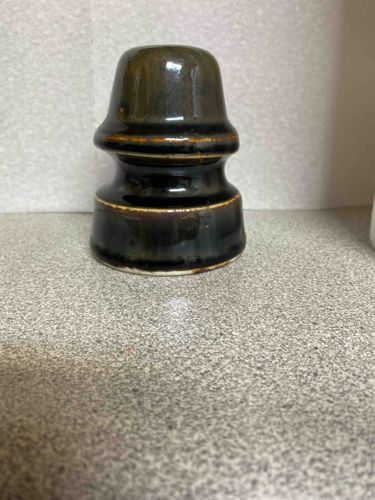
This is a vintage or antique ceramic power line insulator, likely used for electrical transmission or distribution. It features a dark, rich brown to almost black glazed exterior, providing both electrical insulation and protection from the elements. The glaze exhibits a high-gloss finish, reflecting light and indicating a well-preserved surface. The insulator is composed of a durable ceramic or porcelain material, typical for its function, and displays a standard spool-type or multi-part design, characterized by distinct convex and concave sections that provide a longer leakage path to prevent electrical arcing. The visible construction includes a flared top, tapering inwards before flaring out again into a wider, ridged base. There are two prominent concentric ridges or bands that are lightly abraded, revealing a lighter, brownish-orange, un-glazed ceramic body underneath the dark glaze. This abrasion could be due to age, handling, or contact with other surfaces during its operational life or storage. The very bottom rim also shows the unglazed ceramic, consistent with how such items are manufactured and fired. No obvious chips, cracks, or significant damage are discernible from the provided images, suggesting it's in relatively good condition for its presumed age and utility. The uniformity of the glaze application and the solid construction point to a quality piece of industrial ceramic. Its style aligns with insulators produced from the late 19th century through the mid-20th century.
AI Appraisal Report

·AI can make mistakes·Verify before acting
Based on my visual examination of the provided image, this Antiquated Ceramic Power Line Insulator appears to be in very good condition for its age. The dark, high-gloss glaze is largely intact, showing only minor abrasion on two prominent ridges and the bottom rim, revealing the unglazed ceramic body. There are no discernible chips, cracks, or significant damage, which is a positive factor. Its construction points to a utility-grade piece, likely dating from the late 19th to mid-20th century. While authenticity appears self-evident for such an industrial item, a physical inspection would confirm the ceramic type and precise manufacturing characteristics. Market conditions for common utility insulators are generally modest. Comparables often sell in the $5-25 range, with slight variations based on manufacturer marks (not visible here), specific design, and condition. This particular 'spool-type' design is fairly ubiquitous. Demand is primarily from collectors focusing on industrial Americana, electrical history, or decorative repurposing. Its rarity is low; millions of such insulators were produced. Factors impacting its value negatively are the commonality of the design and the lack of unique identifying marks. Positively, its excellent condition and attractive glaze enhance its desirability slightly. Without visible manufacturer marks or provenance documentation, it's difficult to assign a higher value. Scientific testing is typically not performed or necessary for items of this value. An in-person examination would allow me to check for any hidden damage, confirm the ceramic's feel and weight, and search for embossed or printed marks which could slightly increase its value.

Get your items appraised

Instant estimates of your treasures with AI-powered appraisals

Browse More Appraisals