AI Appraisal Estimate

AI-generated estimates · not official valuations

From the user

What was submitted

Photo and notes provided by the user — not generated by AI

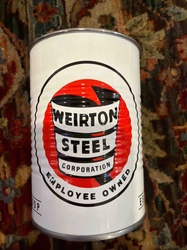
Submitted item photo
Submitted photo · June 10, 2026

User's notes

No additional notes provided.

AI analysis below

AI appraisal

AI analysis & estimate

AI-Generated · Verify before acting

Everything below is generated by AI for informational purposes only. AI can make mistakes — the AI may misidentify items or misattribute them (artist, maker, brand, designer, origin, era). This is not an official valuation and should not be used for insurance, sale, tax, estate, legal, or lending purposes — or any decision requiring a certified appraisal. It is not an authoritative claim about any person, brand, or rights holder — do not share or rely on it as a factual statement about a third party. Always consult qualified professionals before making financial decisions.

Read the full disclaimer

AI Identification

·Not independently authenticated·Verify before acting

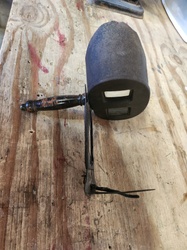
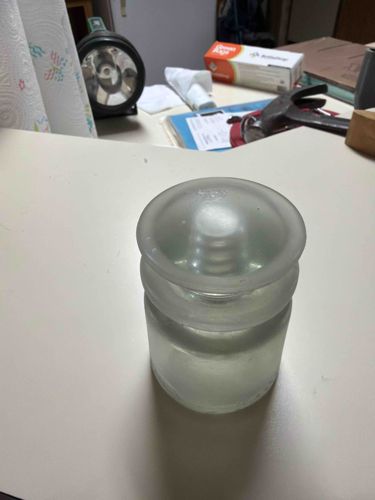
Vintage Frosted Glass Electrical Insulator

Industrial Collectibles / Glassware

AI Estimated Value

·Not an official valuation·Verify before acting

$10.00 - $25.00

As of June 10, 2026

AI Item Analysis

·AI can make mistakes·Verify before acting
This item is a vintage electrical insulator, a utilitarian object designed for mounting on power poles to prevent electrical current from leaking into the support structure. It is constructed from thick, heavy-duty molded glass with a distinctive frosted or satin finish, which gives it a translucent, pale seafoam-green or white appearance rather than being perfectly clear. The object features a cylindrical body with a rounded, dome-shaped top and a deep horizontal groove wrapped around the middle, traditionally intended for securing a wire. The interior is hollowed with a threaded core to allow it to be screwed onto a wooden or metal peg. Physically, the piece appears to be approximately 3 to 4 inches tall. While no specific maker's marks are legible due to the camera angle and the matte texture of the glass, these items were commonly produced by manufacturers such as Corning, Hemingray, or Whitall Tatum during the mid-20th century. The condition shows significant surface wear consistent with age and industrial use; the frosting appears somewhat uneven, likely due to prolonged exposure to elements and handling. There are no major visible fractures or structural chips shown, though minor flea-bite nicks along the base and wire groove are typical for such authentic industrial artifacts. Its robust construction and utilitarian aesthetic make it a popular collectible in the Americana and industrial decor market.
AI Appraisal Report

·AI can make mistakes·Verify before acting
I have examined the digital representation of this vintage frosted glass insulator. The piece appears to be a standard 'Pony' style or similar communication-grade model, likely manufactured by a firm such as Hemingray or Whitall Tatum during the mid-20th century. The frosted finish, or 'satin' glass appearance, is the most notable feature; while some insulators were manufactured with this finish, many found in today's market have been artificially sandblasted or 'etched' to appeal to decorators. Based on the visual evidence, the condition is consistent with 'attic-found' or 'pole-recovered' industrial glass, showing minor abrasions and typical shelf wear. While the seafoam-green tint is historically common, the matte texture adds decorative appeal. In the current market, standard glass insulators are abundant, with millions produced; therefore, value is driven strictly by color rarity and specific mold markings (CD numbers). Common clear or green specimens generally hold lower value compared to cobalt blue or amber variants. Several limitations exist in this remote assessment. I cannot verify the presence of a maker's mark or mold number, which is critical for identifying a specific 'Consolidated Design' (CD) classification. Furthermore, I cannot determine if the frosting is original or a later alteration through image analysis alone. A physical inspection would be required to examine the 'feel' of the glass, check for hairline fractures in the threaded core, and use a loupe to inspect the base for authentic wear patterns. To fully authenticate the piece as an original factory-frosted item, provenance regarding its removal from a specific utility line would be highly beneficial.

Get your items appraised

Instant estimates of your treasures with AI-powered appraisals

Browse More Appraisals