Antique Glass Telephone/Telegraph Insulator
Antique Communication Equipment / Collectible Glass

Antique Glass Telephone/Telegraph Insulator

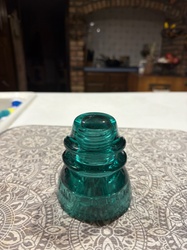
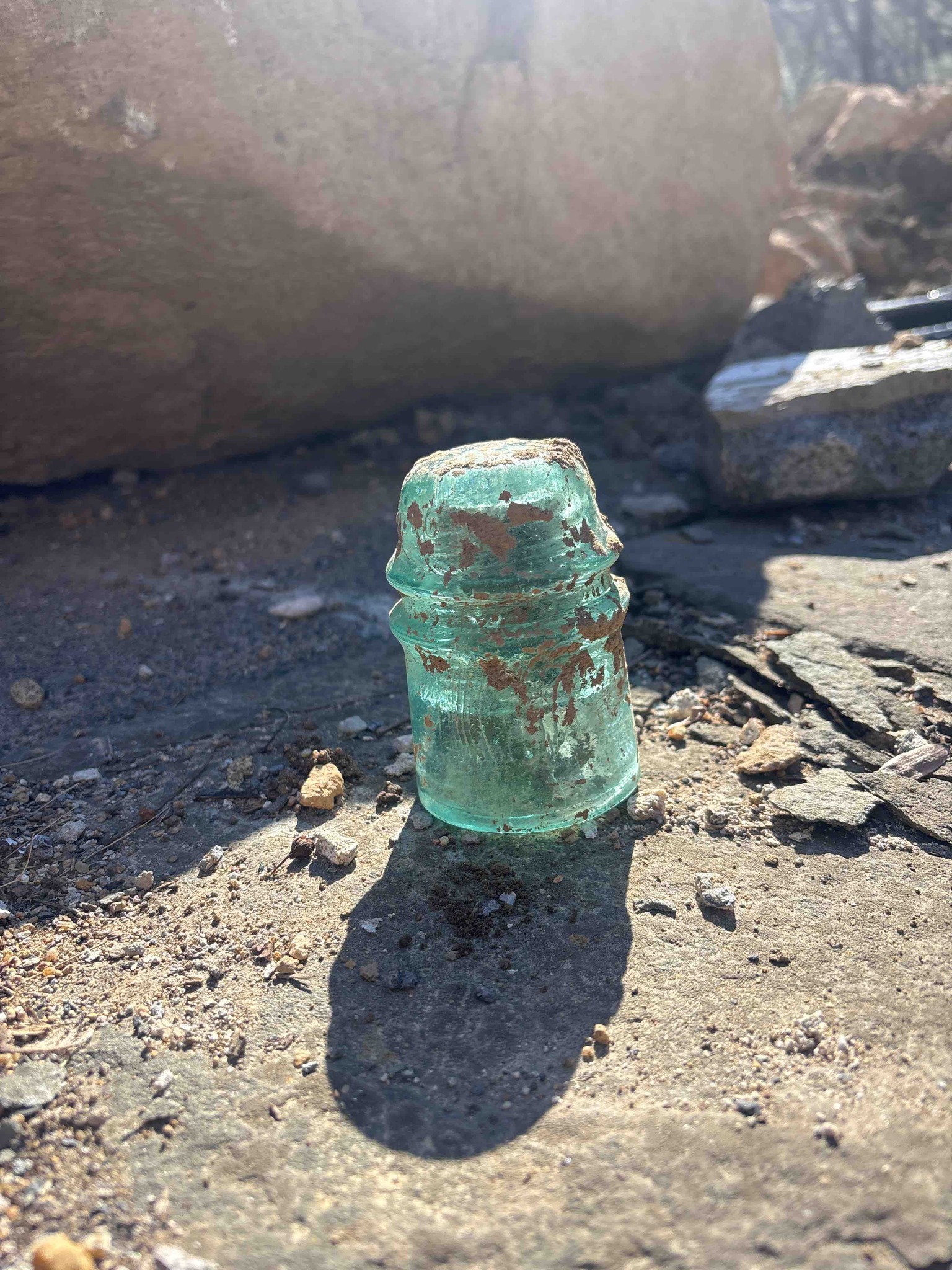
This object is an antique glass insulator, traditionally used for supporting telephone or telegraph wires on wooden poles. The item is crafted from heavy, molded glass in a classic 'aqua' or light blue-green shade, which is characteristic of utilitarian glass from the late 19th to early 20th centuries. It features a rounded top, a wire groove for securing line wire, and a cylindrical skirt at the bottom. The interior would typically be threaded to screw onto a wooden peg. In terms of condition, the insulator is heavily weathered with significant encrustations of dirt, mud, and mineral deposits, suggesting it may have been recently excavated or left exposed to the elements for a long period. There is visible chipping and roughness along the top dome and possibly the base edge. The presence of small air bubbles within the glass (seeds) is a common trait for glass of this era, indicating a mass-production molding process. Based on its style and material, it likely dates between 1890 and 1920, though specific manufacturer marks (such as 'Hemingray' or 'Brookfield') are currently obscured by surface debris. The preservation of the translucency despite the surface grime suggests a high-quality silica-soda-lime glass composition.
Estimated Value

$5.00 - $15.00

Basic Information

Category

Antique Communication Equipment / Collectible Glass

Appraised On

April 10, 2026

Estimated Value

$5.00 - $15.00

Item Description

This object is an antique glass insulator, traditionally used for supporting telephone or telegraph wires on wooden poles. The item is crafted from heavy, molded glass in a classic 'aqua' or light blue-green shade, which is characteristic of utilitarian glass from the late 19th to early 20th centuries. It features a rounded top, a wire groove for securing line wire, and a cylindrical skirt at the bottom. The interior would typically be threaded to screw onto a wooden peg. In terms of condition, the insulator is heavily weathered with significant encrustations of dirt, mud, and mineral deposits, suggesting it may have been recently excavated or left exposed to the elements for a long period. There is visible chipping and roughness along the top dome and possibly the base edge. The presence of small air bubbles within the glass (seeds) is a common trait for glass of this era, indicating a mass-production molding process. Based on its style and material, it likely dates between 1890 and 1920, though specific manufacturer marks (such as 'Hemingray' or 'Brookfield') are currently obscured by surface debris. The preservation of the translucency despite the surface grime suggests a high-quality silica-soda-lime glass composition.
Get Your Items Appraised

Instant estimates of your treasures with AI-powered instant appraisals

Browse More Appraisals