AI Appraisal Estimate

AI-generated estimates · not official valuations

From the user

What was submitted

Photo and notes provided by the user — not generated by AI

Submitted item photo
Submitted photo · June 13, 2026

User's notes

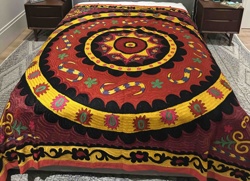
Chiefs blanket

AI analysis below

AI appraisal

AI analysis & estimate

AI-Generated · Verify before acting

Everything below is generated by AI for informational purposes only. AI can make mistakes — the AI may misidentify items or misattribute them (artist, maker, brand, designer, origin, era). This is not an official valuation and should not be used for insurance, sale, tax, estate, legal, or lending purposes — or any decision requiring a certified appraisal. It is not an authoritative claim about any person, brand, or rights holder — do not share or rely on it as a factual statement about a third party. Always consult qualified professionals before making financial decisions.

Note

This analysis also relies on unverified notes provided by the user, which may be incomplete or inaccurate and could affect the result.

Read the full disclaimer

AI Identification

·Not independently authenticated·Verify before acting

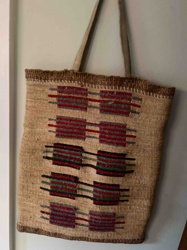
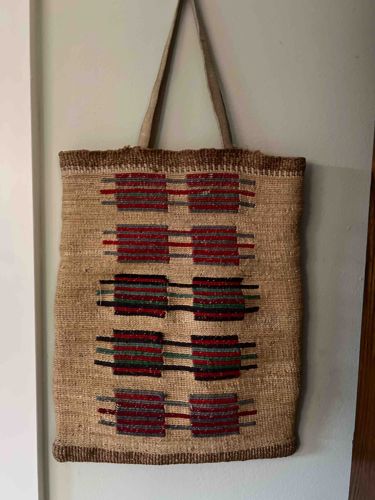
Southwestern Navajo-Style Hand-Woven Textile Tote Bag

Antique and Vintage Textiles / Handbags

AI Estimated Value

·Not an official valuation·Verify before acting

$150 - $250

As of June 13, 2026

AI Item Analysis

·AI can make mistakes·Verify before acting
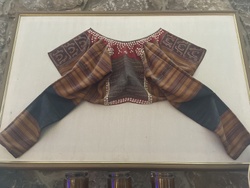
This is a hand-woven textile tote bag designed in the aesthetic tradition of Navajo Third Phase Chief's blankets. The bag features a rectangular body constructed from coarse, natural-toned wool or heavy vegetable fibers in a cream or wheat-colored field. The central design consists of five horizontal rows of geometric motifs featuring red, black, and teal/grey woolen threads. These patterns reference the iconic 'Chief's Blanket' design, characterized by bands and block-like geometric interruptions. The bag is suspended by two flat, light-colored leather or suede straps attached to the interior of the rim. The top and bottom edges are finished with a darker, variegated brown woven border, providing structural stability. The weaving technique appears to be a flat tapestry weave, and the irregular texture suggests hand-spun yarn. Condition-wise, the bag shows slight distortion in shape consistent with the weight of the weave and may have minor pilling or stray fibers. The style is a mid-to-late 20th-century interpretation of classic indigenous motifs, often seen in Southwestern artisanal markets. The craftsmanship is robust, though it lacks the fine-gauge precision of historic 19th-century textiles, suggesting it was intended as a functional accessory or souvenir item.
AI Appraisal Report

·AI can make mistakes·Verify before acting
I have carefully examined the provided images and description of this Southwestern-style hand-woven tote. The piece features a prominent 'Third Phase' Chief’s blanket pattern, characterized by the diamond and block motifs superimposed over horizontal stripes. While the design is historically significant, the material execution—using coarse, heavy-gauge wool and flat suede straps—points to a mid-to-late 20th-century 'revival' or artisanal market origin rather than a 19th-century weaving. The textures and variegated edges suggest hand-spun yarn, a hallmark of authentic Southwestern craftsmanship, though the utilitarian construction as a handbag indicates it was produced for the decorative or tourist trade. The condition appears fair to good; the slight distortion in shape is typical for heavy flat tapestry weaves under their own weight. Currently, the market for 'Western Americana' accessories remains stable, with demand driven by the popular 'Santa Fe Style.' Comparables for similar wool-woven bags by commercial or independent weavers typically realize prices in the low hundreds. The primary value-adding factor is the specific use of the Chief’s blanket motif, which carries higher aesthetic appeal than simple geometric patterns. Note that photos alone cannot confirm the specific dye types (natural versus synthetic) or the exact origin (e.g., Navajo vs. Mexican Chimayo vs. Zapotec). A full authentication would require an in-person physical inspection of the 'lazy lines' in the weave, a fiber burn test to confirm wool content, and provenance documentation to determine if the weaver was a recognized indigenous artisan, which could significantly increase the valuation.

Get your items appraised

Instant estimates of your treasures with AI-powered appraisals

Browse More Appraisals