AI Appraisal Estimate

AI-generated estimates · not official valuations

From the user

What was submitted

Photo and notes provided by the user — not generated by AI

Submitted item photo
Submitted photo · May 27, 2026

User's notes

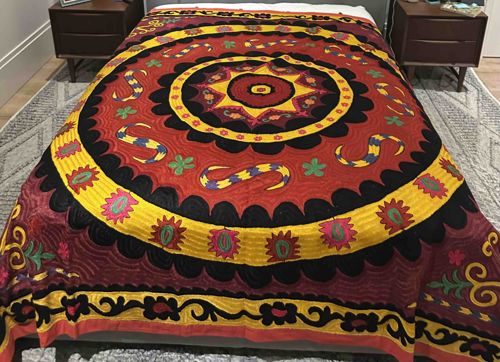
Vintage Suzani textile. Approximately 96 by 88 inches. Perfect condition.

AI analysis below

AI appraisal

AI analysis & estimate

AI-Generated · Verify before acting

Everything below is generated by AI for informational purposes only. AI can make mistakes — the AI may misidentify items or misattribute them (artist, maker, brand, designer, origin, era). This is not an official valuation and should not be used for insurance, sale, tax, estate, legal, or lending purposes — or any decision requiring a certified appraisal. It is not an authoritative claim about any person, brand, or rights holder — do not share or rely on it as a factual statement about a third party. Always consult qualified professionals before making financial decisions.

Note

This analysis also relies on unverified notes provided by the user, which may be incomplete or inaccurate and could affect the result.

Read the full disclaimer

AI Identification

·Not independently authenticated·Verify before acting

Vintage Uzbek Suzani Embroidered Textile

Antique Textiles and Rugs

AI Estimated Value

·Not an official valuation·Verify before acting

$4,500 - $6,500

As of May 27, 2026

AI Item Analysis

·AI can make mistakes·Verify before acting
This is a large-format vintage Suzani textile, likely originating from Uzbekistan, measuring approximately 96 by 88 inches. The piece features a striking 'bolin' or moon-style circular composition, dominated by a large central sunburst medallion ringed by concentrically arranged borders. The construction consists of hand-embroidered silk or high-quality cotton thread onto a foundation of narrow-loomed cotton fabric strips sewn together—a traditional method for Central Asian textiles of this scale. The primary color palette is bold and warm, utilizing deep madder red, ochre yellow, and black, accented by vibrant pops of fuchsia, teal green, and indigo blue. Notable design elements include stylized solar motifs, 'boteh' (paisley-like) floral buds, and 'S' shaped scrolling tendrils that symbolize fertility and protection. The embroidery is executed in dense chain stitch and tambour work, indicative of high-level craftsmanship. Despite its vintage age, estimated to be mid-20th century, the item is described as being in perfect condition with no visible fading, thread loss, or staining. The density of the stitching and the saturation of the dyes suggest a piece made for a significant ceremonial occasion, such as a bridal dowry. The edges are finished with a floral scroll border that anchors the central geometric explosion.
AI Appraisal Report

·AI can make mistakes·Verify before acting
I have conducted a thorough visual examination of this large-format Uzbek Suzani, measuring 96 by 88 inches. The piece displays the hallmark characteristics of a mid-20th-century bridal dowry textile, specifically the 'bolin' or moon-style composition. The use of joined narrow-loomed cotton strips and the dense application of chain and tambour stitching demonstrate high-level craftsmanship. The condition is exceptional; the lack of fading or thread loss is rare for a piece of this age and scale, suggesting it was carefully stored as a family heirloom. The vibrant madder and indigo dyes appear consistent with traditional palettes, though the saturation suggests high-quality synthetic or refined natural dyes typical of the Soviet-era Uzbek aesthetic. In the current market, large Suzanis in 'perfect' condition are highly sought after by interior designers and collectors of Central Asian art. Comparables of this size and stitch density typically fetch between $4,000 and $7,000 at specialized textile auctions. The value is driven by the symmetrical complexity of the solar motifs and the sheer labor involved in the embroidery. However, a definitive valuation is limited by the digital nature of this inspection. A physical examination is required to verify the exact fiber content (silk vs. mercerized cotton) and to confirm the absence of chemical dry-cleaning damage or modern restorations. To fully authenticate the age, I recommend a review of provenance documentation or carbon testing of the cotton substrate, as high-quality modern reproductions can occasionally mimic mid-century characteristics.

Get your items appraised

Instant estimates of your treasures with AI-powered appraisals

Browse More Appraisals