AI Appraisal Estimate

AI-generated estimates · not official valuations

From the user

What was submitted

Photo and notes provided by the user — not generated by AI

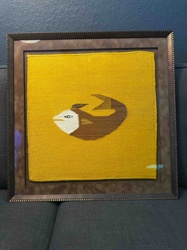
Submitted item photo
Submitted photo · May 27, 2026

User's notes

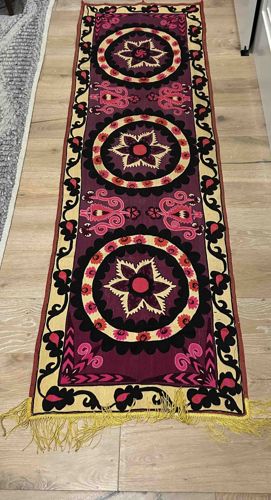
Vintage Suzani textile, approximately 84 + 3 inch fringes by 27 inches. Perfect Condition.

AI analysis below

AI appraisal

AI analysis & estimate

AI-Generated · Verify before acting

Everything below is generated by AI for informational purposes only. AI can make mistakes — the AI may misidentify items or misattribute them (artist, maker, brand, designer, origin, era). This is not an official valuation and should not be used for insurance, sale, tax, estate, legal, or lending purposes — or any decision requiring a certified appraisal. It is not an authoritative claim about any person, brand, or rights holder — do not share or rely on it as a factual statement about a third party. Always consult qualified professionals before making financial decisions.

Note

This analysis also relies on unverified notes provided by the user, which may be incomplete or inaccurate and could affect the result.

Read the full disclaimer

AI Identification

·Not independently authenticated·Verify before acting

Vintage Central Asian Suzani Runner Textile

Vintage Textiles & Folk Art

AI Estimated Value

·Not an official valuation·Verify before acting

$450 - $650

As of May 27, 2026

AI Item Analysis

·AI can make mistakes·Verify before acting
This is a vibrant vintage Suzani textile, measuring approximately 87 inches in total length (inclusive of 3-inch golden-yellow fringes) and 27 inches in width. The piece is constructed with a rich plum-purple cotton or silk ground, featuring hand-embroidered motifs traditionally found in Uzbekistan or Tajikistan culture. The design exhibits three large central solar medallions or 'gul' (flowers), each encompassing a six-pointed star within concentric circles of ivory and black. These medallions are separated by stylized pomegranate or paisley-like shapes in bright pink and coral tones. A contrasting ivory border runs the perimeter, decorated with a continuous black scrolling vine with pink floral accents. The piece demonstrates high-quality craftsmanship, likely using a tambour or chain stitch technique typical of mid-20th-century Central Asian needlework. The embroidery is dense and well-preserved, showing no visible signs of thread loss, fading, or staining. The condition is noted as perfect, with the structural integrity of the base fabric and the vibrancy of the dyes remaining excellent. The fringe is intact along the short edges, adding a decorative finish characteristic of household wall hangings or decorative runners from this style period.
AI Appraisal Report

·AI can make mistakes·Verify before acting
Upon visual examination of this vibrant Suzani runner, I find it to be an excellent example of mid-to-late 20th-century Central Asian embroidery, likely originating from Uzbekistan. The 'perfect' condition reported is a significant value driver; the plum-purple ground appears remarkably saturated with no visible oxidation or bleed, and the integrity of the chain-stitch embroidery (basma or tambour) suggests it was kept as a cherished household dowry piece or decorative hanging rather than a floor-use textile. Market demand for semi-antique Suzanis remains steady among interior designers and folk-art collectors who prize the 'gul' (solar) and pomegranate motifs as symbols of fertility and protection. Comparables for runners of this length (87 inches) and condition typically hammer between $400 and $700 at specialized textile auctions. The presence of the original golden-yellow fringe adds to its desirability, as these elements are often the first to deteriorate. However, values for 20th-century pieces are currently stabilized because of a high volume of modern reproductions entering the market. Limitations: This appraisal is based on photographic evidence only. To fully authenticate the piece as a true vintage textile versus a high-quality modern revival, an in-person examination is required to verify natural versus synthetic dyes and the specific hand-feel of the base fabric. Scientific testing of fibers or provenance documentation (such as purchase records from the region of origin) would be necessary to confirm an earlier date of production, which could potentially increase the valuation if the piece is found to pre-date the mid-20th century.

Get your items appraised

Instant estimates of your treasures with AI-powered appraisals

Browse More Appraisals