AI identification & appraisal estimate

Moritz Zdekauer (M.Z.) Austria Hand-Painted Porcelain Leaf Dish

Submitted photo of Moritz Zdekauer (M.Z.) Austria Hand-Painted Porcelain Leaf Dish
Photo submitted by the user — not generated by AI

User's notes

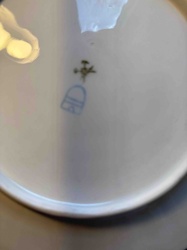
The green “M.Z. Austria” mark with the double-headed eagle dates it to the Moritz Zdekauer porcelain factory, active in Altrohlau (now Stará Role, Czech Republic) under Austrian control. That mark was used roughly between 1884 and 1909, before the company was sold to C.M. Hutschenreuther in 1909. The impressed number “798” is likely a mold or pattern number, not a date, but it can help narrow down the specific figurine or item type if you’re cross-referencing with collector databases or auction listings.

These notes were written by the person who submitted this item. Appraiser.AI has not verified them, and the AI's identification and estimate may rely on them.

AI Estimated Value

Not an official valuation

$45 - $75

AI estimate as of December 18, 2025 · verify with a professional before acting

AI-Generated · Verify before acting

Everything on this page is generated by AI for informational purposes only. AI can make mistakes — the AI may misidentify items or misattribute them (artist, maker, brand, designer, origin, era). This is not an official valuation and should not be used for insurance, sale, tax, estate, legal, or lending purposes — or any decision requiring a certified appraisal. It is not an authoritative claim about any person, brand, or rights holder — do not share or rely on it as a factual statement about a third party. Always consult qualified professionals before making financial decisions.

This analysis also relies on unverified notes provided by the user, which may be incomplete or inaccurate and could affect the result.

Read the full disclaimer

AI Item Analysis

This is a fine antique porcelain nappy or bon-bon dish produced by the Moritz Zdekauer (M.Z.) factory in Altrohlau, Austria. The dish is masterfully shaped into a stylized leaf form with a scalloped, serrated edge and a small, gilded loop handle at the top. It features a delicate hand-painted floral motif consisting of pink and white roses with green foliage, set against a soft cream-colored ground with ethereal blue and lavender cloud-like accents. The rim and handle are accented with gilded highlighting, characteristic of Late Victorian and Art Nouveau porcelain aesthetics. Based on the green 'M.Z. Austria' double-headed eagle backstamp, this piece was manufactured between 1884 and 1909. Physically, the porcelain is thin and translucent, indicating high-quality craftsmanship. The impressed mold number '798' on the reverse further identifies the specific design pattern. Regarding condition, the piece appears to be in very good antique state with minor shelf wear to the base; the gilding on the handle and rim shows light thinning consistent with age, but there are no immediately visible cracks, chips, or significant restoration. This item reflects the refined European porcelain production typical of the Austro-Hungarian era.

AI Appraisal Report

Based on my examination of the provided documentation and imagery for the Moritz Zdekauer (M.Z.) Austria leaf dish (Mold #798), I have assessed its market value within the current Victorian-era porcelain segment. The green double-headed eagle backstamp is a documented mark used between 1884 and 1909, confirming its Altrohlau origin and its production during the height of the factory’s transition into Art Nouveau aesthetics. The hand-painted floral execution and translucent body indicate a high-quality production standard suitable for the middle-to-upper export market of the time. In the current market, M.Z. Austria pieces are widely available, which limits rarity. Small 'nappies' or bon-bon dishes are common forms; however, the leaf shape and preserved gilding on the handle add slight premiums. Condition is paramount; while this piece shows expected light gilt-wear, the absence of chips or crazing maintains its collectible status. Similar leaf-form dishes from this period typically realize between $35 and $85 at auction or specialized antique retail. Limitations: My assessment is based on photographic evidence and descriptions. A physical inspection would be required to verify the absence of professional 'over-painting' or restorations and to confirm the resonance and weight of the porcelain. Full authentication would benefit from provenance documentation or a UV light test to detect hidden repairs in the glaze. Without a physical tactile check for 'bite' on the unglazed footrim, the distinction between original period gilding and later-applied gold cannot be 100% verified. Value assumes the piece remains free of internal structural hairlines not visible in the provided images.

Keep exploring

More antique european porcelain & ceramics appraisals

Get your items appraised

Instant AI-powered appraisal estimates from a photo

Browse More Appraisals