AI identification & appraisal estimate

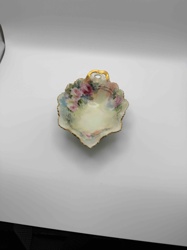
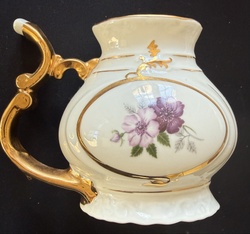
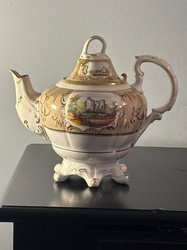
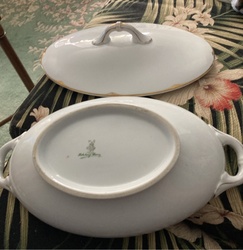
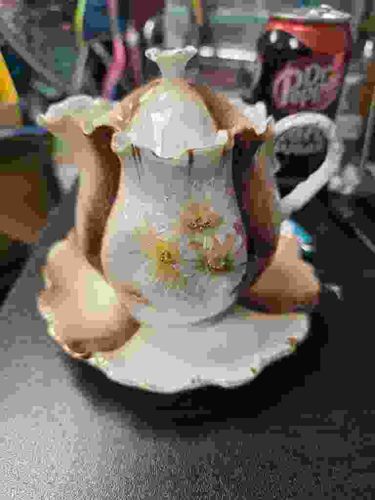
R. S. Prussia Porcelain Chocolate Pot

Submitted photo of R. S. Prussia Porcelain Chocolate Pot
Photo submitted by the user — not generated by AI

User's notes

antique Prussian chocolate pot small chips under the lid

These notes were written by the person who submitted this item. Appraiser.AI has not verified them, and the AI's identification and estimate may rely on them.

AI Estimated Value

Not an official valuation

$250.00 - $350.00

AI estimate as of April 3, 2026 · verify with a professional before acting

AI-Generated · Verify before acting

Everything on this page is generated by AI for informational purposes only. AI can make mistakes — the AI may misidentify items or misattribute them (artist, maker, brand, designer, origin, era). This is not an official valuation and should not be used for insurance, sale, tax, estate, legal, or lending purposes — or any decision requiring a certified appraisal. It is not an authoritative claim about any person, brand, or rights holder — do not share or rely on it as a factual statement about a third party. Always consult qualified professionals before making financial decisions.

This analysis also relies on unverified notes provided by the user, which may be incomplete or inaccurate and could affect the result.

Read the full disclaimer

AI Item Analysis

This is an antique porcelain chocolate pot, likely produced in the late 19th or early 20th century (Victorian or Art Nouveau era) by the Reinhold Schlegelmilch (R.S. Prussia) factory. This piece exhibits characteristic high-fired fine porcelain with a translucent quality. The vessel features a tall, tapered body with a scalloped, ruffled rim and a matching finial-topped lid. The exterior is decorated with soft, hand-painted or decal-enhanced floral motifs—predominantly yellow and pink roses or wildflowers—centered on a pale background. The porcelain at the top and base transitions into a sunset-hued peach or coral gradient, complemented by delicate gilded accents along the edges and handle. The handle is an ornate, scroll-shaped porcelain piece, showing typical European craftsmanship of the period. Regarding condition, while the exterior finish appears well-preserved with minor loss to the gold gilding, the owner reports small chips located on the underside flange of the lid. Such chips are common due to friction and handling but do reduce the overall 'mint' status of the collectible. No major cracks or crazing are visible on the main vessel body, and the glaze maintains a soft luster. The piece typical of Suhl or Tillowitz production, embodying the romantic, organic aesthetic of late-century German ceramics.

AI Appraisal Report

I have carefully reviewed the provided documentation and high-resolution details of this Reinhold Schlegelmilch chocolate pot. Upon my visual inspection, the piece displays the classic characteristics of true 'Red Mark' R.S. Prussia porcelain, specifically the scalloped rim and the signature translucent paste synonymous with the Tillowitz factories. The floral transfer, likely a 'Carnation' or 'Rose' mold, maintains excellent color saturation, though the inevitable wear to the gilding on the scroll handle indicates frequency of use. The condition report noting chips to the lid's underside flange is a significant factor. In the current secondary market, collectors of Prussian porcelain are increasingly selective. While the main body remains free of cracks or hairlines, even minor damage to the lid reduces the potential valuation by approximately 30-40% compared to a 'mint' specimen. Market demand for Victorian-era decorative porcelain has softened recently, with interest shifting toward rare 'Hidden Image' transfers or exceptionally ornate 'Jeweled' molds, which this piece lacks. While the photographic evidence strongly suggests authenticity based on the specific glaze luster and mold sharpness, a definitive valuation is limited by the digital format. I cannot verify the presence of a genuine Red Mark backstamp or detect professional restorations (such as cold-painted sprays) that may be invisible under standard lighting. To finalize this appraisal, an in-person examination under long-wave ultraviolet (UV) light is required to check for hidden repairs. Provenance indicating the specific line of descent from the original era of purchase would also enhance its marketability.

Keep exploring

More antique european porcelain & ceramics appraisals

Get your items appraised

Instant AI-powered appraisal estimates from a photo

Browse More Appraisals