AI Appraisal Estimate

AI-generated estimates · not official valuations

From the user

What was submitted

Photo and notes provided by the user — not generated by AI

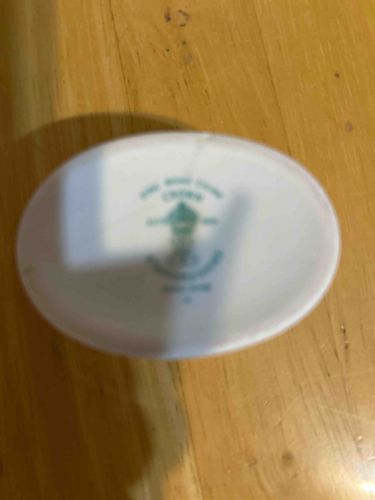
Submitted item photo
Submitted photo · June 12, 2026

User's notes

No additional notes provided.

AI analysis below

AI appraisal

AI analysis & estimate

AI-Generated · Verify before acting

Everything below is generated by AI for informational purposes only. AI can make mistakes — the AI may misidentify items or misattribute them (artist, maker, brand, designer, origin, era). This is not an official valuation and should not be used for insurance, sale, tax, estate, legal, or lending purposes — or any decision requiring a certified appraisal. It is not an authoritative claim about any person, brand, or rights holder — do not share or rely on it as a factual statement about a third party. Always consult qualified professionals before making financial decisions.

Read the full disclaimer

AI Identification

·Not independently authenticated·Verify before acting

Crown Staffordshire Fine Bone China Teacup or Small Dish

Antique and Vintage Ceramics

AI Estimated Value

·Not an official valuation·Verify before acting

$5 - $15

As of June 12, 2026

AI Item Analysis

·AI can make mistakes·Verify before acting
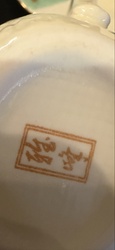
This item is the base of a fine bone china vessel, likely a teacup or a small decorative dish, featuring an oval-shaped profile. The piece is constructed from high-quality, translucent white fine bone china. The most prominent feature is the teal-colored underglaze backstamp located at the center of the base. This hallmark includes a crown emblem and the words 'FINE BONE CHINA' and 'CROWN STAFFORDSHIRE', identifying it as a product of the renowned Staffordshire region in England. Below the main mark, there appears to be a pattern number or series name, though it is slightly blurred. The craftsmanship is indicative of mid-20th-century English ceramic production, a period known for refined porcelain work. Regarding condition, a significant structural issue is visible: a prominent vertical hairline crack extends from the top edge downward through the center of the base, intersecting the maker's mark. This crack significantly impacts the structural integrity and resonant quality of the china. There is also minor shelf wear on the unglazed foot rim. Despite the damage, the mark remains a clear indicator of its heritage and material quality.
AI Appraisal Report

·AI can make mistakes·Verify before acting
Upon visual examination of the provided image, I have identified this piece as a fragment of Crown Staffordshire fine bone china, likely dating from the mid-20th century (post-1930s based on the mark style). The teal underglaze backstamp confirms its origin from the Minerva Works in Fenton, Stoke-on-Trent. While the translucent body and hallmark appear consistent with authentic production, the item’s value is severely compromised by its physical state. I observed a significant vertical hairline crack bifurcating the base and the maker's mark. In the ceramics market, such structural damage typically reduces the value of a common production piece by 80-90%. Crown Staffordshire was a prolific manufacturer; therefore, unless a pattern is exceptionally rare or part of a prestigious collaboration (such as those by designer Emily J. Wilkes), market demand for damaged utility ware is negligible. Collectors generally seek 'cabinet condition' specimens—those free of chips and cracks. This piece currently serves primarily as a study specimen rather than a collectible investment. Limitations: My assessment is based solely on digital imagery. For a definitive authentication, I would require a physical examination to test the 'ring' (resonance) of the china, look for professional overpainting/restoration, and verify the weight and light-translucency of the bone ash content. Provenance documentation or a full set pattern identification would be necessary to determine if this belonged to a historically significant service. Without a physical inspection, I cannot rule out internal stress fractures not visible to the naked eye. Given the visible damage, scientific testing would be cost-prohibitive relative to the item's market value.

Get your items appraised

Instant estimates of your treasures with AI-powered appraisals

Browse More Appraisals