Royal Maruri Porcelain Black Vase
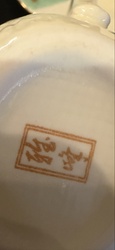
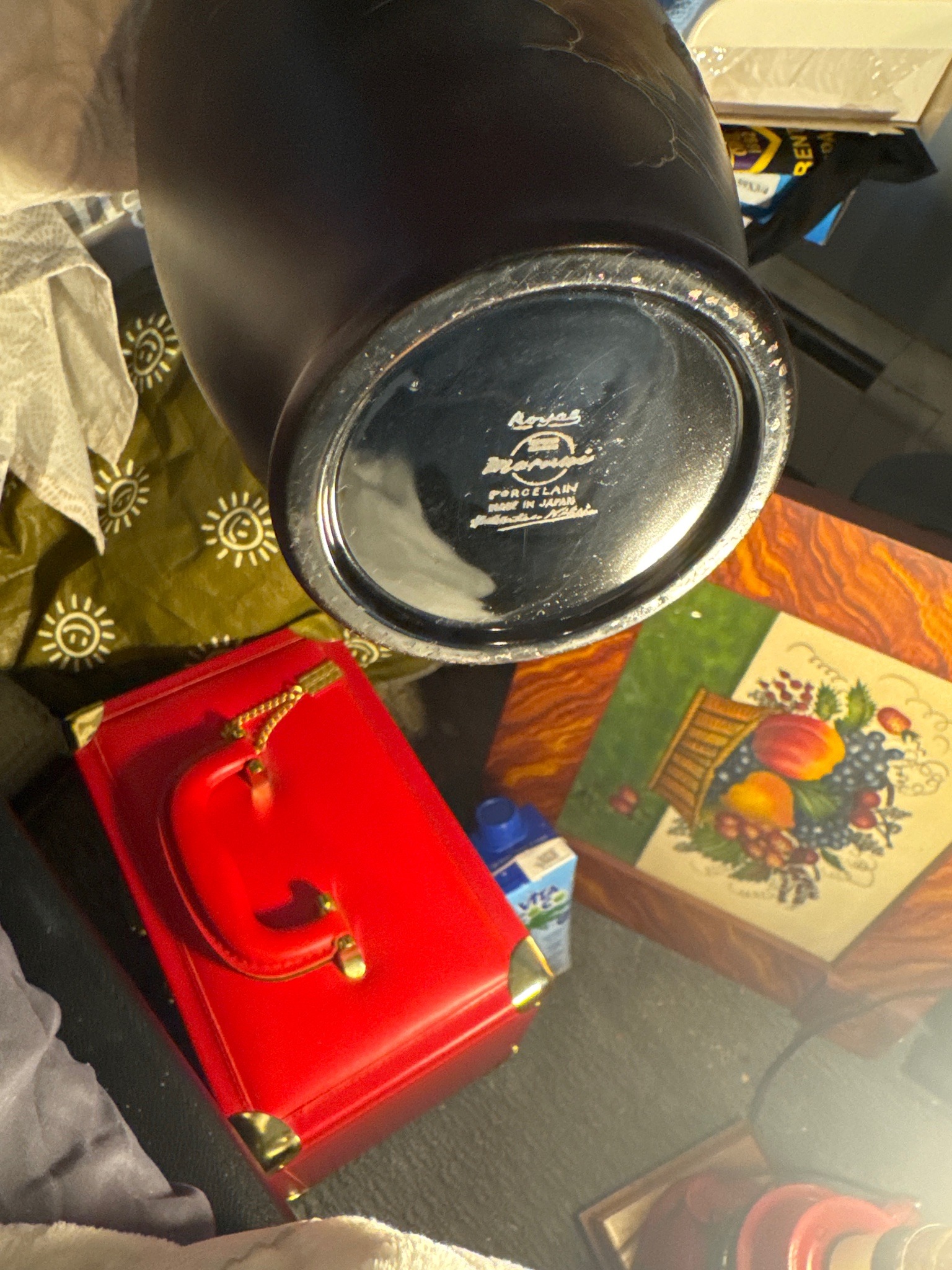
This is a vintage porcelain vase produced by Maruri in Japan, identifiable by the distinctive gold backstamp on the underside which reads Royal Maruri Porcelain Made in Japan. The vase features a sleek, bulbous body tapering toward a narrower base, finished in a deep matte or satin black glaze. The porcelain construction appears thin and refined, characteristic of high-quality Japanese exports. Notable markings include the printed gold-tone maker's mark which identifies it as part of the 'Royal' line, often associated with Mid-Century to late 20th-century giftware. The visible condition shows significant shelf wear on the unglazed foot rim, including numerous small nicks, scuffs, and areas of discoloration where the white porcelain body is exposed through the black surface. The black glaze itself appears to have some fine surface scratches and dust accumulation, though no major structural cracks or large chips are evident from this angle. The craftsmanship is indicative of mass-produced yet high-quality decorative ceramics from the Gifu or Nagoya regions of Japan, likely dating from the 1960s to 1980s. Its minimalist aesthetic and dark finish provide a striking contrast to the white porcelain core.
AI-Generated Appraisal Disclaimer
Estimated Value
$45.00 - $75.00
Basic Information
Category
Antique and Vintage Ceramics
Appraised On
May 12, 2026
Estimated Value
$45.00 - $75.00
Item Description
This is a vintage porcelain vase produced by Maruri in Japan, identifiable by the distinctive gold backstamp on the underside which reads Royal Maruri Porcelain Made in Japan. The vase features a sleek, bulbous body tapering toward a narrower base, finished in a deep matte or satin black glaze. The porcelain construction appears thin and refined, characteristic of high-quality Japanese exports. Notable markings include the printed gold-tone maker's mark which identifies it as part of the 'Royal' line, often associated with Mid-Century to late 20th-century giftware. The visible condition shows significant shelf wear on the unglazed foot rim, including numerous small nicks, scuffs, and areas of discoloration where the white porcelain body is exposed through the black surface. The black glaze itself appears to have some fine surface scratches and dust accumulation, though no major structural cracks or large chips are evident from this angle. The craftsmanship is indicative of mass-produced yet high-quality decorative ceramics from the Gifu or Nagoya regions of Japan, likely dating from the 1960s to 1980s. Its minimalist aesthetic and dark finish provide a striking contrast to the white porcelain core.
Related Tags
Get Your Items Appraised
Instant estimates of your treasures with AI-powered instant appraisals