AI Appraisal Estimate

AI-generated estimates · not official valuations

From the user

What was submitted

Photo and notes provided by the user — not generated by AI

Submitted item photo
Submitted photo · June 28, 2026

User's notes

No additional notes provided.

AI analysis below

AI appraisal

AI analysis & estimate

AI-Generated · Verify before acting

Everything below is generated by AI for informational purposes only. AI can make mistakes — the AI may misidentify items or misattribute them (artist, maker, brand, designer, origin, era). This is not an official valuation and should not be used for insurance, sale, tax, estate, legal, or lending purposes — or any decision requiring a certified appraisal. It is not an authoritative claim about any person, brand, or rights holder — do not share or rely on it as a factual statement about a third party. Always consult qualified professionals before making financial decisions.

Read the full disclaimer

AI Identification

·Not independently authenticated·Verify before acting

Vintage Delft Blue Polychrome Tripodal Dish

Antique and Vintage Ceramics

AI Estimated Value

·Not an official valuation·Verify before acting

$45.00 - $75.00

As of June 28, 2026

AI Item Analysis

·AI can make mistakes·Verify before acting
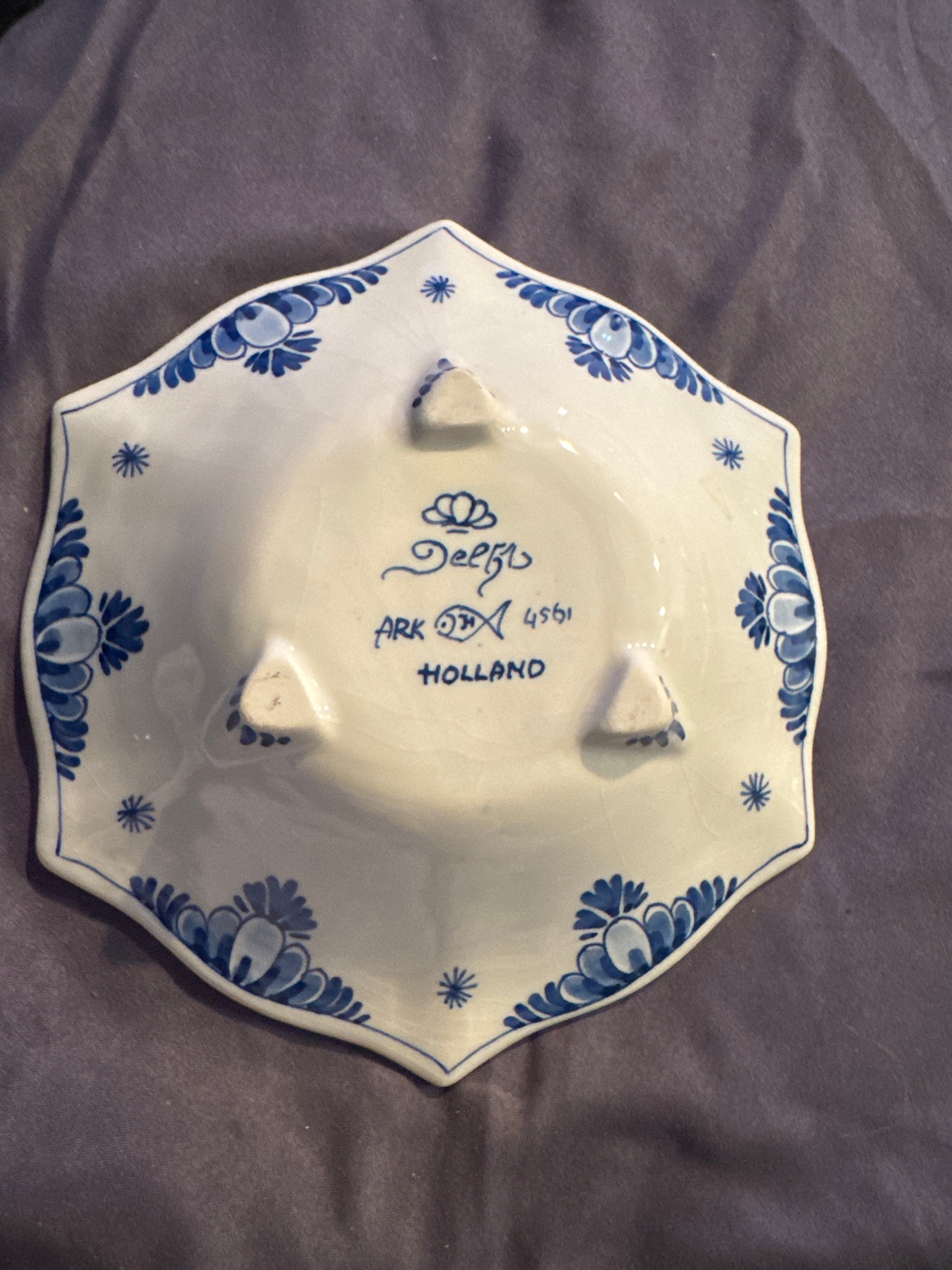
This is a vintage ceramic dish featuring a distinctive hexagonal star or lobed-edge silhouette, resting on three unglazed triangular feet. The piece is crafted from white earthenware or porcelain and decorated with the iconic 'Delft Blue' (Delfts Blauw) aesthetic. The underside displays hand-painted cobalt blue floral motifs and star-like symbols along the perimeter. Most significantly, the base features an extensive maker's mark consisting of a crown logo, the word 'Delft' in a stylized script, the initials 'ARK' flanking a stylized fish symbol, and the number '4561' followed by 'HOLLAND'. These marks suggest the piece was produced in the mid-to-late 20th century by a Dutch pottery such as Plateelbakkerij Ram or a similar studio employing the ARK designation. The glaze exhibits fine, all-over crazing consistent with aged ceramic, but the cobalt pigment remains vibrant. The feet show minor shelf wear and discoloration typical of used vintage pottery. The craftsmanship reflects traditional Dutch decorative arts, with the hand-painted elements showing varying thicknesses of blue pigment, adding depth to the floral designs. No major chips or cracks are immediately visible, though the surface patina indicates a decorative life spanning several decades.
AI Appraisal Report

·AI can make mistakes·Verify before acting
I have examined the digital images of this vintage 'Delfts Blauw' tripodal dish. The piece is a mid-20th-century decorative item, likely dating from the 1960s or 1970s. The markings, specifically the 'ARK' initials and the crown logo, indicate it was produced by the 'Alt-Rohde-Keramik' studio or a related Dutch workshop active during this period. The '4561' serves as a shape/mold number. Visually, the cobalt pigment maintains excellent saturation, and the overall crazing is consistent with the natural aging of the glaze on earthenware. There are no structural fractures visible. While the 'Delft' name carries prestige, this specific piece is a commercial-grade production rather than a 17th or 18th-century antique. The market for mid-century Dutch souvenir-style pottery is stable but saturated, as these items were mass-exported. High rarity is not present here; similar tripodal dishes frequently appear in online auctions and estate sales within the $30-$80 range. The value is supported by its charming lobed geometry and the integrity of the maker's mark. Limitations of this appraisal include the inability to detect 'under-glaze' repairs via UV light or to verify the tactile density of the ceramic. A full authentication would require physical handling to assess 'ping' resonance (checking for internal cracks) and specialized equipment to confirm the lead content of the glaze, which can further pinpoint the production era. Provenance documentation, such as original purchase receipts from a Dutch pottery house, would bolster the secondary market appeal.

Get your items appraised

Instant estimates of your treasures with AI-powered appraisals

Browse More Appraisals