German Porcelain Export Backstamp (Made in Germany)
Antique and Vintage Ceramics

German Porcelain Export Backstamp (Made in Germany)

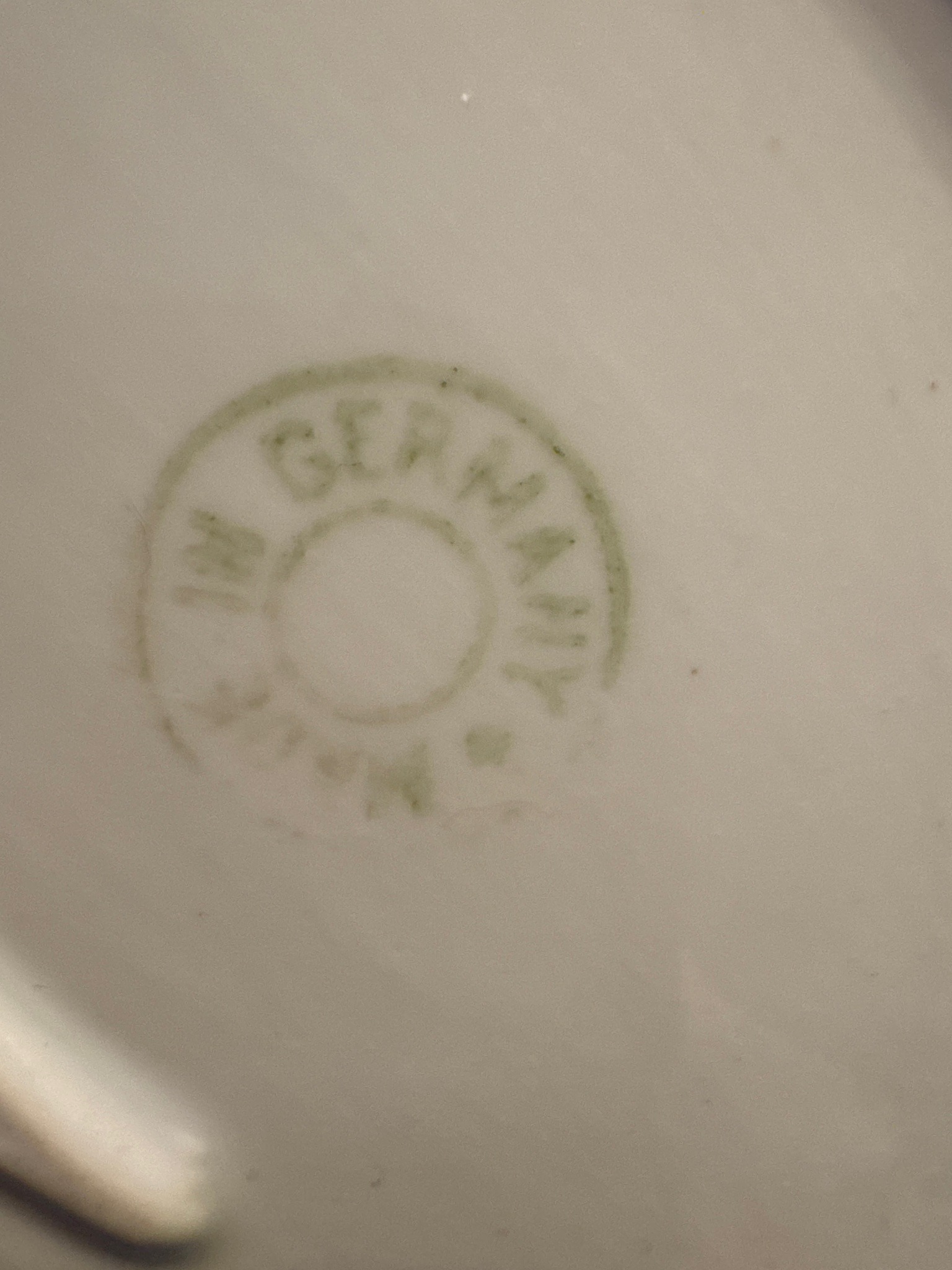
This image features a circular underglaze backstamp or 'maker\'s mark' on a porcelain surface, executed in a muted green pigment. The stamp reads 'MADE IN GERMANY' arranged in a circular formation within two concentric rings. The ceramic body appears to be a fine-grained, vitrified white porcelain with a high-gloss translucent glaze. The mark is slightly faded and blurred, a characteristic often found in early 20th-century mass-produced ceramics where the stamp was applied by hand before firing. Based on the phrasing 'Made in Germany,' this piece was likely manufactured for export following the UK Merchandise Marks Act of 1887, with this specific style appearing common from the 1890s through the 1930s. The surface shows minor pitting and microscopic surface scuffs consistent with age and stacking wear, but lacks visible crazing or significant chips in this section. The quality of the glaze application is smooth and even, suggesting a professional factory origin from one of the major German ceramic regions such as Bavaria or Thuringia. The simplicity of the mark without a specific manufacturer logo suggests an utility piece or a distributor mark.
Estimated Value

$10 - $35

Basic Information

Category

Antique and Vintage Ceramics

Appraised On

May 12, 2026

Estimated Value

$10 - $35

Item Description

This image features a circular underglaze backstamp or 'maker\'s mark' on a porcelain surface, executed in a muted green pigment. The stamp reads 'MADE IN GERMANY' arranged in a circular formation within two concentric rings. The ceramic body appears to be a fine-grained, vitrified white porcelain with a high-gloss translucent glaze. The mark is slightly faded and blurred, a characteristic often found in early 20th-century mass-produced ceramics where the stamp was applied by hand before firing. Based on the phrasing 'Made in Germany,' this piece was likely manufactured for export following the UK Merchandise Marks Act of 1887, with this specific style appearing common from the 1890s through the 1930s. The surface shows minor pitting and microscopic surface scuffs consistent with age and stacking wear, but lacks visible crazing or significant chips in this section. The quality of the glaze application is smooth and even, suggesting a professional factory origin from one of the major German ceramic regions such as Bavaria or Thuringia. The simplicity of the mark without a specific manufacturer logo suggests an utility piece or a distributor mark.
Get Your Items Appraised

Instant estimates of your treasures with AI-powered instant appraisals

Browse More Appraisals