Vintage Desktop Globe with Cast Iron Tripod Base
Antiques & Collectibles / Cartography

Vintage Desktop Globe with Cast Iron Tripod Base

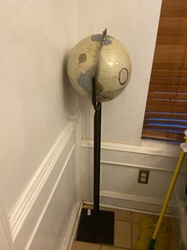
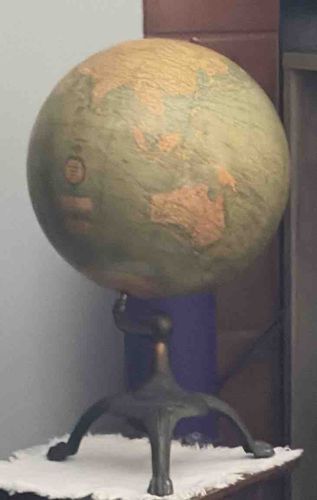
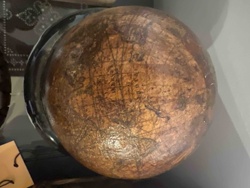
This is a vintage terrestrial desktop globe featuring a distinctive aesthetic that suggests a mid-20th-century manufacture, likely between the 1930s and 1950s. The globe sphere appears to be constructed of paper gores applied over a plaster or cardboard core. The color palette is muted, with green oceans and tan/ochre landmasses, indicative of aged lithography. It is mounted on a heavy, decorative cast metal (likely iron) tripod base with a dark bronze or black patina. The base features curved, possibly claw-foot or scroll-inspired legs, providing a sturdy and ornate foundation. Notable features include a visible cartouche on the left side, though the specific maker's name is obscured by the photo quality. The physical condition shows significant signs of age and patina; there is visible surface gridding or texture on the sphere, suggesting minor paper shrinkage or environmental wear. The orb sits on an offset axis typical of educational models. Such items are valued for their cartographic history as well as their decorative appeal, representing a period of manual craftsmanship before the era of plastic-molded globes.
Estimated Value

$350-$550

Basic Information

Category

Antiques & Collectibles / Cartography

Appraised On

January 30, 2026

Estimated Value

$350-$550

Item Description

This is a vintage terrestrial desktop globe featuring a distinctive aesthetic that suggests a mid-20th-century manufacture, likely between the 1930s and 1950s. The globe sphere appears to be constructed of paper gores applied over a plaster or cardboard core. The color palette is muted, with green oceans and tan/ochre landmasses, indicative of aged lithography. It is mounted on a heavy, decorative cast metal (likely iron) tripod base with a dark bronze or black patina. The base features curved, possibly claw-foot or scroll-inspired legs, providing a sturdy and ornate foundation. Notable features include a visible cartouche on the left side, though the specific maker's name is obscured by the photo quality. The physical condition shows significant signs of age and patina; there is visible surface gridding or texture on the sphere, suggesting minor paper shrinkage or environmental wear. The orb sits on an offset axis typical of educational models. Such items are valued for their cartographic history as well as their decorative appeal, representing a period of manual craftsmanship before the era of plastic-molded globes.
Get Your Items Appraised

Instant estimates of your treasures with AI-powered instant appraisals

Browse More Appraisals