AI Appraisal Estimate

AI-generated estimates · not official valuations

From the user

What was submitted

Photo and notes provided by the user — not generated by AI

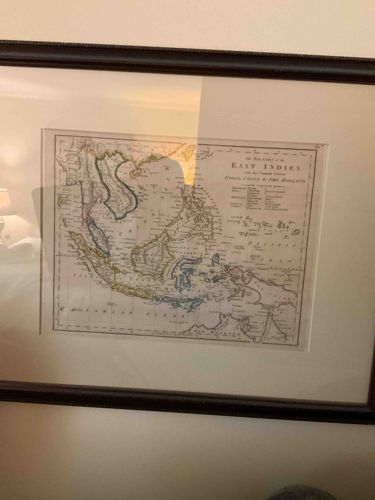
Submitted item photo
Submitted photo · June 3, 2026

User's notes

No additional notes provided.

AI analysis below

AI appraisal

AI analysis & estimate

AI-Generated · Verify before acting

Everything below is generated by AI for informational purposes only. AI can make mistakes — the AI may misidentify items or misattribute them (artist, maker, brand, designer, origin, era). This is not an official valuation and should not be used for insurance, sale, tax, estate, legal, or lending purposes — or any decision requiring a certified appraisal. It is not an authoritative claim about any person, brand, or rights holder — do not share or rely on it as a factual statement about a third party. Always consult qualified professionals before making financial decisions.

Read the full disclaimer

AI Identification

·Not independently authenticated·Verify before acting

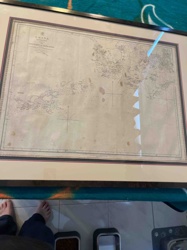
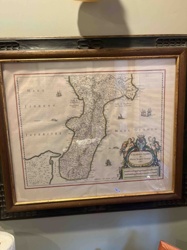
Framed 19th Century Map of the East Indies with the Channels between India, China & New Holland

Antiques & Collectibles - Cartography

AI Estimated Value

·Not an official valuation·Verify before acting

$450.00-$650.00

As of June 3, 2026

AI Item Analysis

·AI can make mistakes·Verify before acting
This item is a framed, hand-colored antique map titled ‘The Islands of the East Indies with the Channels between India, China & New Holland.’ The map depicts the Southeast Asian archipelago, including Java, Sumatra, Borneo, and the northern tip of Australia. It features delicate pastel watercolor outlines in shades of yellow, green, and blue to distinguish various colonial territories or geographical regions. The typography is characteristic of early-to-mid 19th-century copperplate engraving, with a clean title block and various legends to the right side detailing territorial ownership (British, Spanish, Dutch, Portuguese). The map is printed on aged paper that shows a slight warm tone consistent with antique documents. It is professionally matted with a thick, neutral-toned acid-free mat and housed in a dark wood or mahogany-finish frame with a beaded inner edge. There are no immediate visible signs of foxing, tearing, or moisture damage from the front, though there is a prominent vertical reflection on the protective glass. The overall craftsmanship suggests a high-quality decorative piece, likely intended for a historical or maritime-themed collection. The cartographic style and geographic labels suggest an origin around 1830 to 1850, a period of significant British and Dutch colonial expansion in the region.
AI Appraisal Report

·AI can make mistakes·Verify before acting
This appraisal covers a hand-colored 19th-century map of the East Indies. Based on my visual examination, the typography and cartographic data align with British steel or copperplate engravings from the 1830-1850 era, likely by a publisher such as Wyld or Tallis. The map displays excellent preservation; the pastel watercolor washes are vibrant without significant light-strike fading, and the paper lacks the heavy foxing or 'tide marks' often found in maritime documents. The professional archival matting and mahogany-finish frame add approximately $150 in decorative value, protecting the piece from further environmental degradation. The market for Southeast Asian cartography remains stable, particularly for items showing the 'Spice Islands' and early Australian coastlines. Significant demand exists among regional specialists and maritime collectors. This specific map is desirable for its clear colonial legends and detailed depiction of administrative boundaries. However, visual inspection via image has limitations. I cannot verify the presence of a watermark or investigate the plate indentation (platemark) hidden beneath the matting, which is essential to distinguish an original period strike from a high-quality mid-20th-century lithographic reproduction. To provide a definitive certification of authenticity, an in-person examination is required to check paper weight, fiber composition, and the presence of any hidden repairs or acidity on the reverse side. Provenance documentation or original sales receipts from established map dealers would further substantiate the valuation.

Get your items appraised

Instant estimates of your treasures with AI-powered appraisals

Browse More Appraisals