AI estimate as of November 3, 2025 · verify with a professional before acting
AI-Generated · Verify before acting
Everything on this page is generated by AI for informational purposes only. AI can make mistakes — the AI may misidentify items or misattribute them (artist, maker, brand, designer, origin, era). This is not an official valuation and should not be used for insurance, sale, tax, estate, legal, or lending purposes — or any decision requiring a certified appraisal. It is not an authoritative claim about any person, brand, or rights holder — do not share or rely on it as a factual statement about a third party. Always consult qualified professionals before making financial decisions.
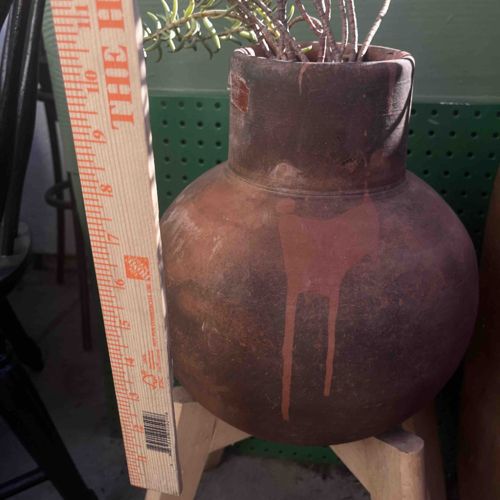
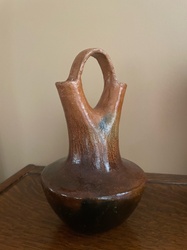
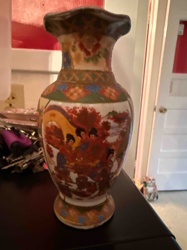
This item is a spherical-bodied vessel, likely a pot or jar, crafted from terracotta, presenting a rustic and aged appearance. The primary color of the vessel is a dark reddish-brown, indicative of natural fired clay, with some lighter reddish-orange tones visible through areas where the dark patina may have worn or is less concentrated. The form transitions from a broad, globular body to a cylindrical neck with a slightly flared or rolled rim at the opening. A distinct, roughly applied red glaze or paint is evident on the upper body, directly beneath the neck, manifesting as irregular drips that run down the side of the pot, creating an almost heart-like shape at its initiation before tapering into two distinct vertical lines. These drips appear accidental or intentionally primitive, adding to the inherent rustic character. The surface texture seems unglazed and somewhat coarse, consistent with terracotta. Visible condition issues include general surface wear, dirt accumulation, and what appears to be a natural aging patina that darkens the terracotta. There is also a small, lighter reddish-orange area on the neck, possibly a chip or an area where the darker finish has rubbed off. The construction appears to be traditional pottery, perhaps hand-thrown or molded. The presence of a plant, likely a rosemary bush as suggested by its foliage, indicates its current use as a planter. Given the material and style, it likely dates from a period emphasizing handcrafted or traditional artistry, perhaps mid-20th century or earlier, though it could also be a contemporary piece designed to mimic an antique aesthetic. The overall craftsmanship is functional and robust, focusing more on utility and traditional form rather than refined detailing.
AI Appraisal Report
Based on my visual examination of the terracotta pot or jar, it presents as a rustic, spherical-bodied vessel with a dark reddish-brown primary color, typical of natural fired clay. The most notable feature is the roughly applied red drip glaze or paint on the upper body, which appears to be either an intentional primitive design choice or an accidental aesthetic. The surface is unglazed and coarse, consistent with traditional terracotta. Condition-wise, I observe general surface wear and dirt accumulation, along with a natural aging patina that darkens the material. A lighter reddish-orange area on the neck suggests a possible chip or wear spot. While the presence of a plant, likely rosemary, indicates its current use as a planter, it does not impact the intrinsic value of the pot itself. The craftsmanship appears functional and robust, focusing on utility rather than fine detailing. I assess its authenticity as a genuine terracotta pot, likely hand-thrown or molded, designed in a traditional or rustic style. Without in-person inspection, it's difficult to determine a precise age; it could be mid-20th century, earlier, or a contemporary piece designed to appear aged. Market conditions for such rustic terracotta pots are generally stable, with demand for charming garden planters remaining consistent. However, without a known maker, provenance, or specific artistic distinction beyond its rustic appeal, its rarity is low. Similar functional, unglazed terracotta pots with decorative elements typically sell in the $40-$80 range. The decorative red drip, while unique, doesn't elevate its value significantly in the absence of an identifiable artist or historical significance. Factors impacting value negatively include the utilitarian nature and lack of refined artistry. For full authentication, detailed in-person examination to assess clay composition, firing techniques, and patina, along with any provenance documentation, would be necessary.