AI Appraisal Estimate

AI-generated estimates · not official valuations

From the user

What was submitted

Photo and notes provided by the user — not generated by AI

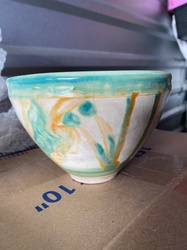
Submitted item photo
Submitted photo · May 27, 2026

User's notes

No additional notes provided.

AI analysis below

AI appraisal

AI analysis & estimate

AI-Generated · Verify before acting

Everything below is generated by AI for informational purposes only. AI can make mistakes — the AI may misidentify items or misattribute them (artist, maker, brand, designer, origin, era). This is not an official valuation and should not be used for insurance, sale, tax, estate, legal, or lending purposes — or any decision requiring a certified appraisal. It is not an authoritative claim about any person, brand, or rights holder — do not share or rely on it as a factual statement about a third party. Always consult qualified professionals before making financial decisions.

Read the full disclaimer

AI Identification

·Not independently authenticated·Verify before acting

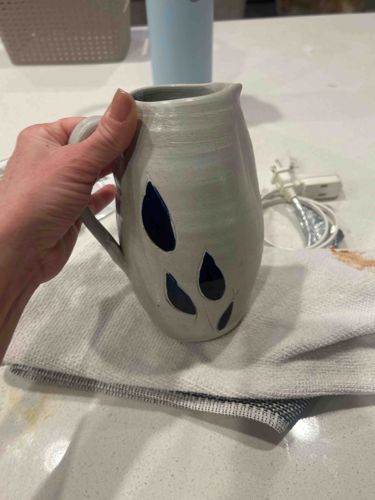
Hand-Thrown Studio Pottery Pitcher with Cobalt Leaf Motif

Studio Pottery and Ceramics

AI Estimated Value

·Not an official valuation·Verify before acting

$125 - $185

As of May 27, 2026

AI Item Analysis

·AI can make mistakes·Verify before acting
This is a hand-thrown ceramic pitcher crafted in a contemporary studio pottery style. The vessel features a bulbous body tapering slightly toward the base and neck, with a functional loop handle and a practical pouring spout. In terms of color, the primary body is finished in a light grey or off-white celadon-style glaze with visible horizontal throwing rings that indicate a wheel-thrown construction. The most striking decorative element consists of four stylized, tear-drop or leaf-shaped motifs executed in a deep, glossy cobalt blue glaze. These blue accents are slightly recessed or 'incised' into the clay body, creating a tactile depth. In terms of condition, the pitcher appears to be in good vintage or contemporary condition with no immediately visible cracks or large chips to the rim or spout, although there is typical surface wear consistent with age and domestic use. The style suggests a late 20th-century or 21st-century origin, likely made by a regional artisan rather than a mass-production factory. Its craftsmanship shows a balance of rustic texture and refined glazing, characteristic of high-quality handcrafted stoneware.
AI Appraisal Report

·AI can make mistakes·Verify before acting
Upon visual examination of this vessel, I find it to be a skillfully executed example of contemporary studio stoneware. The construction displays excellent technical proficiency; the horizontal throwing rings are rhythmic and intentional, and the integration of the pulled handle shows a sophisticated understanding of ceramic ergonomics. The use of a celadon-tinted base glaze provides a neutral canvas that allows the recessed cobalt motifs to serve as a strong focal point. The 'incised' glaze technique suggests the piece was fired to a high temperature, likely in a reduction atmosphere, which is consistent with professional studio practices. From the digital inspection, the condition appears excellent. The rim and spout—the most vulnerable areas of a pitcher—show no evidence of percussion chips or glaze loss. However, a physical inspection is required to check for 'pitting' in the glaze or internal stress fractures not visible to the eye. Market demand for high-quality, functional studio pottery remains steady, particularly for items that blend mid-century modern aesthetics with rustic textures. While the piece lacks a visible signature in the provided view, its value is derived from its decorative appeal and artisan quality. Limitations: This appraisal is based solely on visual attributes. For a definitive valuation, I would need to inspect the 'foot' of the pitcher for a potter's mark or chop, which could significantly increase the value if linked to a known master. In-person examination would also confirm the quality of the 'fit' between the clay body and glaze to ensure no crazing. Provenance documentation regarding the artist's studio or gallery origin would further solidify its place in the secondary market.

Get your items appraised

Instant estimates of your treasures with AI-powered appraisals

Browse More Appraisals