AI Appraisal Estimate

AI-generated estimates · not official valuations

From the user

What was submitted

Photo and notes provided by the user — not generated by AI

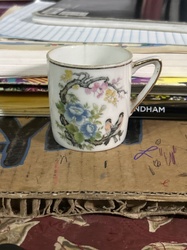
Submitted item photo
Submitted photo · May 27, 2026

User's notes

No additional notes provided.

AI analysis below

AI appraisal

AI analysis & estimate

AI-Generated · Verify before acting

Everything below is generated by AI for informational purposes only. AI can make mistakes — the AI may misidentify items or misattribute them (artist, maker, brand, designer, origin, era). This is not an official valuation and should not be used for insurance, sale, tax, estate, legal, or lending purposes — or any decision requiring a certified appraisal. It is not an authoritative claim about any person, brand, or rights holder — do not share or rely on it as a factual statement about a third party. Always consult qualified professionals before making financial decisions.

Read the full disclaimer

AI Identification

·Not independently authenticated·Verify before acting

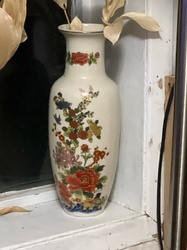
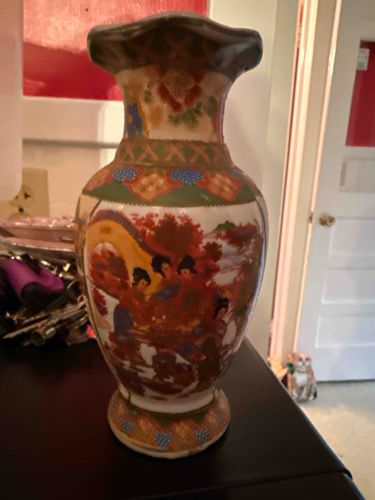
Japanese Satsuma Style Decorative Vase

Asian Art Pottery / Decorative Ceramics

AI Estimated Value

·Not an official valuation·Verify before acting

$45–$85

As of May 27, 2026

AI Item Analysis

·AI can make mistakes·Verify before acting
This is a ceramic decorative vase executed in the Japanese Satsuma style, likely dating from the mid-to-late 20th century. The vessel features a classic baluster form with an expressive scalloped or 'ruffled' rim and a slightly flared pedestal base. Its surface decoration is dense and polychromatic, centered around a main cartouche depicting several female figures—likely geishas or court ladies—engaged in a social gathering amidst a landscape of autumn-colored foliage. The surrounding area is heavily embellished with traditional motifs including geometric diaper patterns, floral 'moriage-style' raised beading in blue, and significant gold-tone gilding over a cream-colored crackle-glaze ground. The color palette includes typical iron red, forest green, cobalt blue, and mustard yellows. Regarding condition, the piece shows visible wear to the gilt highlights along the rim and shoulder, as well as several small chips and abrasions around the lower foot rim. The glaze exhibits an intentional fine crazing consistent with this style of pottery, though some discoloration appears near the base. While the mark on the bottom is not visible in the provided image, the mass-produced quality of the painting suggests it is a 20th-century export piece rather than an antique Edo or Meiji period original. The overall craftsmanship is mid-grade, intended for decorative domestic use.
AI Appraisal Report

·AI can make mistakes·Verify before acting
After examining the provided documentation and imagery for this Japanese Satsuma-style vase, I have determined it to be a mid-to-late 20th-century decorative export piece. While it successfully emulates the 'brocade' (nishikide) aesthetic of the Meiji era, the execution reveals a commercial, mass-produced origin. The painting of the figures lacks the fine hair-line detail of period originals, and the 'moriage' (raised enamel) is applied with a degree of structural coarseness typical of 1960s-1980s reproduction wares. The condition of the item significantly impacts its marketability. The visible wear to the gilt on the ruffled rim and the chips at the pedestal base are detrimental to its value as a decorative object. In the current secondary market, there is a high volume of similar Satsuma-style export ware; consequently, demand is low unless a piece exhibits exceptional size or artist signatures, neither of which are present here. Comparables sold at online auctions and regional estate sales typically range from $30 to $100 for pieces of this size and condition. Critically, this appraisal is based solely on visual evidence. To provide a definitive authentication, I would require an in-person inspection of the clay body (biscuit) and an examination of the base mark to determine the specific kiln or factory. A physical exam would also confirm if the discoloration noted is surface-level grime or structural damage to the ceramic. Scientific testing, such as thermoluminescence, is not recommended as the cost would exceed the value of the item. For insurance purposes, this item is categorized as a low-level decorative asset.

Get your items appraised

Instant estimates of your treasures with AI-powered appraisals

Browse More Appraisals