AI estimate as of October 10, 2025 · verify with a professional before acting
AI-Generated · Verify before acting
Everything on this page is generated by AI for informational purposes only. AI can make mistakes — the AI may misidentify items or misattribute them (artist, maker, brand, designer, origin, era). This is not an official valuation and should not be used for insurance, sale, tax, estate, legal, or lending purposes — or any decision requiring a certified appraisal. It is not an authoritative claim about any person, brand, or rights holder — do not share or rely on it as a factual statement about a third party. Always consult qualified professionals before making financial decisions.
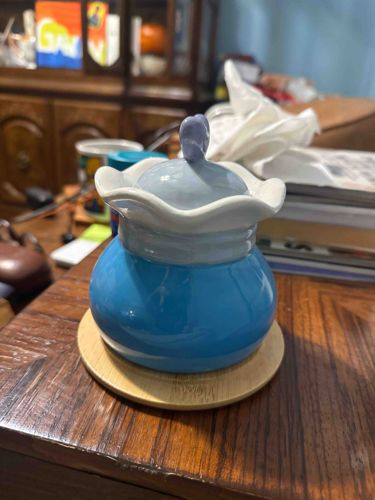
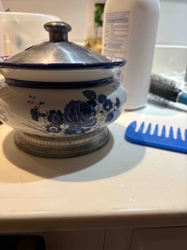
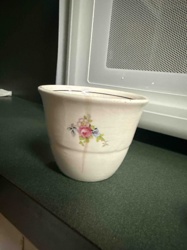
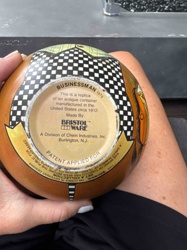
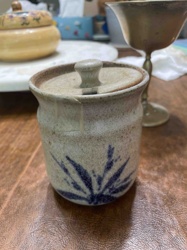
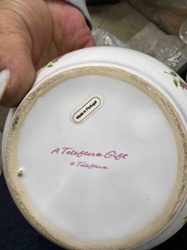
This item is a small, ceramic lidded pot, possibly intended for sugar or other condiments, exhibiting a two-tone blue and white glazed finish. The main body of the pot is a vibrant, glossy sky blue, with a smoothly curved, bulbous form. The lid, also ceramic, is a lighter, pastel blue on its domed surface, contrasting with a creamy white, ornate ruffled rim that mimics the appearance of fabric or petals. Atop the lid, serving as a finial or handle, is a small, sculptural element in a light purple hue, twisted or knot-like in appearance. The pot is seated on a simple, round, light-colored wooden coaster, which appears to be bamboo or a similar fine-grained wood, providing a subtle natural contrast to the ceramic. The ceramic itself appears to be in good condition, with no immediately visible chips, cracks, or significant wear. The glaze is even and shiny, suggesting a good quality firing process. There are no discernible maker's marks or signatures visible from the provided image. The style suggests a more whimsical or contemporary design, likely from the late 20th or early 21st century. The craftsmanship appears to be commercially produced, with clean lines and consistent glazing, indicating a standard factory finish rather than artisanal handmade pottery, though the ruffled rim and unique finial add decorative appeal. The combination of colors and decorative lid gives it a charming and somewhat playful aesthetic.
AI Appraisal Report
Upon visual examination of the Ceramic Lidded Pot with Ruffled Rim, I assess its condition to be excellent, exhibiting no visible chips, cracks, or significant wear. The glazing appears even and glossy, indicative of a quality manufacturing process. Authenticity, based solely on this image, suggests a commercially produced item rather than a unique artisanal piece. The clean lines and consistent finish point to factory production, likely from the late 20th or early 21st century given its contemporary whimsical aesthetic.
Market conditions for such decorative ceramic containers are generally quite robust, particularly within the home decor and collectible niches. Comparable items, often found in retail stores specializing in unique kitchenware or gift shops, typically retail in the $20-$60 range depending on brand and perceived uniqueness. Demand for items that blend functionality with decorative appeal, as this pot does, remains steady.
This item is not rare; similar decorative condiment or sugar pots are widely available. Its value is primarily driven by its aesthetic appeal, good condition, and charming design elements like the ruffled rim and unique finial, which add a touch of personality. The inclusion of the simple wooden coaster enhances its presentation but adds minimal monetary value.
Factors significantly impacting its value include its excellent condition and decorative nature. The lack of discerning maker's marks, however, prevents it from commanding a premium associated with known designers or brands. The primary limitation in authenticity verification from images alone is the inability to physically inspect for hidden defects, evaluate material quality definitively, or search for obscure impressed marks beneath the base.
For full authentication, a physical in-person examination would be necessary to check for subtle manufacturing flaws, assess the weight and feel of the ceramic, and thoroughly search for any maker's marks or signatures that might be obscured or very small. Provenance documentation, though unlikely for an item of this type, would also be beneficial if it were a higher-value artisanal piece.