AI Appraisal Estimate

AI-generated estimates · not official valuations

From the user

What was submitted

Photo and notes provided by the user — not generated by AI

Submitted item photo
Submitted photo · June 6, 2026

User's notes

Cookie jar

AI analysis below

AI appraisal

AI analysis & estimate

AI-Generated · Verify before acting

Everything below is generated by AI for informational purposes only. AI can make mistakes — the AI may misidentify items or misattribute them (artist, maker, brand, designer, origin, era). This is not an official valuation and should not be used for insurance, sale, tax, estate, legal, or lending purposes — or any decision requiring a certified appraisal. It is not an authoritative claim about any person, brand, or rights holder — do not share or rely on it as a factual statement about a third party. Always consult qualified professionals before making financial decisions.

Note

This analysis also relies on unverified notes provided by the user, which may be incomplete or inaccurate and could affect the result.

Read the full disclaimer

AI Identification

·Not independently authenticated·Verify before acting

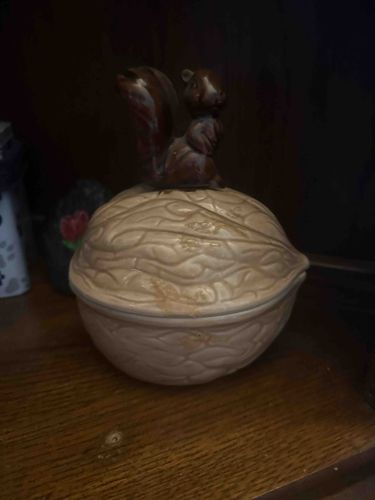
Squirrel and Walnut Ceramic Lidded Container

Decorative Container

AI Estimated Value

·Not an official valuation·Verify before acting

$25-45

As of June 6, 2026

AI Item Analysis

·AI can make mistakes·Verify before acting
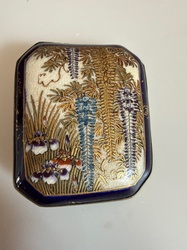
This item is a ceramic lidded container designed to resemble a large walnut, topped with a figurine of a squirrel. The container is spherical, mimicking the shape of a whole walnut, with textured surfaces throughout both the lid and the base that replicate the natural ridges and grooves of a walnut shell. The color of the 'nut' portion is a muted, light beige or off-white, with visible signs of age or use, including several yellowish-brown stains on both the lid and the base, suggesting either residue from contents, discoloration from exposure, or possibly intended aging in the finish. The nut appears to be comprised of two interlocking halves, forming the base and the lid. Perched atop the lid is a small, three-dimensional squirrel figurine, rendered in a darker brown, almost reddish-brown, glaze. The squirrel is depicted in a naturalistic pose, possibly sitting or reaching, with its tail prominently curved upwards and detailed with texture to suggest fur. The overall construction appears to be molded ceramic with a glazed finish. There are no visible maker's marks or signatures in the provided image. Given the style and apparent construction, this item likely dates from the mid-22th to late 20th century. The craftsmanship appears to be of moderate quality, with good detail on the squirrel figure and effective replication of the walnut texture. It functions as a decorative storage vessel.
AI Appraisal Report

·AI can make mistakes·Verify before acting
Upon examining the provided images of this Squirrel and Walnut Ceramic Lidded Container, identified as a cookie jar, I have assessed its fair market value. The piece is a charming example of mid-to-late 20th-century decorative ceramics, likely mass-produced for the home goods market. The design, featuring a naturalistic squirrel atop a textured walnut, is visually appealing. The craftsmanship appears to be of a standard, molded quality with a decent glaze application. The condition is fair; while structurally intact with no visible chips or cracks, there are notable yellowish-brown stains and discoloration on both the lid and base. This staining significantly impacts the item's aesthetic appeal and value, suggesting past use or improper storage. The current market for collectible cookie jars of this nature is moderate. While novelty designs are popular, pieces without a known maker's mark (such as McCoy, Shawnee, or Brush) tend to command lower prices. Comparable unmarked, figural cookie jars from the same era typically sell in the $25 to $45 range, depending on condition and buyer interest. The visible staining places this specific item at the lower end of that valuation. The demand is primarily driven by collectors of novelty kitchenware or squirrel-themed decor rather than high-end ceramic enthusiasts. It is important to note the limitations of this appraisal, as it is based solely on photographic evidence. I cannot definitively authenticate the manufacturer, confirm the age, or assess the full extent of the staining without a physical, in-person examination. A hands-on inspection would allow me to look for hidden maker's marks, feel for hairline cracks, and determine if the staining is surface-level or has permeated the ceramic body. Full authentication would require identifying a maker's mark and cross-referencing it with historical pottery catalogs.

Get your items appraised

Instant estimates of your treasures with AI-powered appraisals

Browse More Appraisals