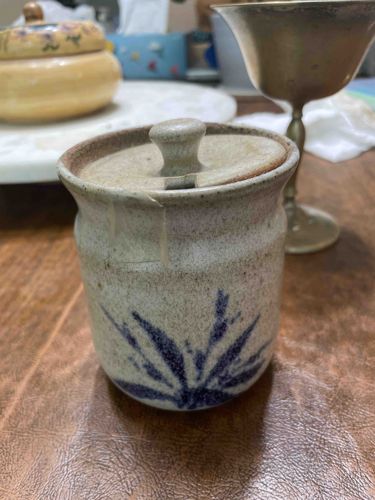
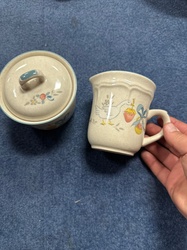
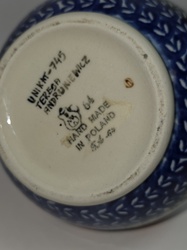
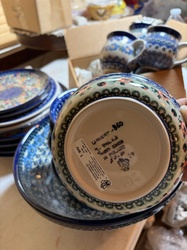
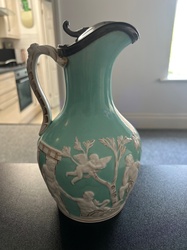
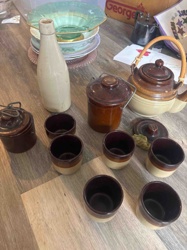
Stoneware. Blue on grey sugar container Appears to be painted blue leaf typical of stoneware no signature no chips or scratches
These notes were written by the person who submitted this item. Appraiser.AI has not verified them, and the AI's identification and estimate may rely on them.
AI Estimated Value
Not an official valuation
$40-$70
AI estimate as of August 4, 2025 · verify with a professional before acting
AI-Generated · Verify before acting
Everything on this page is generated by AI for informational purposes only. AI can make mistakes — the AI may misidentify items or misattribute them (artist, maker, brand, designer, origin, era). This is not an official valuation and should not be used for insurance, sale, tax, estate, legal, or lending purposes — or any decision requiring a certified appraisal. It is not an authoritative claim about any person, brand, or rights holder — do not share or rely on it as a factual statement about a third party. Always consult qualified professionals before making financial decisions.
This analysis also relies on unverified notes provided by the user, which may be incomplete or inaccurate and could affect the result.
This is a stoneware lidded container, likely intended as a sugar bowl or small storage jar. It features a robust, cylindrical body with a slightly flared rim and a fitted lid topped with a classic knob handle. The primary material is unglazed stoneware, exhibiting a natural, speckled grey or light beige color with visible flecks of darker minerals, indicative of the clay body and firing process. The exterior surface is decorated with a hand-painted motif in a deep indigo or cobalt blue, resembling abstract leaves or reeds, characteristic of folk art or studio pottery. The application of the blue pigment appears somewhat organic, with variations in saturation, suggesting it was applied with a brush prior to glazing and firing. The rim of both the container and the lid, as well as the knob, show a darker, perhaps unglazed or thinly glazed, rustic brown tone, contrasting with the lighter body. There are no apparent chips, cracks, or significant scratches, indicating good structural integrity. The finish appears matte to semi-matte, consistent with many stoneware pieces. Without a visible maker's mark or signature, the precise manufacturing origin is unknown. The style suggests it could be a piece of studio pottery from the mid to late 20th century, particularly given the naturalistic aesthetic and hand-painted design. The construction is solid and appears well-fired, reflecting a good level of craftsmanship typical of functional stoneware.
AI Appraisal Report
I have examined the provided image and information for this stoneware lidded container.
**Condition and Authenticity:** The item appears to be in excellent condition, showing no visible chips, cracks, or significant scratches, which is highly positive for its value. The speckled grey/beige body with blue hand-painted leaf motifs is consistent with stoneware functional pottery. The rustic brown tones on the rim and knob further authenticate its studio pottery aesthetic. Given the lack of a maker's mark and the 'folk art' style, determining precise authenticity from images alone is challenging. However, its craftsmanship appears sound, aligning with well-fired stoneware pieces.
**Market Conditions and Comparables:** The market for contemporary or mid-20th century studio stoneware, particularly unmarked pieces, is generally steady for functional items. Comparable examples of unmarked stoneware sugar bowls or small storage jars with similar hand-painted, folk-art-inspired designs typically sell in the $30-$75 range. Pieces from known, even regional, potters can fetch more, but without attribution, it falls into the general category.
**Demand and Rarity:** While attractive, this piece is not particularly rare. Similar functional stoneware items with decorative motifs are relatively common in the secondary market. Demand is moderate, driven by collectors of handmade pottery and individuals seeking unique, artisanal home goods.
**Factors Impacting Value:** The excellent condition is a significant positive factor. The absence of a maker's mark is the primary limiting factor for value, as attribution to a specific artist or studio would substantially increase its worth. Its aesthetic appeal (hand-painted blue leaf motif) is a positive, but not enough to elevate it significantly.
**Limitations of Verification:** Without physical inspection, I cannot confirm the integrity of the glaze, the precise tactile quality of the stoneware, or subtle imperfections not visible in images. A physical examination could also reveal faint maker's marks or clues to origin. Full authentication would require in-person examination, and ideally, provenance documentation from the original purchase. Scientific testing, such as elemental analysis of the clay body or glaze, is typically not warranted for items in this price range but could potentially narrow down geographic origin.