AI estimate as of August 9, 2025 · verify with a professional before acting
AI-Generated · Verify before acting
Everything on this page is generated by AI for informational purposes only. AI can make mistakes — the AI may misidentify items or misattribute them (artist, maker, brand, designer, origin, era). This is not an official valuation and should not be used for insurance, sale, tax, estate, legal, or lending purposes — or any decision requiring a certified appraisal. It is not an authoritative claim about any person, brand, or rights holder — do not share or rely on it as a factual statement about a third party. Always consult qualified professionals before making financial decisions.
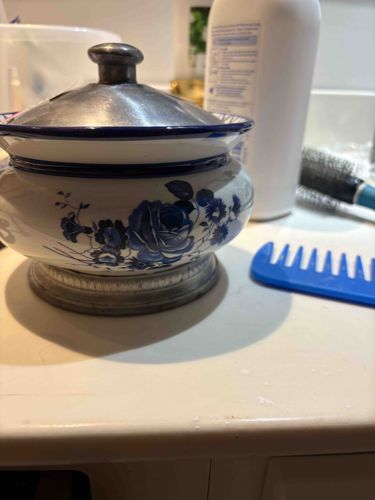
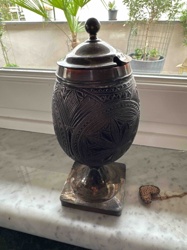
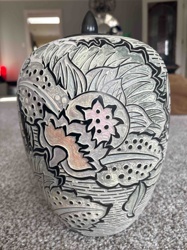
The item is a lidded container, likely a sugar bowl or small candy dish, crafted from a combination of ceramic/porcelain and metal. The body of the container is ceramic, primarily white with vivid blue floral motifs, specifically what appear to be roses and accompanying foliage. The blue decoration is applied in a classic underglaze style, reminiscent of Delftware or traditional Chinese porcelain patterns. There's a distinct blue band along the rim of the ceramic bowl, providing a clean finish. The base of the ceramic piece is integrated with a pewter or silver-tone metal foot, which features a fluted or reeded design around its circumference, adding to its visual stability and decorative appeal. The lid is also made of the same metal, exhibiting a slightly domed shape with a sturdy, turned finial handle at its center. The metal components show a soft, aged patina and some mild surface wear consistent with handling and age, but no significant damage like dents or heavy scratches are visible. The ceramic portion appears to be in very good condition, with no visible chips, cracks, or crazing, and the blue decoration is vibrant. The overall craftsmanship suggests a well-made, possibly vintage piece, prioritizing both aesthetics and functionality. The combination of materials and design elements hints at a Victorian or early 20th-century aesthetic, though without a clear maker's mark, a precise age is difficult to ascertain. Its quality indicators include the detailed floral painting and the sturdy construction of the metalwork.
AI Appraisal Report
Based on my visual examination of the provided image, I appraise this lidded ceramic and metal floral container. The ceramic body, with its vibrant blue floral motifs on a white ground, appears to be in very good condition, showing no visible chips, cracks, or crazing. The underglaze decoration is robust and well-preserved. The integration of the ceramic with the metal base and lid suggests a thoughtful, well-executed design. The metal components exhibit an expected soft, aged patina and minimal surface wear, consistent with an object of its likely vintage. I assess the overall condition as very good.
Authenticity, based solely on visual inspection, points to a period piece, possibly late 19th to early 20th century, given the combined aesthetic of the ceramic decoration (reminiscent of Delftware or transferware) and the metalwork. However, without a physical examination for maker's marks, material analysis (e.g., specific alloy of the metal), or construction details not visible in the image, a definitive attribution of origin or absolute age is limited. Provenance documentation would significantly aid authenticity verification.
Market conditions for decorative arts, particularly smaller, well-preserved containers, remain steady, driven by collectors and interior decorators seeking unique vintage pieces. Comparables would include similar metal-mounted ceramic sugar bowls or candy dishes from the Victorian or Edwardian eras. While not exceptionally rare, the attractive combination of materials and the pleasant aesthetic prevent it from being common. Demand is moderate, likely appealing to those who appreciate traditional decorative styles.
Key factors impacting value include its excellent condition, the appealing blue and white color scheme, and the quality of the metalwork. The absence of a clear maker's mark or definitive provenance somewhat limits the upper end of its market value, as it cannot be attributed to a highly sought-after manufacturer. For full authentication, I would require an in-person examination to inspect for maker's marks, assess the weight and feel of the materials, analyze the ceramic body for specific age indicators, and potentially conduct a more detailed metallurgical examination of the metal components.